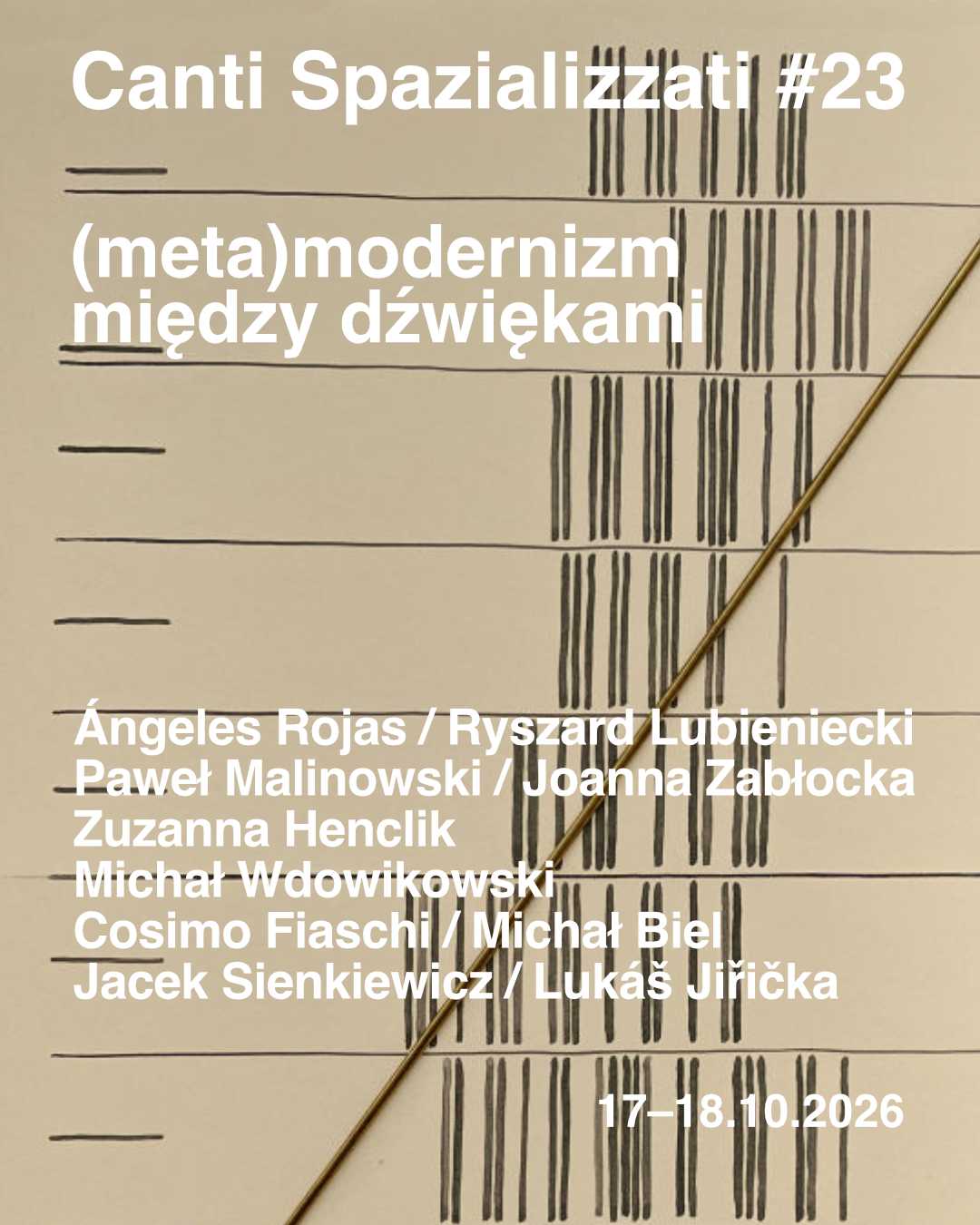


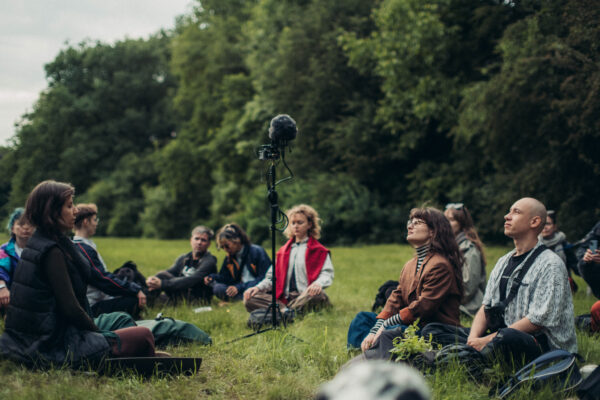


We take as our point of departure *Modernism Between Buildings* (Agnieszka Kępkowicz, Małgorzata Sosnowska, Ilona Woźniak-Kostecka, Warsaw, 2021), which argues that, in landscape architecture, modernism marked a significant expansion of—and growing attention to—the spaces between buildings. We propose that musical modernism, too, was fundamentally a project of spatial thinking, emerging only when composers began to work consciously with the spatial qualities of sound. Our interest lies not only in the moment when music opened itself to time and space through resonance, reverberation, and decay, but also in the critical reflection on the cognitive processes set in motion by these ways of engaging with sonic material.
We invite participating artists to engage in a speculative exercise: what might modernism as the space between sounds mean for the field of sound art today? And what might metamodernism sound like? As a contemporary current in cultural theory, metamodernism oscillates between modernist utopian aspiration and postmodern irony. It seeks to address the anxieties and crises of an age marked by the power of digital corporations and widespread disillusionment with political elites, proposing instead a renewed commitment to sincerity, affect, and shared emotional experience. Could Pauline Oliveros’s practice of Deep Listening and Brandon LaBelle’s politics of listening be understood as metamodern gestures within sound studies? For the purposes of this project, we propose to think of metamodernism as the space between listeners, and to ask how this relational perspective reshapes contemporary artistic practices working with sound, listening, and space.
ABOUT THE EVENT
🔉 17.10.2026, 19:00
Ángeles Rojas – Fragile Harmony (2023)
Ángeles Rojas – Music for clavicymbalum (2025) *
/ Ryszard Lubieniecki – clavicymbalum
Paweł Malinowski – Vergänglichkeit der Ferne (2026) */**
na kontrabas i wielokanałową warstwę elektroniczną / Joanna Zabłocka – kontrabas, Paweł Malinowski – elektronika
Zuzanna Henclik – nociception (2026) *
🔉 18.10.2026, 19:00
Michał Wdowikowski – Przymus powtarzania (2026) *
Cosimo Fiaschi / Michał Biel – canone incerto (2026) *
Jacek Sienkiewicz / Lukáš Jiřička – The works Cut Corners of the Mouth (2026) */**
Żyjnia BWA Wrocław
Świdnicka 2-4
PROGRAMME
Ángeles Rojas – Fragile Harmony (2023)
A performative sound installation built around a self-made instrument of twenty balloons and harmonicas. Suspended in space, each balloon holds a small, slightly detuned harmonica. One by one, the balloons are slowly opened through a system that allows the air to escape gradually,
letting the harmonicas sound and interact. As the air flows out, the harmonicas begin to resonate with one another and with the surrounding space. The enclosed air, once held within a fragile boundary, is released into the open. What was contained begins to move, vibrating with the room and dissolving the limits between inside and outside. The performance unfolds until all the balloons have fully deflated, lasting between twenty and thirty minutes.
Fragile Harmony was commissioned for the 48 Stunden Neukölln Festival and supported by the ArtSpaceLab Grant.
Ángeles Rojas – Music for clavicymbalum (2025) *
Ryszard Lubieniecki – clavicymbalum
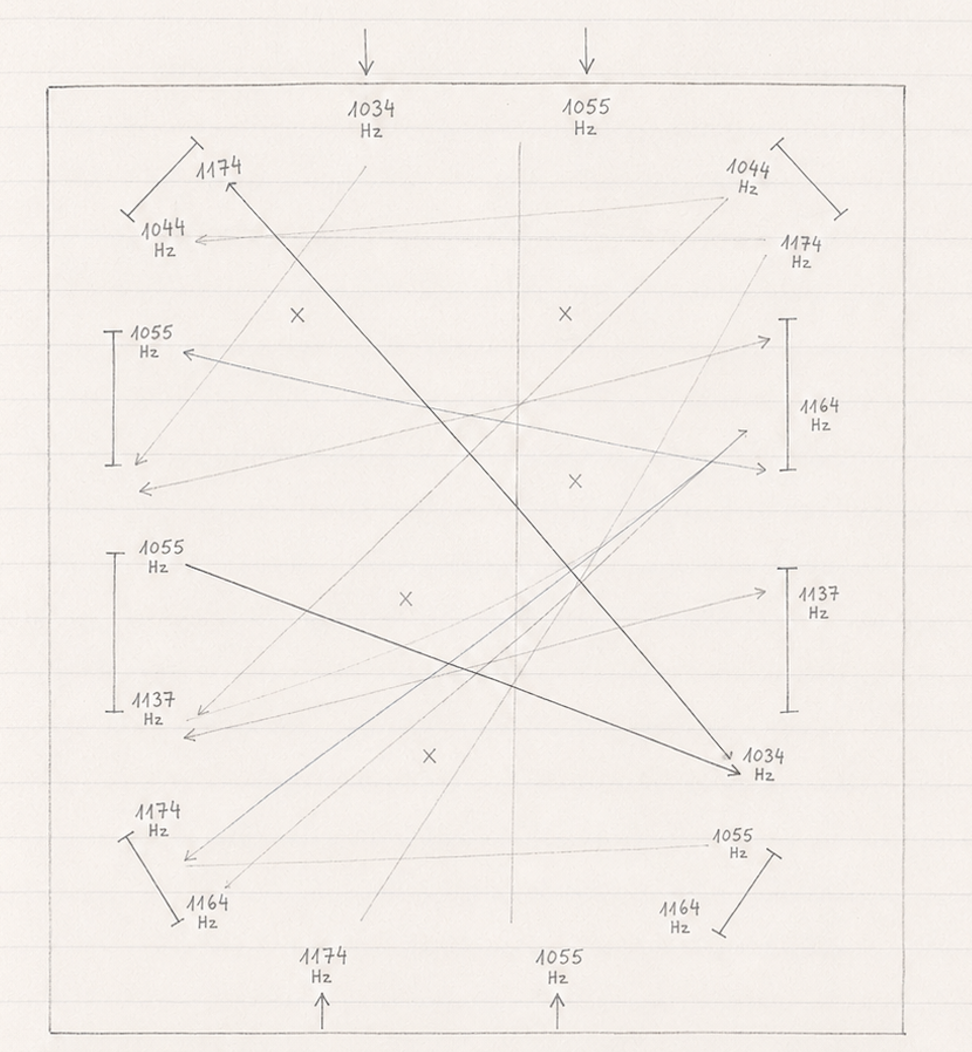
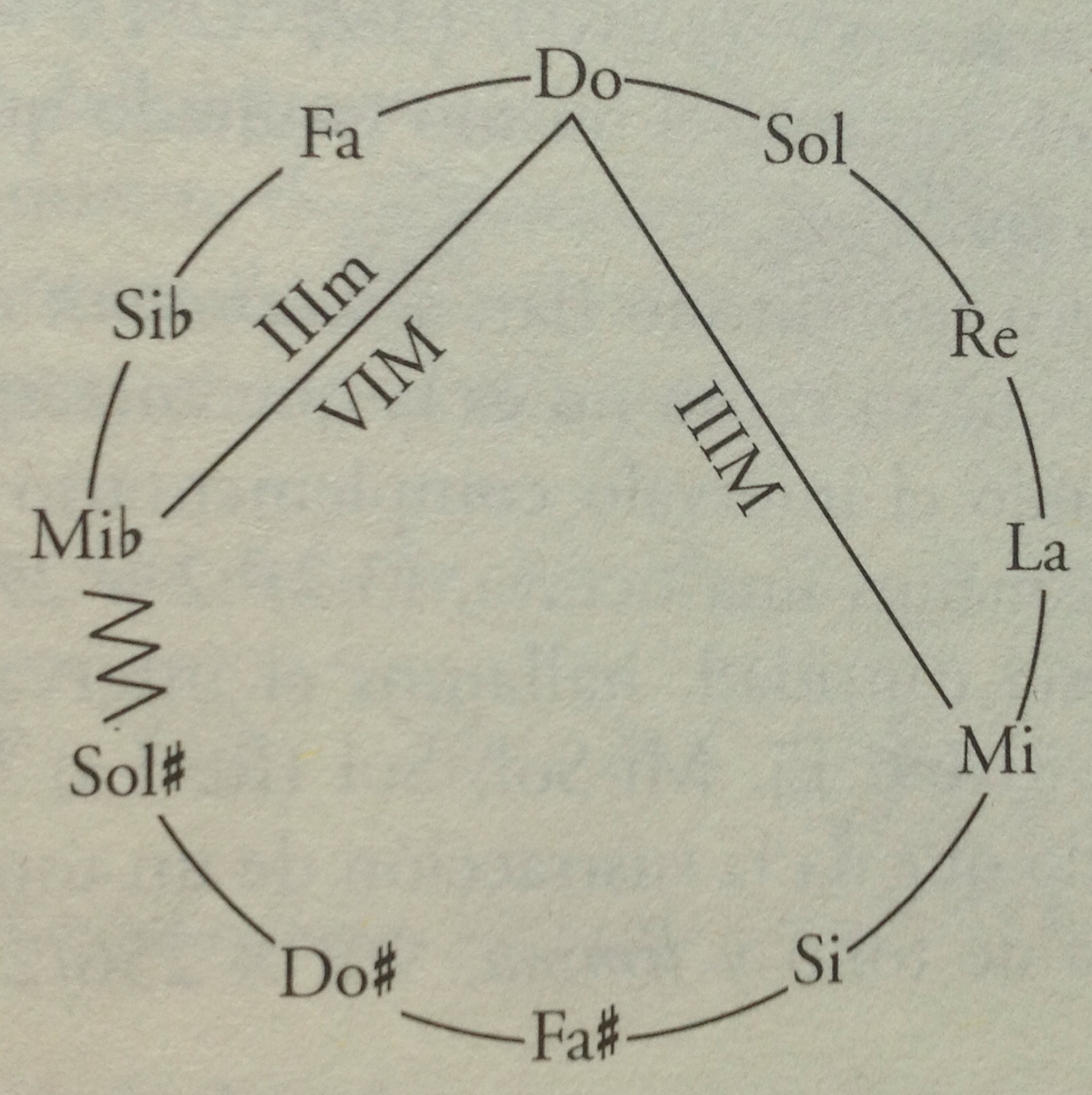
This piece has the intention of slowing down the space between notes. This space is never fixed. It is fluid, like water. The wolf fifth is an interval that was historically left aside because of its instability. But within this interval there are many possibilities. In this piece, I use it as a fundamental interval. Through gradual detuning, the interval slowly shifts, creating different combinations of relationships, beatings, and imperfections. These ever-changing intervals also create ever-changing silences. Different resonance shadows are created each time and left floating between the instrument, the room, and our own ears.
Listen
to the beatings
of ever-changing intervals.
Listen
how they
slowly fade.
Paweł Malinowski – Vergänglichkeit der Ferne (2026) */**
for doble bass and multichannel electronics
/ Joanna Zabłocka – double bass, Paweł Malinowski – electronics
“What shall we listen to together?” This is the question I find myself asking as I begin work on my first piece in a long time with an extensive electroacoustic layer. I am thinking above all about what matters most to me in working with sound: the singularity and ephemerality of the performance moment, the sensitivity of the performers, and, ultimately, how these concerns might be reconciled with Walter Benjamin’s notion of distance at the very moment loudspeakers enter the picture. In composing the work, I deliberately limit my choice of electronic means and tools, wanting my full attention to remain directly connected to the sound of the double bass and the choir of loudspeakers surrounding it. In the context of this event, I also find myself thinking about urban planners and architects—from the ambitious participatory visions of Oskar and Zofia Hansen to the perhaps more pragmatic, yet deeply attentive housing estates designed in Kraków by Jerzy and Maria Chronowscy, shaped with genuine understanding of the needs of their future residents. And there were, of course, many more such examples. Finally, I look with growing alarm at the restorative impulses of movements calling for neo-imperial classical models, cloaking themselves in the search for a universal ideal of beauty. Against this backdrop, my composition turns once again toward sonorism, reinterpreting its processual character and the performer’s freedom of interpretation. Yet I filter these ideas through qualities that have become central to my own practice: dynamics so quiet that they demand exceptional attentiveness, and harmonies that gradually dissolve from within.
Zuzanna Henclik – nociception (2026) *
Aleksandra Filipowicz – video
The starting point of the piece is an interest in situations in which the body ceases to be a reliable guide to reality. It draws inspiration from phenomena related to the experience of pain, false sensory alarms, adaptation to prolonged stimuli, and the gradual loss of sensitivity to the contemporary acoustic environment.
I am interested in the tension between a signal and its interpretation—the moment in which experience becomes real regardless of whether its source actually exists or has been correctly identified. I am particularly fascinated by the paradox of situations in which the body generates a sense of threat, pain, or presence in the absence of any clear cause.
One of my points of reference is the contemporary acoustic landscape: a space filled with signals, messages, and sounds that structure everyday experience, yet whose presence often remains outside the field of conscious attention.
I approach multichannel space as a field of perceptual uncertainty, in which the listener continuously negotiates the relationship between what is heard and what is taken to be real. The project emerges from the assumption that listening is not a linear reception of a shared reality, but a process of individually constructed meaning. It is an attempt to examine the boundary between stimulus, its interpretation, and the experience of listening.
Michał Wdowikowski – Przymus powtarzania (2026) *
The piece is inspired by an early Freudian theory of psychoanalysis and refers to a phenomenon in which a person unconsciously reenacts painful experiences, conflicts, or relational patterns rather than avoiding them. In contemporary understanding, the term extends beyond human suffering to encompass a wide range of schematic and unconscious behaviours. In the context of metamodernism, this reference serves as a reminder that progress and the search for the new in a fast-moving, uncertain time require an awareness—or a continuous re-awareness—of the limitations to which we are, in part, bound. Only a conscious perception of the situation, whatever it may be, allows for a meaningful search for solutions to problems or sources of pleasure in life. Or perhaps it is an attempt to draw attention to the fact that in creating new ways of thinking and responding to reality, one cannot forget the partially determined nature of the human mind.
Cosimo Fiaschi / Michał Biel – canone incerto (2026) *
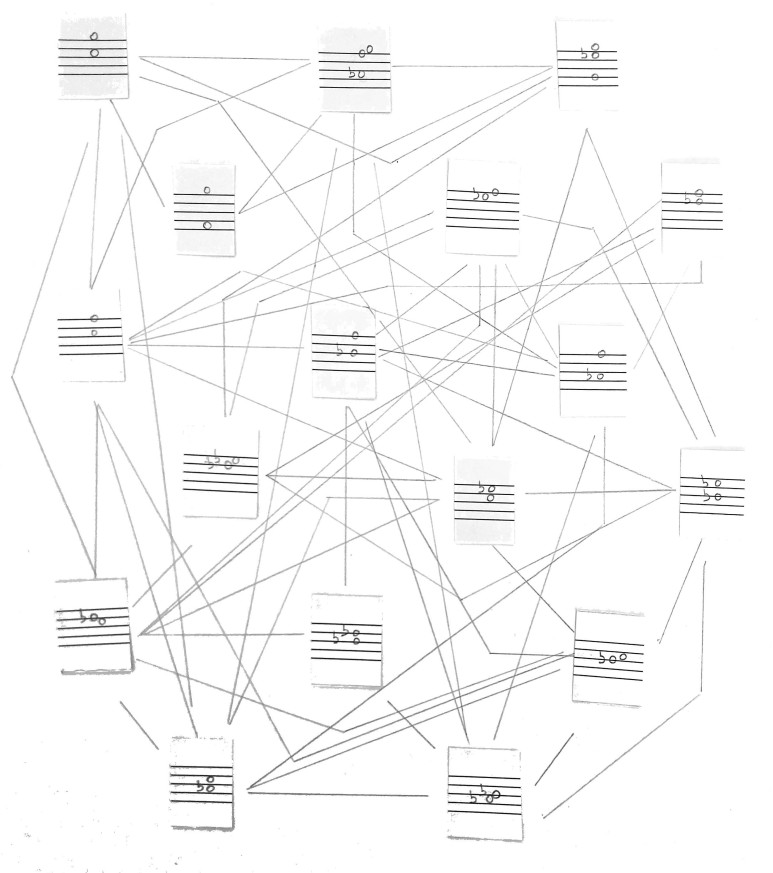
The new composition pushes forward the investigation on multiphonics relation within two soprano saxophones, enriched by multi-channel sound systems. Exploring aspects relating to the inner spatialisation of multiphonic, the piece aims to create an acoustic harmonic field, in which the instruments chase one another in an open canon, while transforming wind-derived instrumental and environmental sonorities.
Jacek Sienkiewicz / Lukáš Jiřička – Obcięte kąciki ust (2026) */**
The project “Cut Corners of the Mouth” is a new, expanded composition by Jacek Sienkiewicz and Lukáš Jiřička, developing their long-standing artistic dialogue at the intersection of experimental music, radio art, and theatre. The approximately forty-five-minute work, written for a multichannel sound system, will take a dual form: on the one hand as a radio art piece existing within the space of transmission and recording, and on the other as a live performative installation in which sound, body, and space intertwine in a singular act of presence.
The conceptual core of the project is the encounter between two distant, almost opposing literary worlds. On one side, the dark, hallucinatory imagination of Les Chants de Maldoror by Lautréamont; on the other, the subtle, contemplative writings of Essays in Idleness (Tsurezuregusa) by Yoshida Kenkō, focused on transience and minute observations of reality. These two orders—violence and contemplation—generate a tension reminiscent of breath: a movement between extremes in which nature reveals itself as a mirror of human experience, crisis, and continual transformation.
The composition is rooted in the concept of Ma, a generative emptiness in which silence and pause are not absence but active, form-producing forces. Sound emerges here from the tension between presence and absence, between gesture and its disappearance. The musical layer combines operatic and spoken voices with electronics, koto, vibraphone, percussion, and noise structures, forming a dense, multilayered acoustic fabric. Particular emphasis is placed on the voice—breath, whisper, scream—treated as a primal material subject to decomposition, repetition, and transformation.
The piece unfolds in three sections: Cut Corners of the Mouth, Hunger, a Friend of Storms, and Brief Shelters, guiding the listener from concentration toward intensity, from near-silent contemplation to a rhythmic, pulsating sonic materiality. In parallel, the textual layer moves from a dark vision toward subdued reflection, interweaving both poles in a continuous movement of meaning.
Out of the dark, into the light
Composition / live performance: Jacek Sienkiewicz
Direction: Lukáš Jiřička
Cast: Ramona Rey (voice), Klara Bielawka (voice/acting), Mirosław Zbrojewicz (actor), Antoni Beksiak (extended vocal techniques), Elia Moretti (vibraphone), Katarzyna Karpowicz (koto)
* first performance, commissioned by Canti Spazializzati
** The works Cut Corners of the Mouth by Jacek Sienkiewicz and Lukáš Jiřička, and Vergänglichkeit der Ferne by Paweł Malinowski, were co-financed by the Minister of Culture and National Heritage of the Republic of Poland from the Culture Promotion Fund—a state special-purpose fund—under the “Compositional Commissions” programme, implemented by the National Institute of Music and Dance.
ABOUT ARTISTS
Ángeles Rojas
Composer and performer from Argentina based in Berlin. Her work centers on listening as a way of inhabiting different perceptions of time and space. She explores acoustic phenomena such as resonance, vibration, and microtonal intonation, investigating the harmonic overtones and beating patterns that emerge through sustained tones and extended temporal structures. Her music unfolds slowly, focusing on amplifying what is already present rather than producing new sound, allowing natural sonic processes to become perceptible. Her practice spans composition, performance, and installation, often realized in collaborative or site-sensitive contexts. Her work has been presented at festivals and venues across Europe and Latin America, including MaerzMusik, Tsonami, and RUIDO Festival. In 2025, she was an artist in residence at the Elektronisches Studio of the Akademie der Künste (ADK) in Berlin. She studied composition at the Universidad Nacional del Arte (UNA) in Buenos Aires.
Ryszard Lubieniecki
Composer, musicologist, instrumentalist, improviser. He studied composition and accordion at the Academy of Music in Bydgoszcz. In 2023, he completed his doctoral thesis under the supervision of Professor Remigiusz Pośpiech at the Institute of Musicology in Wrocław (where he currently works as an assistant professor), on memory and its traces in late medieval musical and theoretical sources from the Central European region. In addition to the accordion, he also plays medieval keyboard instruments (portative organ and clavicymbalum). Co-founder of the contemporary music trio Layers and the medieval music ensemble Vox Imaginaria, as well as more ephemeral improvised music groups, including Izquierdo/Lubieniecki, Widzicie, Lubieniecki/Rupniewski and Disquiet.
https://soundcloud.com/ryszard-lubieniecki
Paweł Malinowski
Paweł Malinowski (*1994) is a composer who works with the fragility of sound and the musical past. He is a laureate of the 1st Prize in the 58th Tadeusz Baird Competition for Young Composers, and a was awarded a Creative Scholarship of the City of Krakow, as well as the scholarship of the Minister of Culture and National Heritage. His music represented Polish Radio at the 66th IRC International Rostrum of Composers. In the 2020/21 season he worked with the London Philharmonic Orchestra as part of the LPO Young Composers mentoring project. Paweł’s works have been performed by ensembles and musicians including members of the London Philharmonic Orchestra, Ensemble OMN, Ensemble Modern, Linea, United Instruments of Lucilin, Hashtag Ensemble, Ensemble Kompopolex, Spółdzielnia Muzyczna, at international festivals such as MaerzMusik, Gaudeamus, Warsaw Autumn, Sacrum Profanum, Ferienkurse für Neue Musik Darmstadt and have been broadcast on BBC Programme 3, Polskie Radio Programme 2 and others. He holds a DMA degree (supervisors: Prof. Wojciech Widłak and Piotr Peszat) defended at the Krzysztof Penderecki Academy of Music in Krakow. He graduated with honours from the Academy of Music in Krakow and studied composition (MMus) with Juliana Hodkinson, Niels Rønsholdt and Simon Steen-Andersen at the Royal Academy of Music in Aarhus.
https://www.pawelmalinowski.com/
Joanna Zabłocka
Double bassist, educator, and cultural animator. She graduated from the Karol Szymanowski Academy of Music in Katowice in the double bass class of Prof. Jan Kotula, and also studied musicology at the University of Warsaw. As a double bassist, she has collaborated with symphony orchestras such as the Zielona Góra Philharmonic (NIMiT Music-Resident scholarship), the Gorzów Philharmonic, the National Forum of Music in Wrocław (Orchestra Academy), the National Symphony Orchestra of Ukraine, and the International Lutosławski Youth Orchestra, as well as chamber ensembles including the New Music Orchestra (Orkiestra Muzyki Nowej) and the Archetti Chamber Orchestra of the City of Jaworzno. She honed her skills under the guidance of Catalin Rotaru, Petru Iuga, Miroslav Gajdos, and Marek Romanowski. In 2024, she received an honorable mention at the 5th National Cello and Double Bass Tournament in Warsaw. As a musicologist, she has worked at the Chopin Museum in Warsaw and on the editorial team of Glissando magazine, among others.
https://www.instagram.com/jozabrzoza/
Zuzanna Henclik
Composer, pianist, and engineer. She is a graduate of the Gdańsk University of Technology and studied Composition and Music Theory at the Stanisław Moniuszko Academy of Music in Gdańsk under Paweł Mykietyn. She also graduated from a secondary music school with a major in piano. In her work, she focuses primarily on electronic and electroacoustic music. She is interested in the environmental soundscape, noises, resonances, and the natural rhythms of the surroundings. She frequently uses field recordings, her own samples, and the ASMR phenomenon, exploring the space between sounds and their internal structure. Her main formal inspirations are concepts related to human perception—particularly its subjectivity and instability. Since 2022, she has been composing music for dance theater performances in collaboration with the h.art company collective. Her works have been presented at venues such as the Nowy Teatr in Warsaw, the Kielce Dance Theatre, Klub Żak, and the Centre for Culture in Lublin. Since 2023, she has been developing her own festival, Receptive Listening (Słuchanie Receptywne)—an all-night event dedicated to ambient, experimental, and electroacoustic music, inspired by Pauline Oliveros’ concept of deep listening. As part of the festival, she creates sound installations and performative projects that examine the relationship between sound, space, and perception. Her installations Echosomme, Vox Corporis, and Noise Organ focus on the bodily and communal experience of listening, utilizing elements of environmental acoustics, mechanics, and audience interaction. These installations require the participant to physically enter the space and actively engage with the stimuli, allowing them to experience sound as a bodily phenomenon. She uses intuitive forms, treating installations as tools that dismantle educational barriers and allow individuals to discover sound in a direct way. As the president of the Acousma Lab Foundation, she runs initiatives that support contemporary music creators and leads outreach projects related to acoustic ecology.
Michał Wdowikowski
An artist associated with the diverse music scene of Gorzów Wielkopolski and Wrocław. He developed his drumming skills through his education at the 1st degree music school in Gorzów Wlkp. and (partially) at the 2nd degree Wrocław School of Jazz. He interrupted his jazz studies at the Institute of Music of the University of Zielona Góra to pursue Psychology at the University of Wrocław (UWr). In the meantime, he has collaborated with various artists and formed numerous bands, actively touring and recording albums. He has performed at many festivals and clubs in Poland (Open’er Festival, OFF Festival, Tauron Nowa Muzyka, Avant Art Festival) and abroad (Czech Republic, Slovakia, Germany). He also gained experience playing in the Gorzów Brass Band and the Wrocław University of Science and Technology Big Band. Recently, he has been exploring electroacoustic music, performing on drums with a modular synthesizer, and working as a session musician. Together with Mikołaj Nowicki, Filip Zakrzewski, and the acclaimed saxophonist Matylda Gerber, he co-founded the Wrocław Improvised Orchestra. Currently, he performs with the bands Młyn and Sneaky Jesus, balancing between various subgenres of jazz.
Cosimo Fiaschi
A soprano saxophonist, improviser and composer born in 1998, based in Rome. A musician dedicated to a deep exploration of the spectrum of timbral possibilities of his instrument, with particular attention to the sphere of multiphonics. He plays in improvised music and contemporary music contexts, both solo and as part of heterogeneous ensembles. He has numerous publications to his credit, published by international labels such as INSUB. records, Discreet Archive, Dinzu Artefacts, Granny Records, Zoomin’ Night, Sofa label, Shhpuma, 901 edition.
https://www.instagram.com/cosimofiaschi/
Michał J. Biel
Polish sound artist based between Copenhagen and Wrocław, whose work spans the fields of sound engineering, composition, cinematography, and performance. Works with sound in different contexts: instrumental constellations, solo performances, site specific works, audio documentation and restoration, text scores for large ensembles, still objects and photography. Currently interested in darkroom practices taking the form of re-listening processes. Main tools: saxophones, tapes, microphones, text, analog photography.
Jacek Sienkiewicz
https://www.jaceksienkiewicz.com/
Lukáš Jiřička
ABOUT CANTI SPAZIALIZZATI
The series of workshops and concerts, carried out since 2018, is dedicated to theories and practices in the field of experimental music, focusing on the concepts of spatialisation of sound compositions created for multi-channel sound systems. It combines the idea of presenting new music projects and providing artists with the opportunity to develop the spatial aspects of sound compositions, as well as creating a platform for cooperation between young musicians, composers and sound artists.
THE TEAM
Daniel Brożek (curator), Agnieszka Jakuszak (producer), Agata Szakiel (PR)
Visual identity: Kama Sokolnicka
Organiser: Fundacja na Rzecz Studiów Europejskich / Foundation for European Studies
Partner: BWA Wrocław Galerie Sztuki Współczesnej / BWA Wrocław Galleries of Contemporary Art
Media sponsor: TVP Kultura, Radio LUZ, Glissando, Polskie Centrum Informacji Muzycznej POLMIC, Notes Na 6 Tygodni, Wrocławski Portal, DlaStudenta.pl
The event is co-financed by the Municipality of Wrocław.
The event is funded by the Minister of Culture and National Heritage from the Culture Promotion Fund – a dedicated state fund – within the framework of the “Music” and “Composition Commissions” programmes, implemented by the National Institute of Music and Dance.


