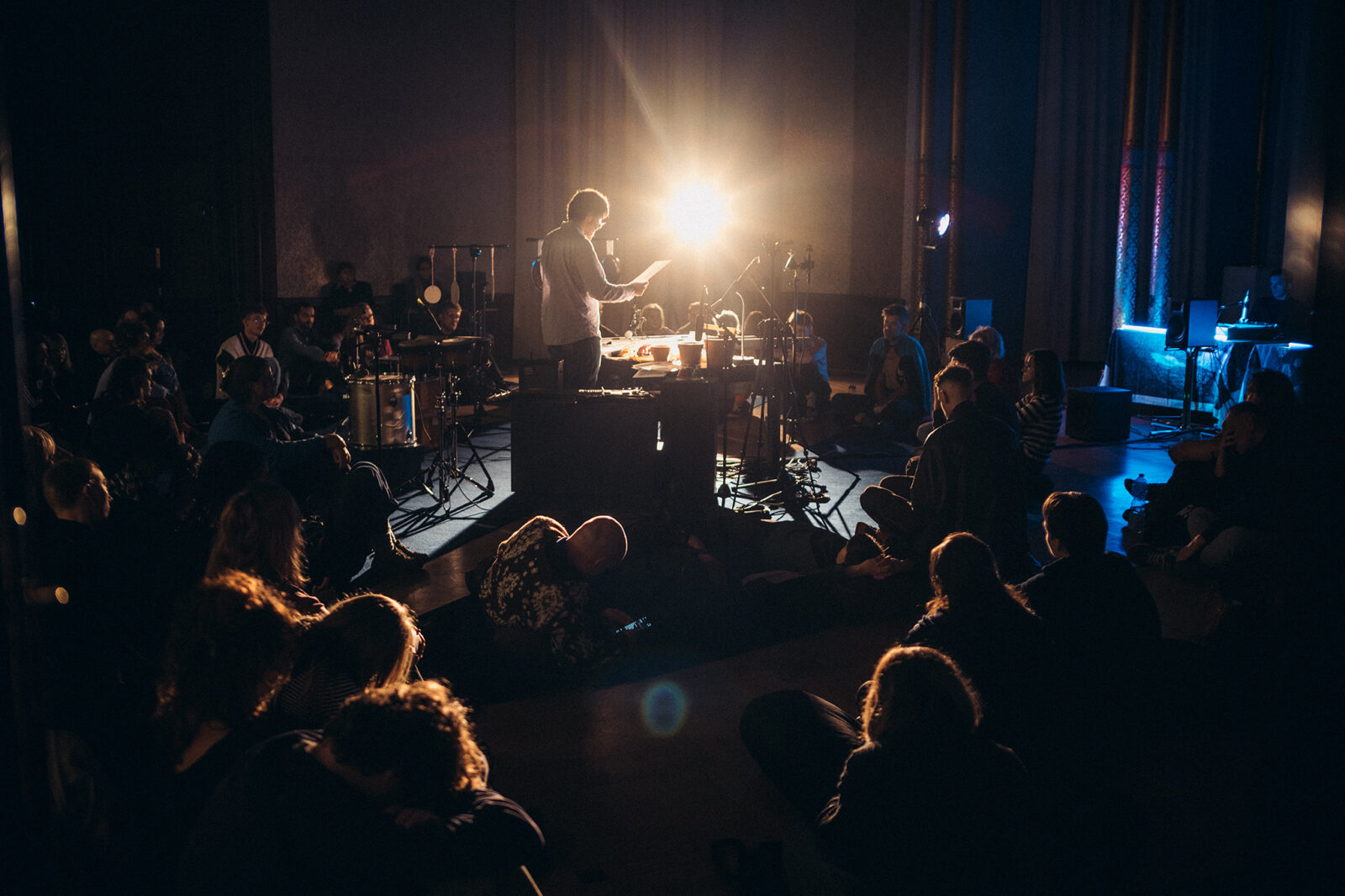


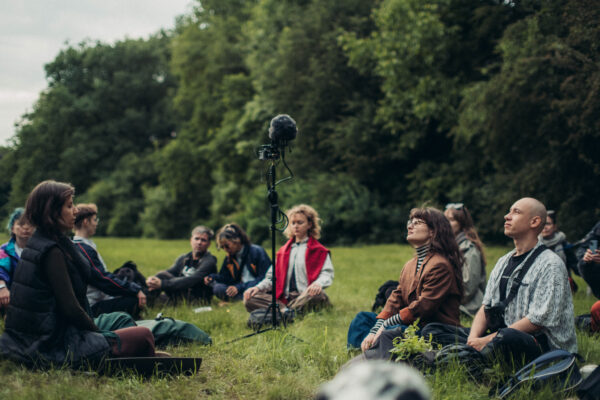


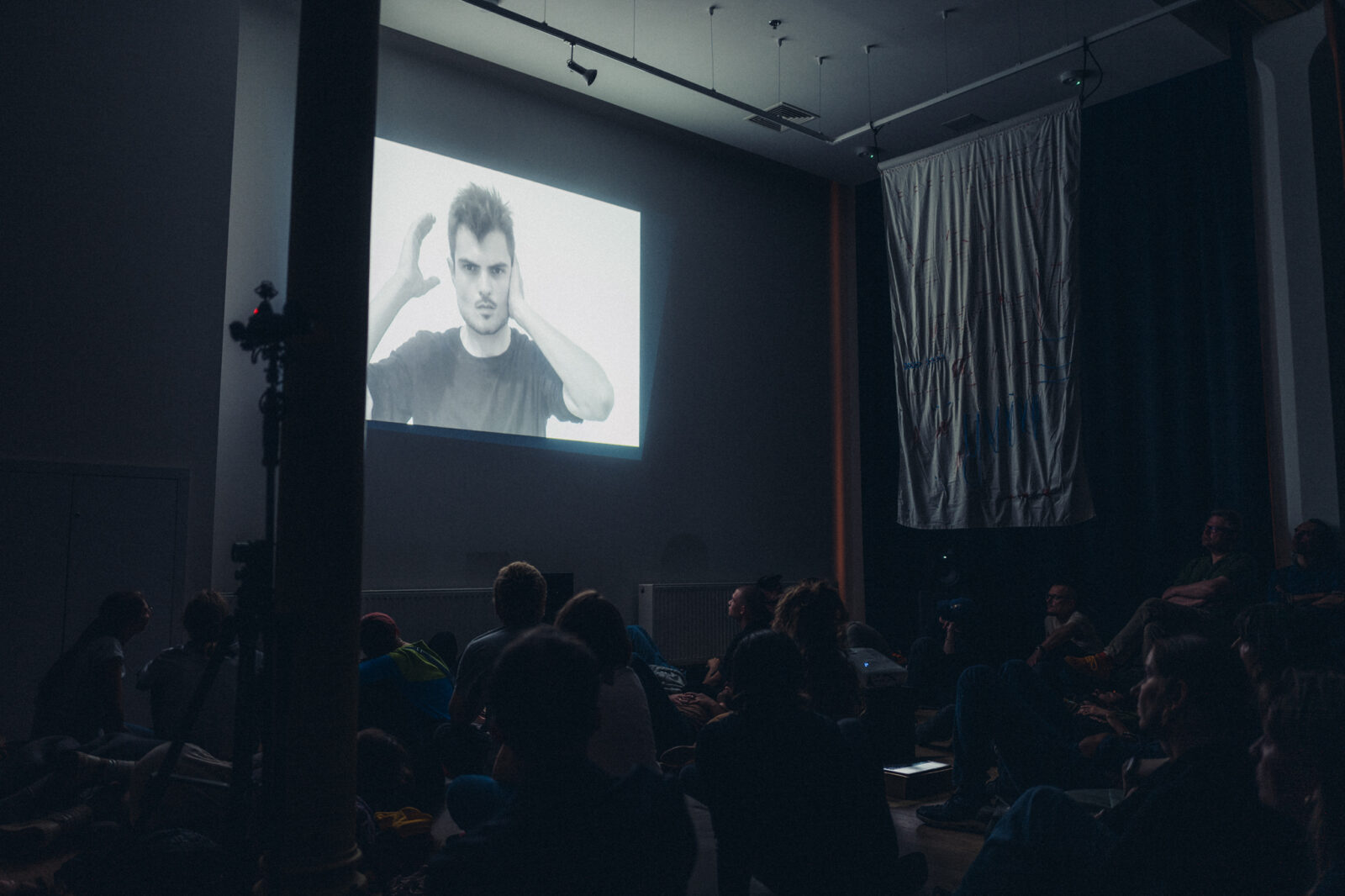
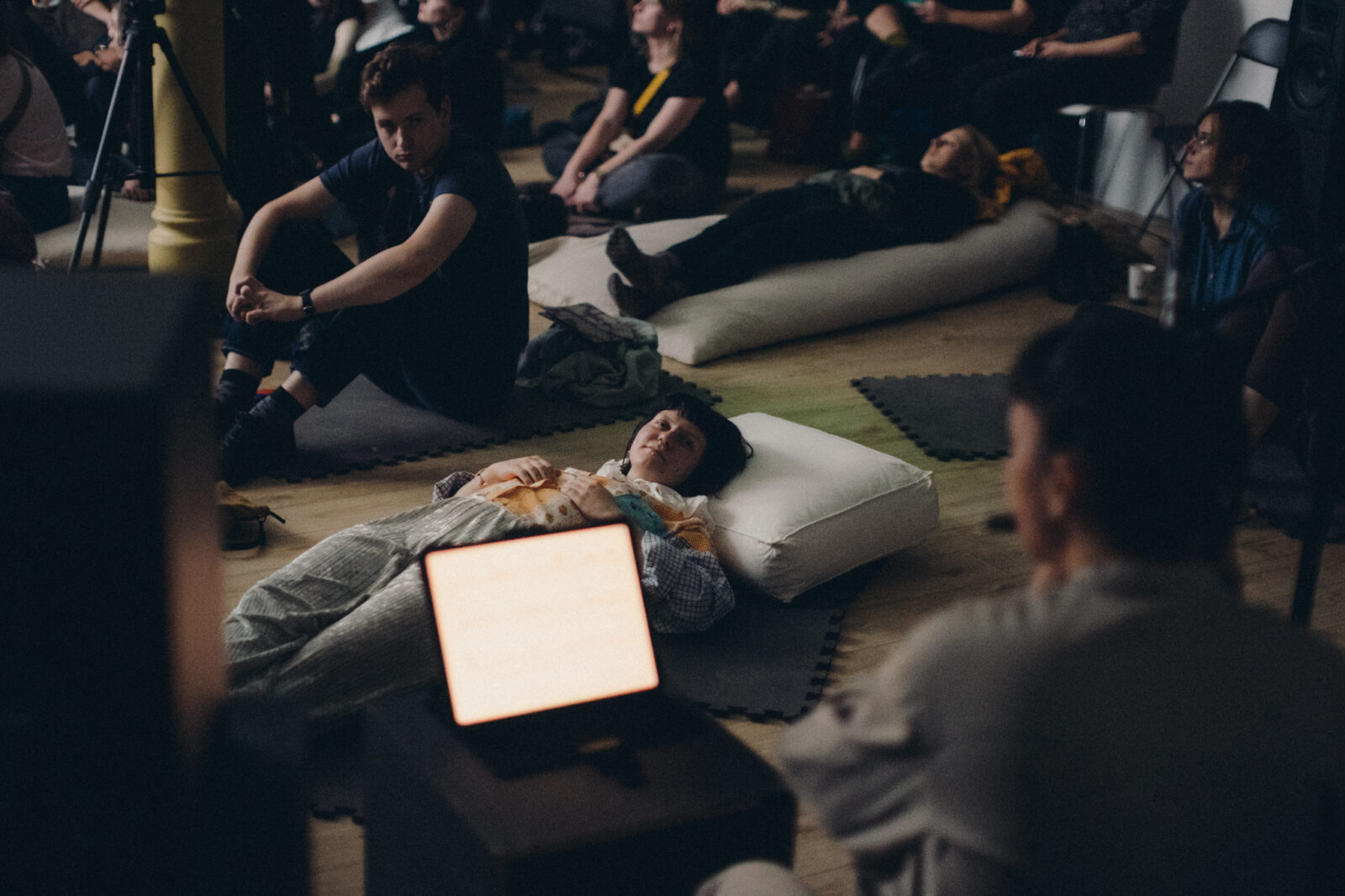
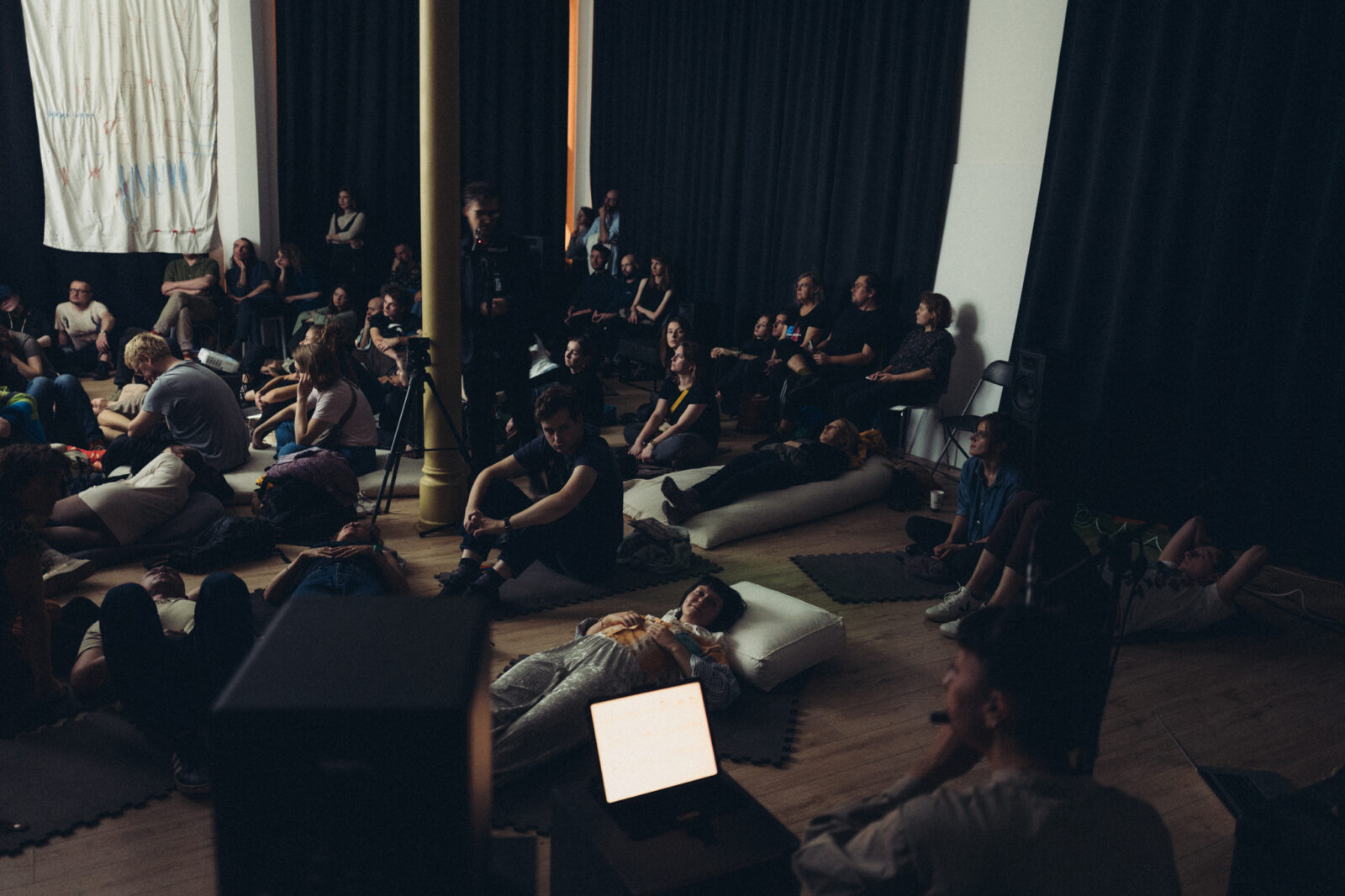
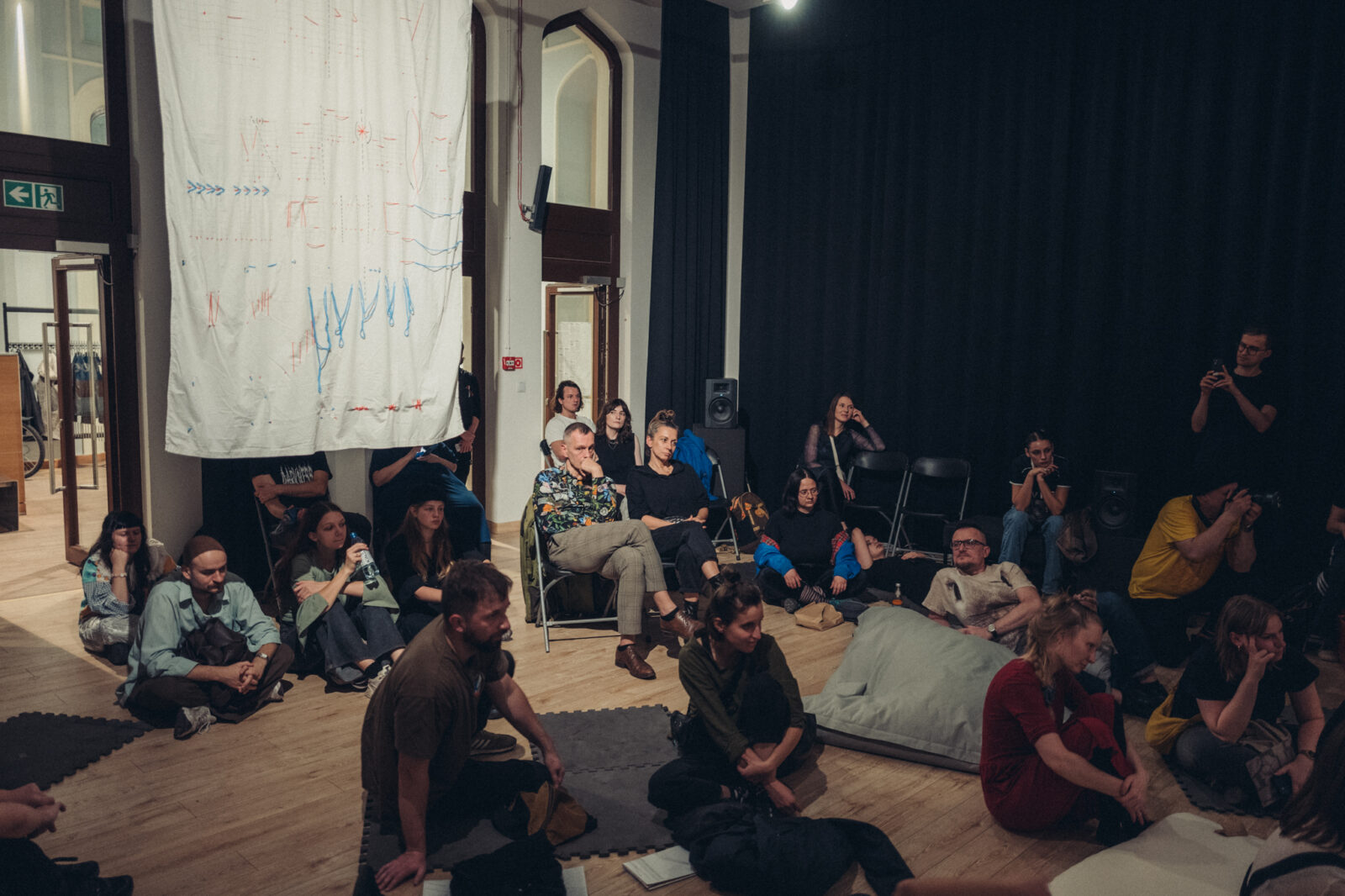
During the 15th edition of spatialised concerts, we attempt to expand the formula to include listening scores. Our aim is to experiment with a (hyper)-textual-visual form serving as a guide to the sound matter of a musical piece, an invitation to immerse oneself in the composition’s spatial form, and support in active involvement in its performance. We pose questions about the inclusivity of the form of presenting the concept and structure of a piece and the egalitarian nature of creating a sound event. We search for modes of emancipating the subjective experience of sound. We follow Pauline Oliveros’ theories on deep listening, Raymond Murray Schafer‘s soundscape and John Cage‘s concept of experimental music. At the heart of these theories is the process of active, mindful listening. They consider the listeners as equal to those who create and perform the piece, blurring the boundaries between the composer-performer-audience. We have asked the invited artists to distribute the accents in the compositional process from the listeners’ point of view, to try and create scores for participation in the performed piece using graphic and textual forms.
PROGRAMME
Monika Szpyrka
Mikroskopia (2023)
Silence and darkness may contribute to the activation of listening. Sounds appear somehow closer, at times even magnified, as if observed through an acoustic microscope. It reveals, if only for a moment, hidden life. We can trace acoustic paths, move through sound’s diverse physical states, and discover the intertwining of simplicity and complexity in natural regularity. The sounds may be considered organic – a kind of tissue to look at, touch, and shape at will. The darkness also allows one to sense the signs of presence, with no certainty as to whether it is real or merely imaginary, to base conjectures on mishearing and delusion.
Mar Sala Romagosa
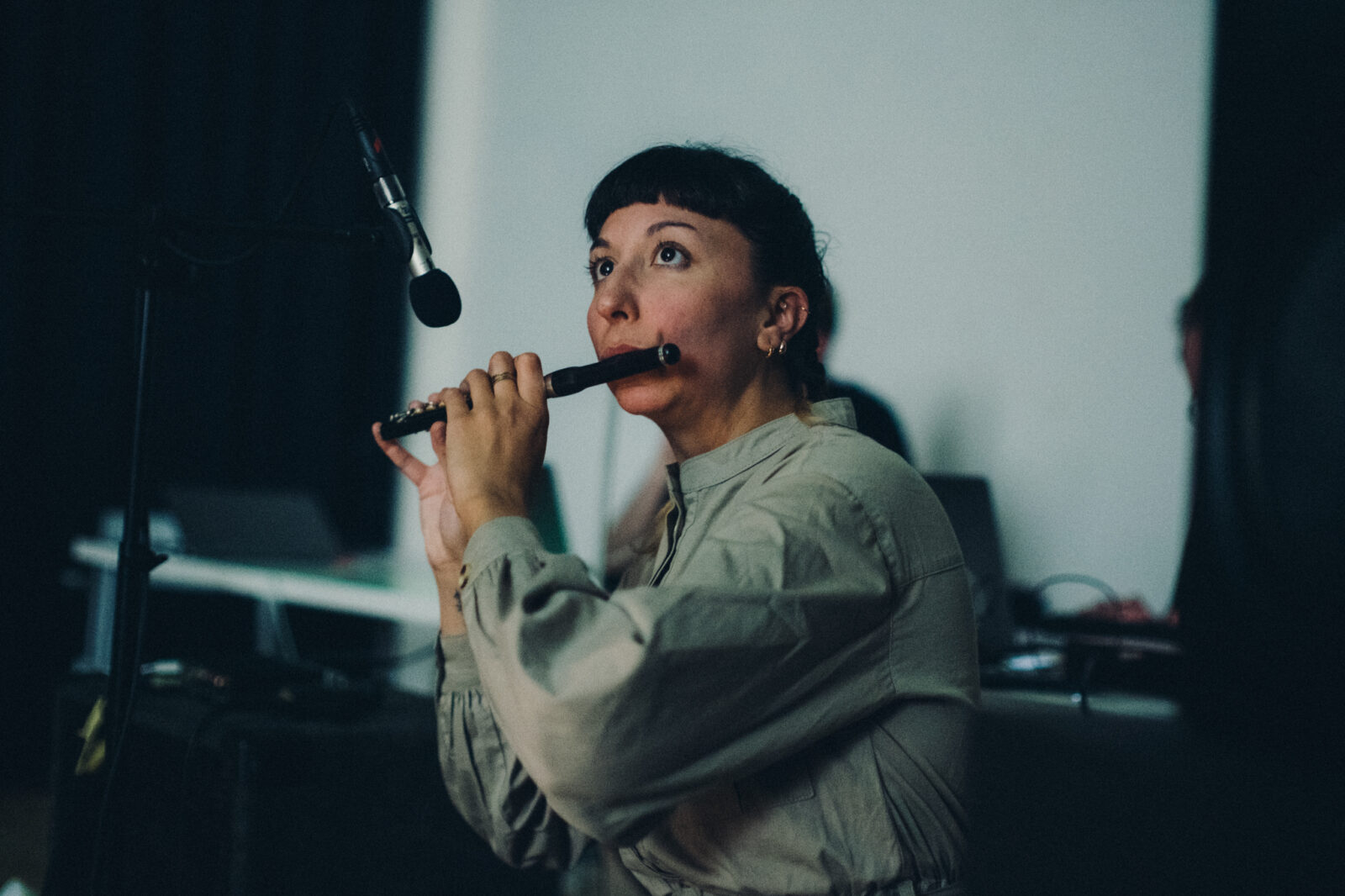
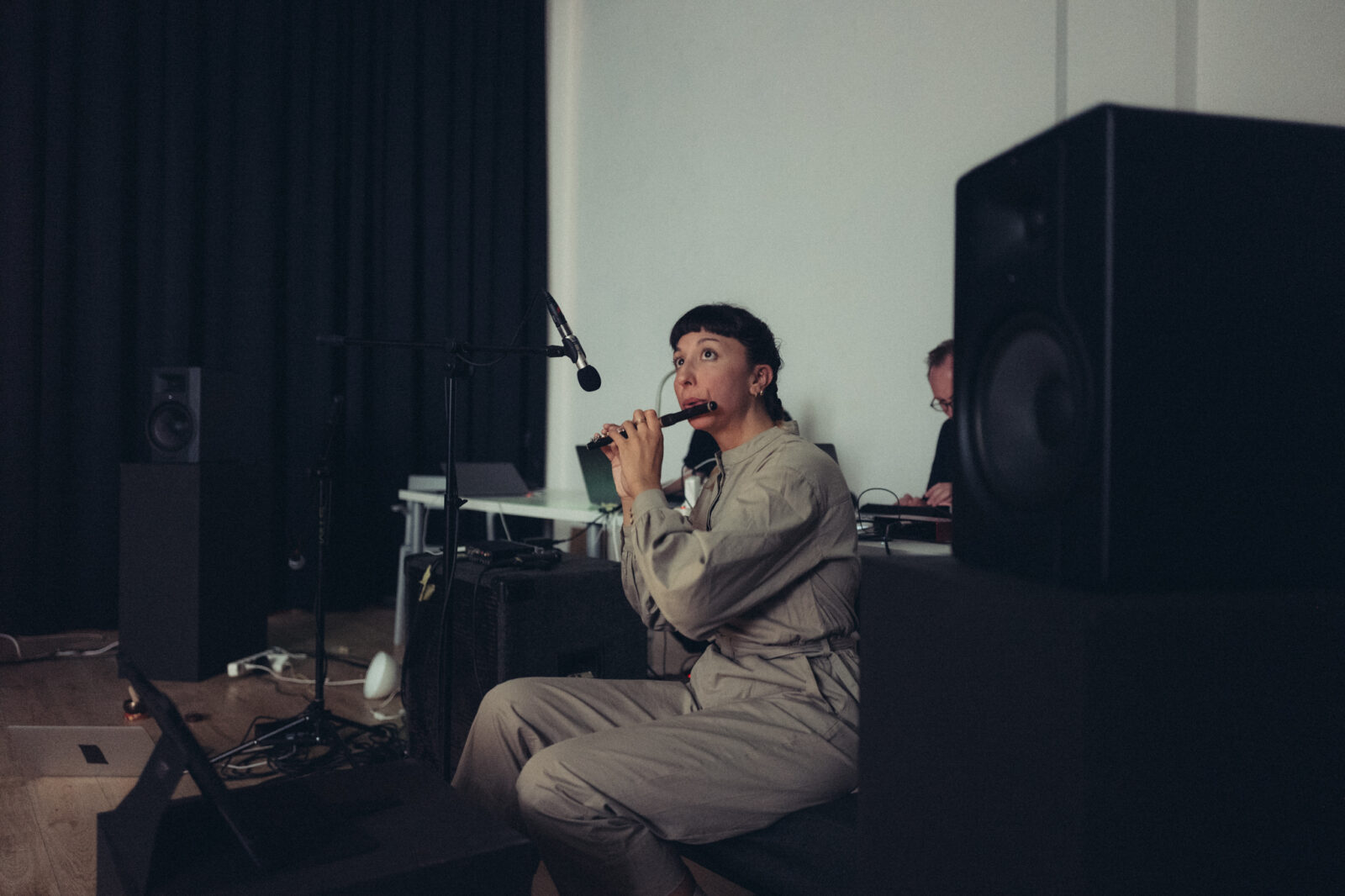
d.e.a.f. (A third ear to a silenced body) (2023)
Project combines poetry, visuals and music to voice the shadow of a silenced body. The concept grows out of a state of constricted consciousness where the mental picture is not complete. Hence, interpretation has an open path. The performance is involving the body as initiator and terminator of the sculptural process. The elements interact with each other and the musician in a dialogue of mutual exchanges, where the voice turns into a spatial sound element becoming a third ear and transcending the containing body. Allowing all the sounds to come out, the known, the unknown, the sweet, the sad, the urgent. This performance will not just be an audience stimulus, but also responds to the visual senses, in order to appeal to the ear awareness and its conditioning.
The performance involves a specific version of the piece on intimacy IIa by Ruud Roelofsen, written for piccolo and electronics in close collaboration with Romagosa.
Jakub Majchrzak
Strzał w kolano (2023)
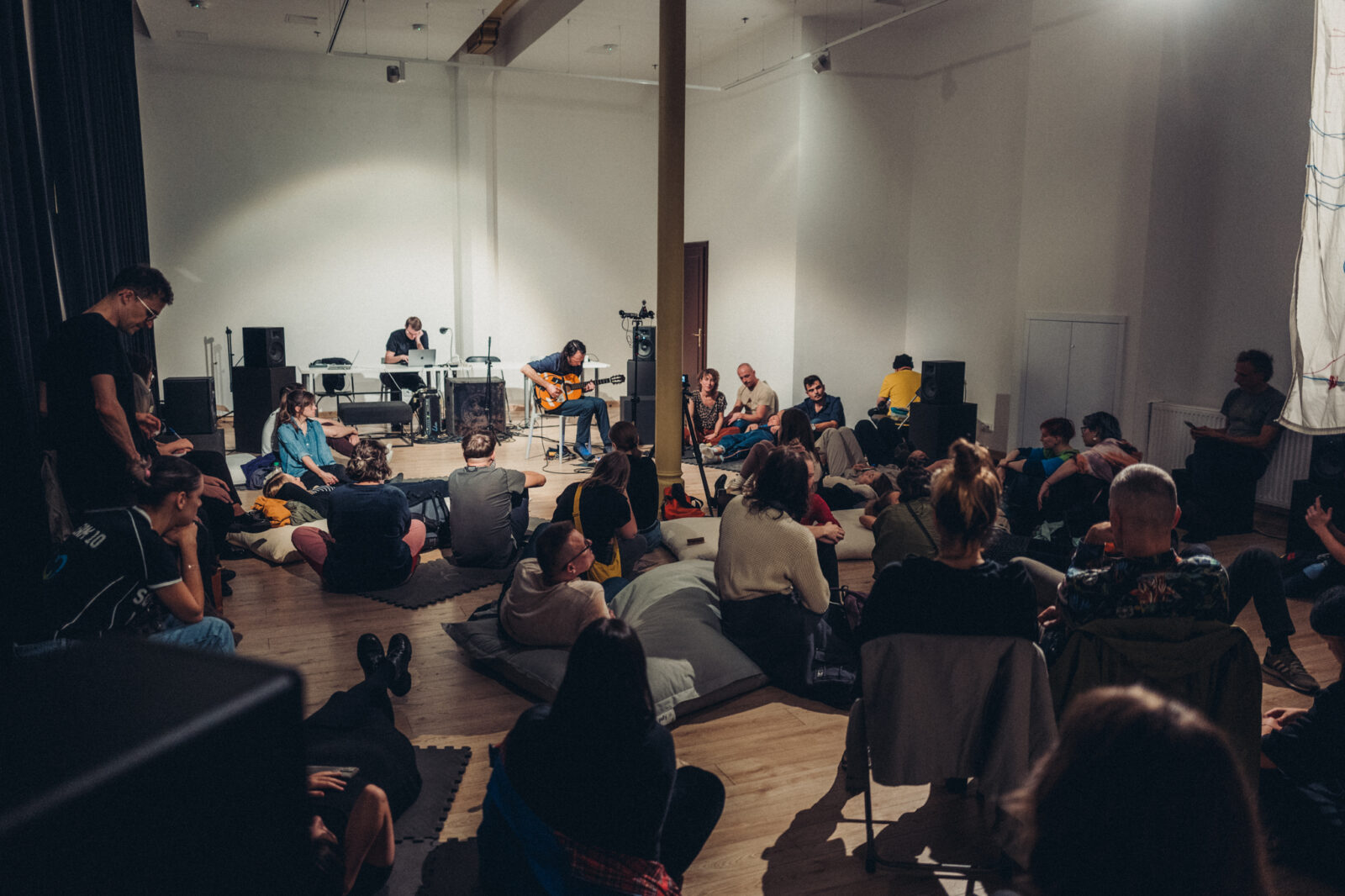
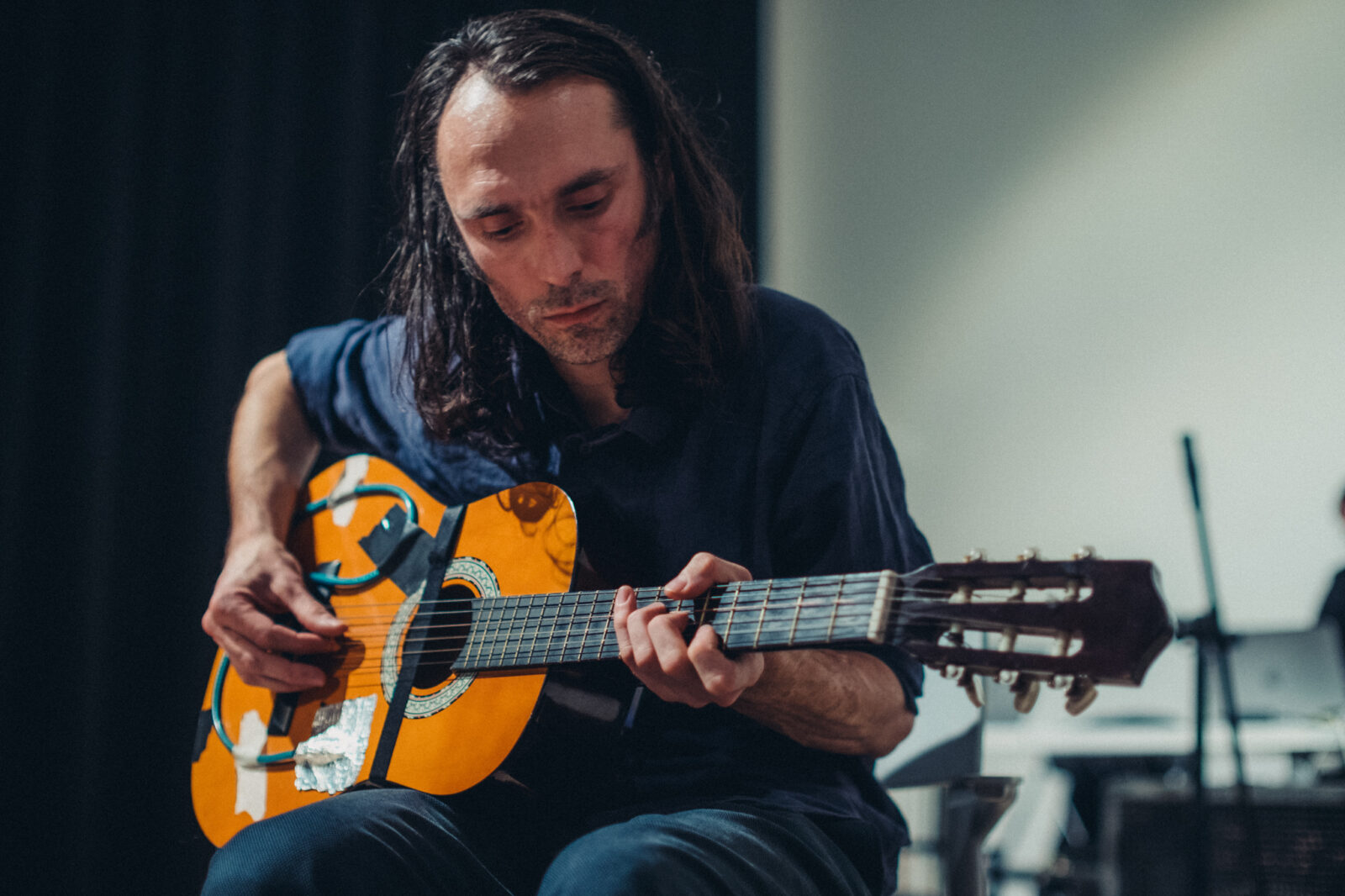
Formed at the invitation of Canti Spazializzati, this is a solo music project by Jakub Majchrzak, who until recently was active in bands such as Kurws and Przepych, and who represents Wrocław’s independent music community CRK Salka. He is preoccupied with dealing with structures that are unstable, necessary and unattainable, at the same time controllable and uncontrollable. While he considers composing as a method of tracing the paradoxes of a composition, improvisation serves to test its resilience; it is about shaking its structure. Acts of self-vandalism on the work’s grammar expanding over time. In defence of the digressive character of the music-making flow.
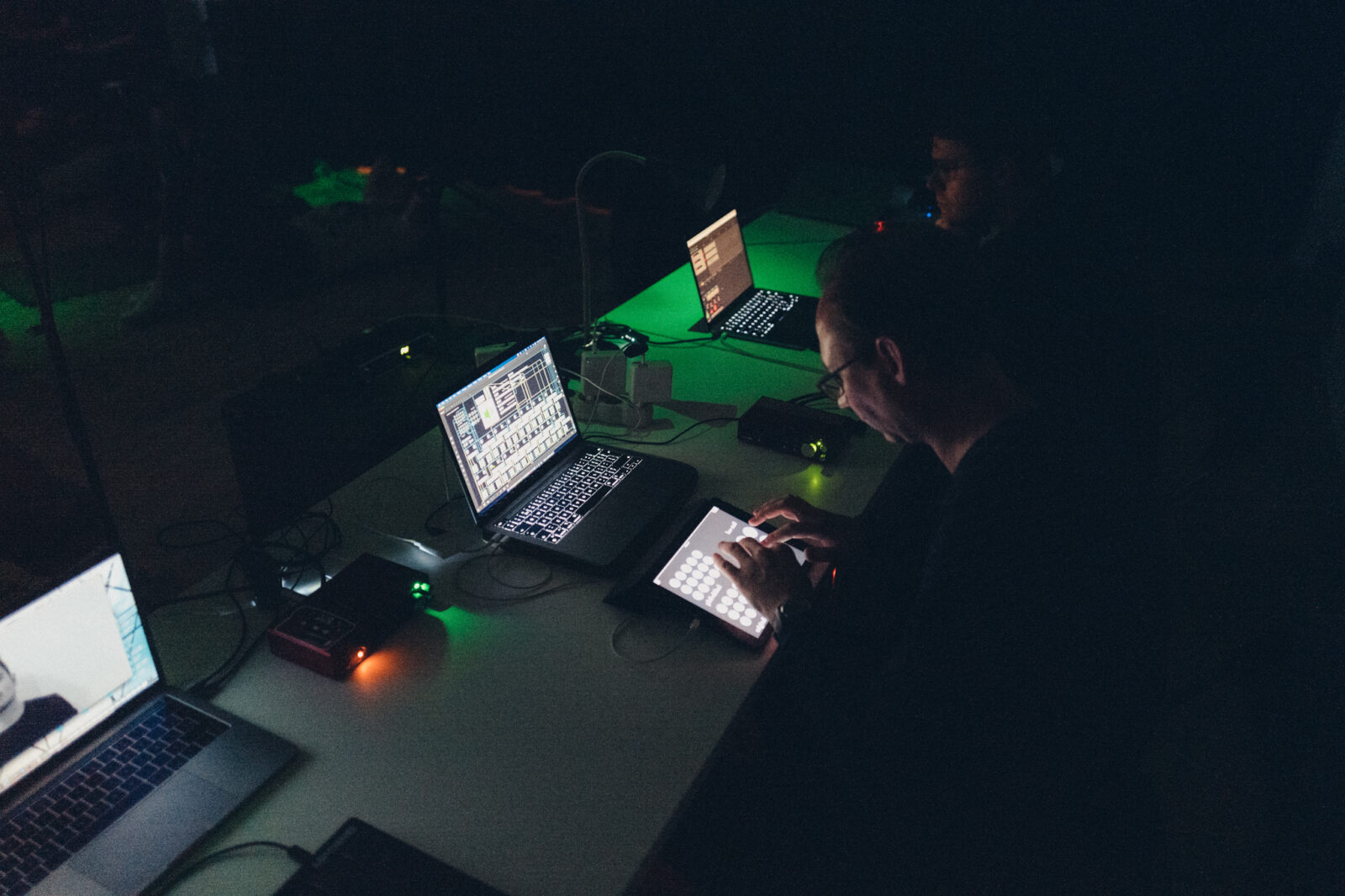
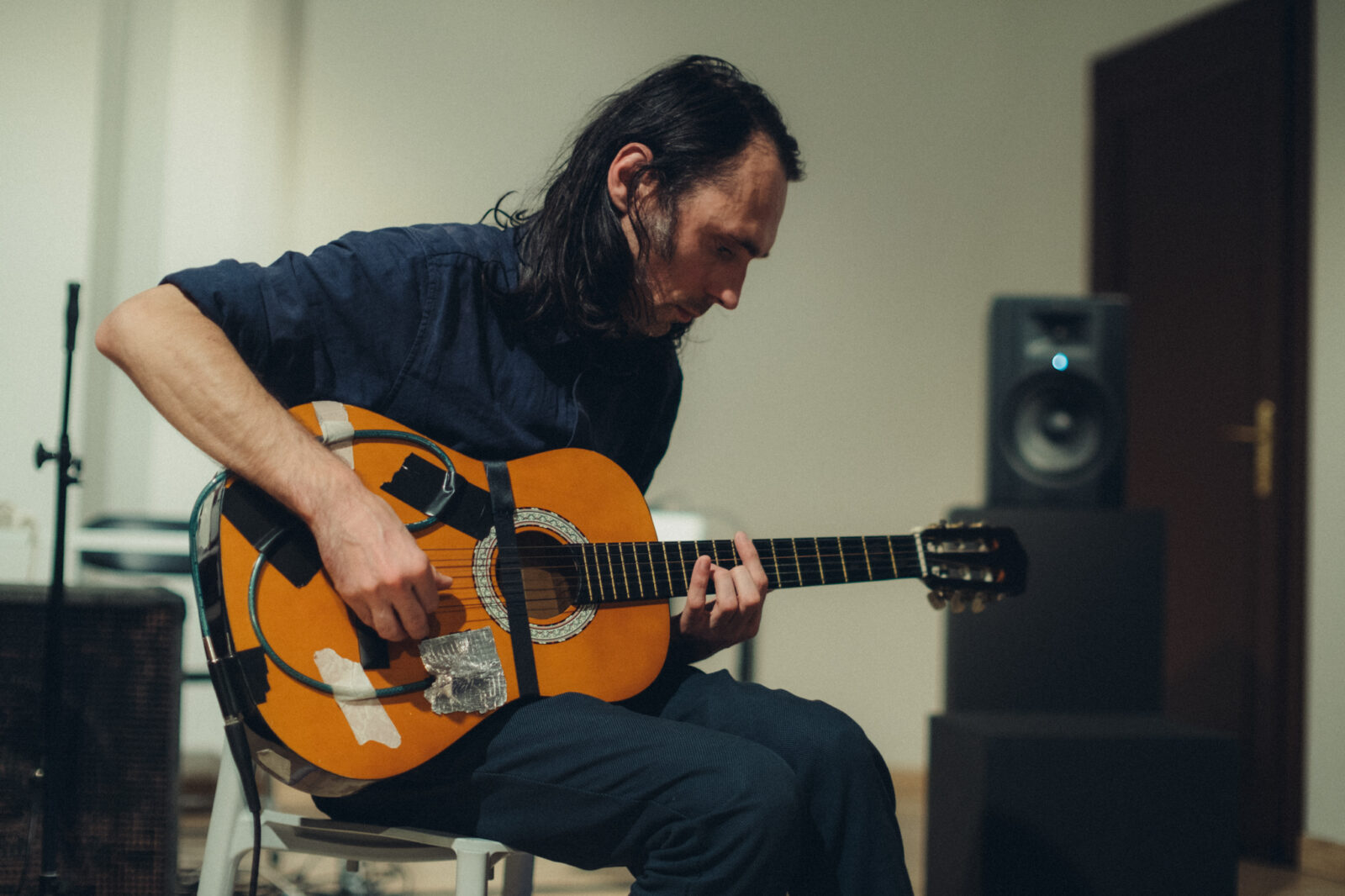
He does not usually deal with electronic music, so the quadraphonic work he chose to undertake also had to be tangible and based on his preferred conventional means – in this case, a classical guitar (quarter-tone tuned) plugged into four separate guitar amplifiers via a piezo microphone. The amplifiers’ output signals are given expressive identities by means of horizontal, vertical or still processing of the sound texture itself.
Paweł Kulczyński
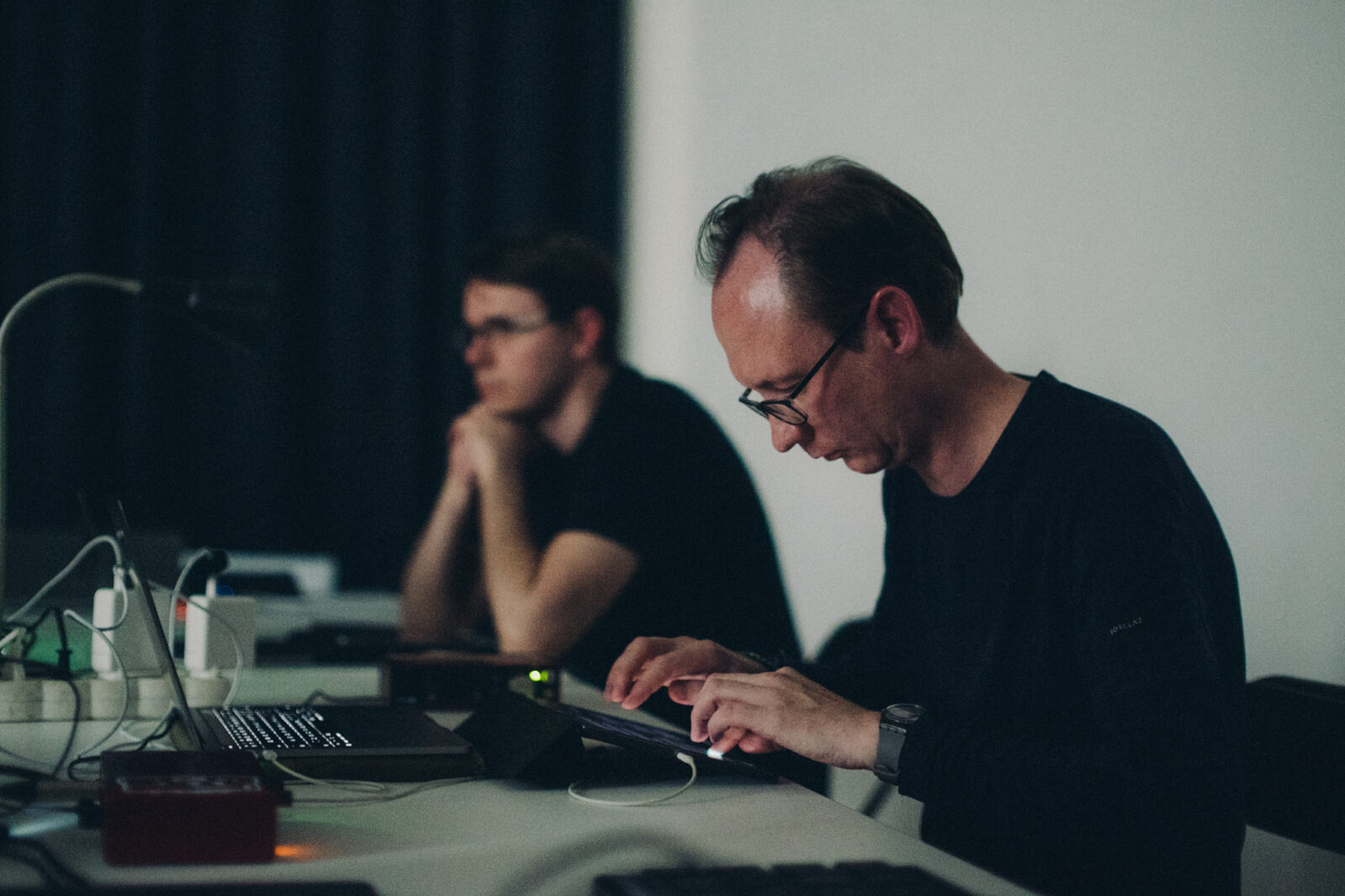
Silent Treatment (2023)
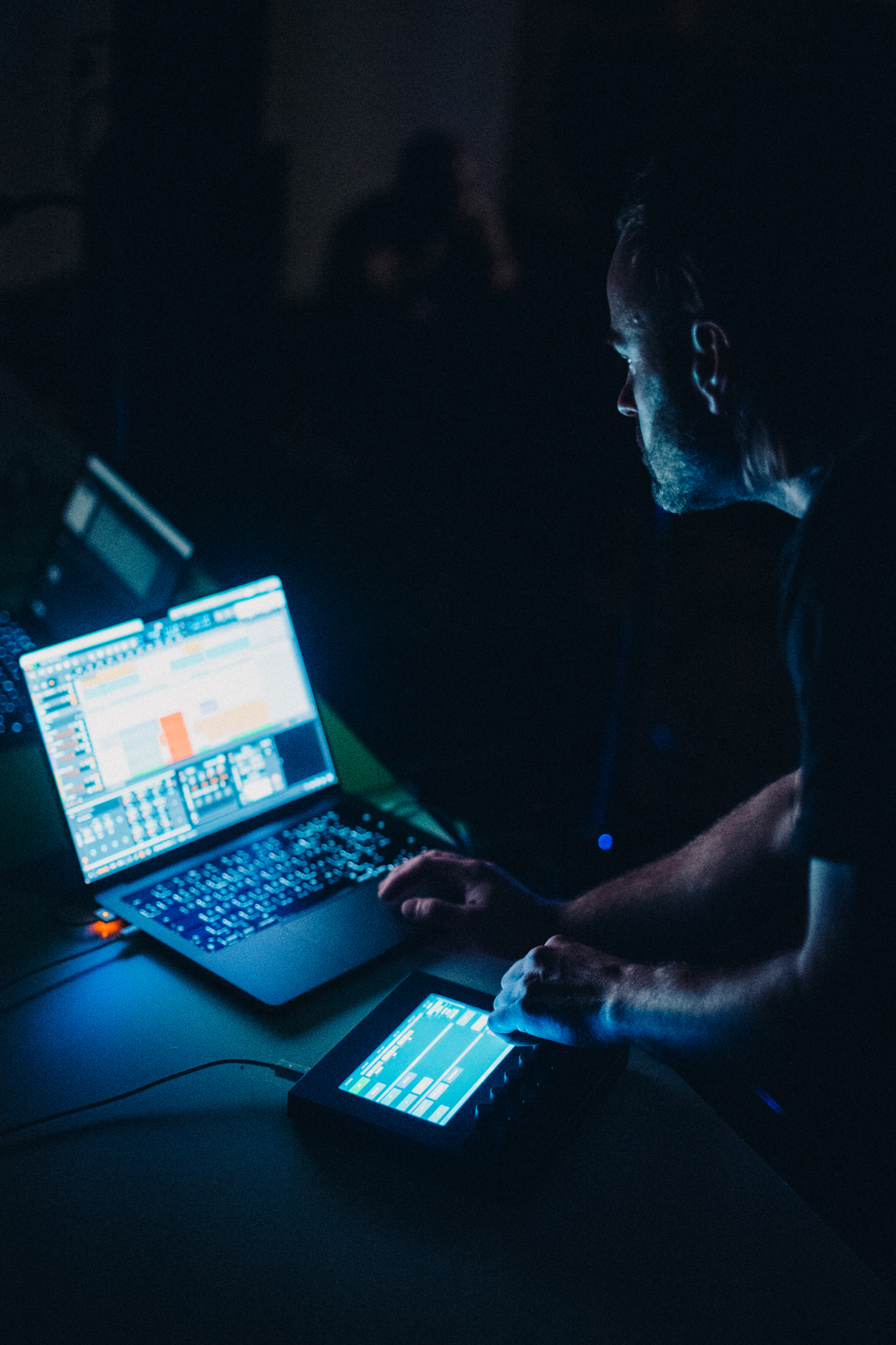
Composition developed with and around the audiosphere of the Wrocław section of the Odra River, using mic and hydrophone recordings, and the recordings of object vibrations and magnetic fields. Its narrative and sound structure draws on climate and weather processes, the activity of humans, animals and plants, and the river itself. It draws attention to the issue of the relationship between the city and the river by applying sound tools to recognise the important relationships associated with this key artery of the city.
The multi-channel concert is part of a series of compositions exploring the borderlands and interrelationships of the audiosphere of the expanding human civilisation and the adjusting natural world in the context of the climate crisis. This edition is based on field recordings made around and along the Wrocław section of the Odra River and its bridges, including the use of hydrophones and seismographs and electromagnetic wave sensors. Both minimally processed and highly modified materials are being presented, as well as those used for synthesis based on the data derived from them. They range from remote urban landscapes across the seasons to microsounds of rustling water, crumbling ice, the activities of birds, amphibians and insects, to the electromagnetic noise of urban infrastructure and the resonance of grand bridges.
The composition is prepared with spatial information built directly into the features of the synthetic instruments. Each midi note is directed and positioned in space independently of the others using a complex chain of synthesis and sound propagation, allowing individual instrumentation elements to be dispersed in a virtual, omnidirectional acoustic space. This method differs significantly from the frequent adaptation of stereo tracks to multichannel configurations and offers a refined richness of surround sound in electroacoustic compositions.
The environmental catastrophe on the Odra River in 2022 has drawn attention to the need to recognise rivers as legal personalities in public discussion. Spending time attentively by the river makes it a subject, a person, for us. The state of meditating on the apparent ‘nothing going on’, of listening to the soundscape above and below the surface of the water, gazing into its depths, is part of the practice of deep listening. In the multichannel electroacoustic composition of Silent Treatment, the spectral aspect is important, both in the quoted and modified field recordings and in the synthetic instrumental elements. Many of the timbral, harmonic and narrative transformations take place in slow motion, and similar phenomena can be seen in the audiosphere of the city as perceived from the perspective of the river. Organic micro-tunings of unevenly tempered scales introduce multiple resultant tones and instability in slowly evolving clusters. Some fragments of the recordings, seemingly static, were recorded during the slow rotation of the microphone ensemble, resulting in a clear animation of the perceived space and changing sound planes. All the components of the composition are united in an arbitrarily defined, abstract and unreal acoustic space, in which the elements of instrumentation move freely and intertwine with field recordings in varying proportions, creating an absorbing auditory universe inspired by the Odra River in Wrocław.
The composition was created as part of the 2023 Mayor of Wrocław Scholarship.
ABOUT THE ARTISTS
Monika Szpyrka
Composer born in Krakow in 1993. Her creative interests revolve around themes of concealment, the “acoustic microscope” and methods of the intertwining of simplicity and complexity. Her works have been performed at Polish and foreign concerts and festivals, including: Spor, Maerz Musik, Heroines of Sound, MFMW “Warsaw Autumn”, Sacrum Profanum, Musica Electronica Nova, Musica Polonica Nova, Pulsar Festival, International Summer Courses of New Music in Darmstadt, YCM. She has collaborated with Aarhus Sinfonietta, E-MEX Ensemble, Ensemble Modern, Ensemble Recherche, KNM Berlin, Matthias Geuting, NJYD Quartet and Orkest de Ereprijs, among others. She also participated in workshops: Donaueschinger Musiktage Next Generation (2016), SYNTHETIS (2016, 2017). In 2022, her composition “Part among Parts” represented Polish Radio and received first place in the “Young Composers” category at the 68th International Rostrum of Composers in Palermo. She is also a recipient of the Ministry of Culture and National Heritage Scholarship for the best students (2017), as well as the Sapere Auso Scholarship (2017/18) and the Scholarship for the Promotion of Creativity from the Danish Koda Kultur Fund (2018, 2022). She trained at the Royal Conservatory of Music in Aarhus under Juliana Hodkinson, Niels Rønsholdt and Simon Steen-Andersen. In 2023 she defended her doctorate with distinction under the direction of Anna Zawadzka-Gołosz at the Krzysztof Penderecki Academy of Music in Krakow.
Mar Sala Romagosa
Mar Sala Romagosa is a Polished-Belgium based artist dwelling between the sonic and visual disciplines. She explores the boundaries of the multidisciplinary performance within a sonic framework. As a musiciantrained, she holds the piccolo solo position at Wrocław philharmonic orchestra (PL), is a founding member of Nemø ensemble (BE), and former member of Ictus and Spectra academy ensemble (BE). She has performed in festivals such as Opera Festival (Rotterdam), Rewire (The Hague), Darmstädter Ferienkurse, Bach Festival (Gent), En Avant Mars (Gent), Mixtur Festival (Barcelona), La Biennale (Venice), De Link Nieuwe Muziek Festival (Tilburg), Transit Festival (Leuven), Ear to the ground (Ghent), and Cement Festival (‘s Hertogenbosch). Mar Sala has also collaborated with and premiered creations from Vladimir Gorlinsky, Christophe Guiraud, Ellen Jacobs, Joan Arnau Pàmies, Annalies Van Parys, Pietro Dossena, among others.
Jakub Majchrzak
(b. 1982) Independent musician associated with the environment of Wroclaw’s CRK Salka and video artist. Active on the DIY music scene for two decades in bands (including Kurws, Przepych, Nuremberg, Pustostany) and outside them (composing under the name Shot in the Knee or improvising under his own name). He has participated in several residency programs, one of which resulted in the Życia Żółć project. He has played almost 500 concerts in most European countries (including Primavera Sound
Festival, Avant Art Festival, SOTU Festival, Stellar Swamp Festival, DomOFFon, SURVIVAL Art Review, Out of Smth) and a month-long tour of both the European and Asian parts of Russia. With his bands he has recorded 8 albums and one single, co-produced and made guest appearances on albums by Barłóg and Ukryte Zalety Systemu (Hidden Advantages of the System).
Paweł Kulczyński
Musician, experimenter and sound artist, author of outdoor concerts, sound installations and theater music. He uses complex methods of synthesis, composition and spatial sound projection, and conducts workshops and sound walks. He is interested in the social and spatial aspects of music, the phenomenology of the audiosphere, acoustics, random events and conceptualism. He creates electronic avant-garde music at the intersection of genres, with an idiom that is difficult to identify. His latest works include themes of mass extinction, planetary mourning and climate crisis. He collaborates with leading festivals and institutions in Poland and abroad. He has performed at festivals including: Unsound in Krakow, New York, Toronto and Bishkeku, Sacrum Profanum, CTM Berlin, Primavera Sound and Gwangju Biennale.
EVENT
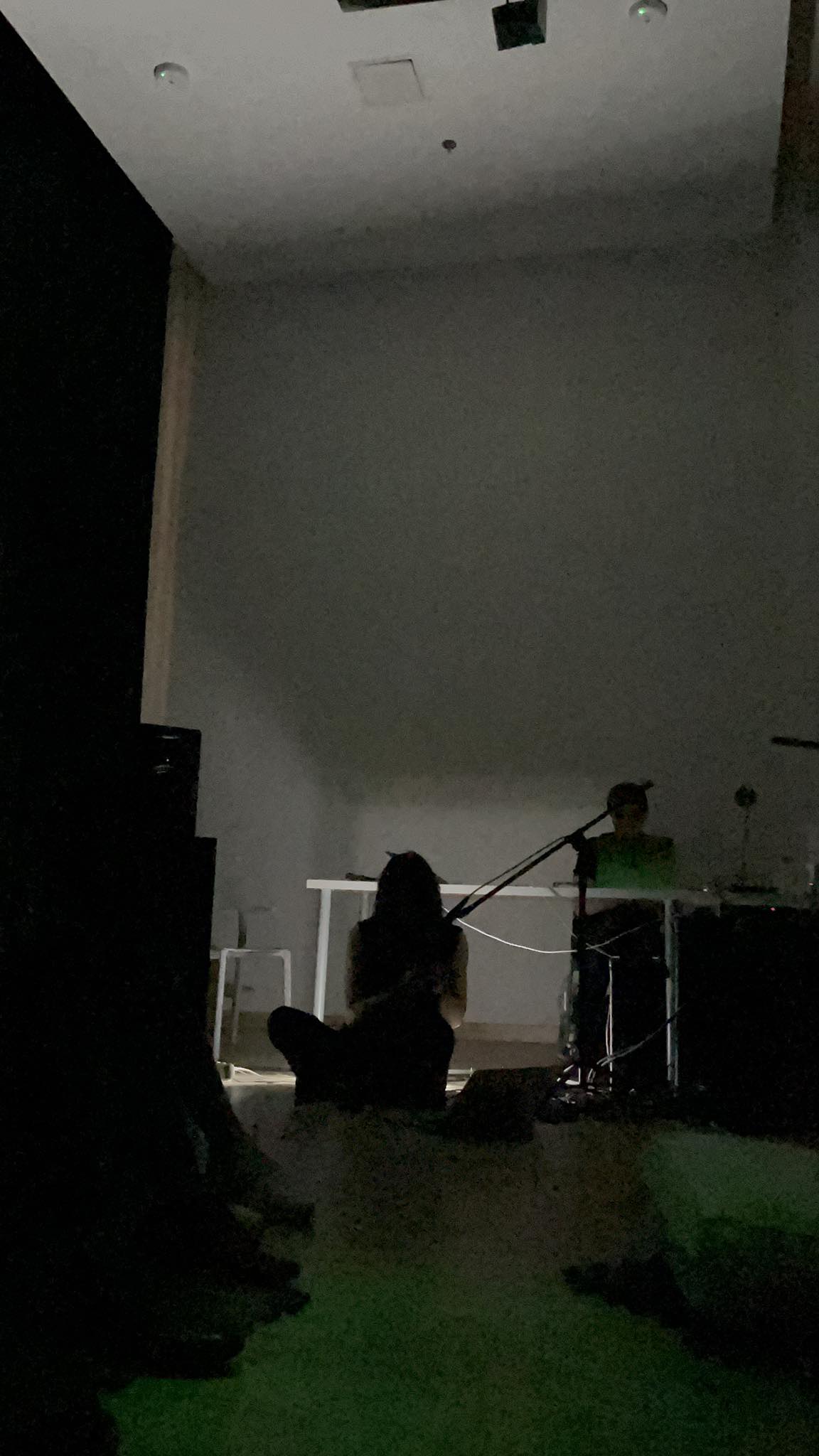
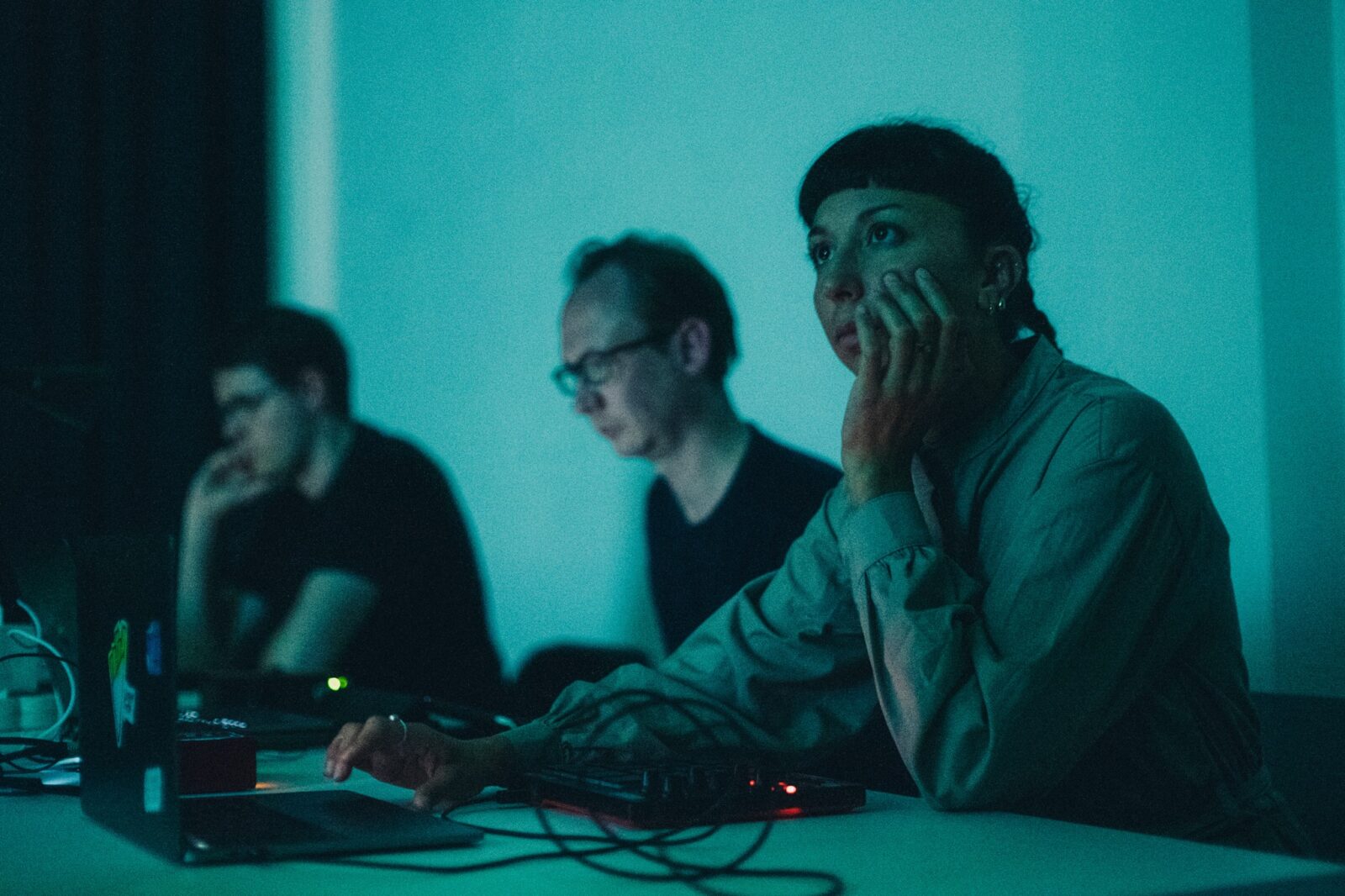
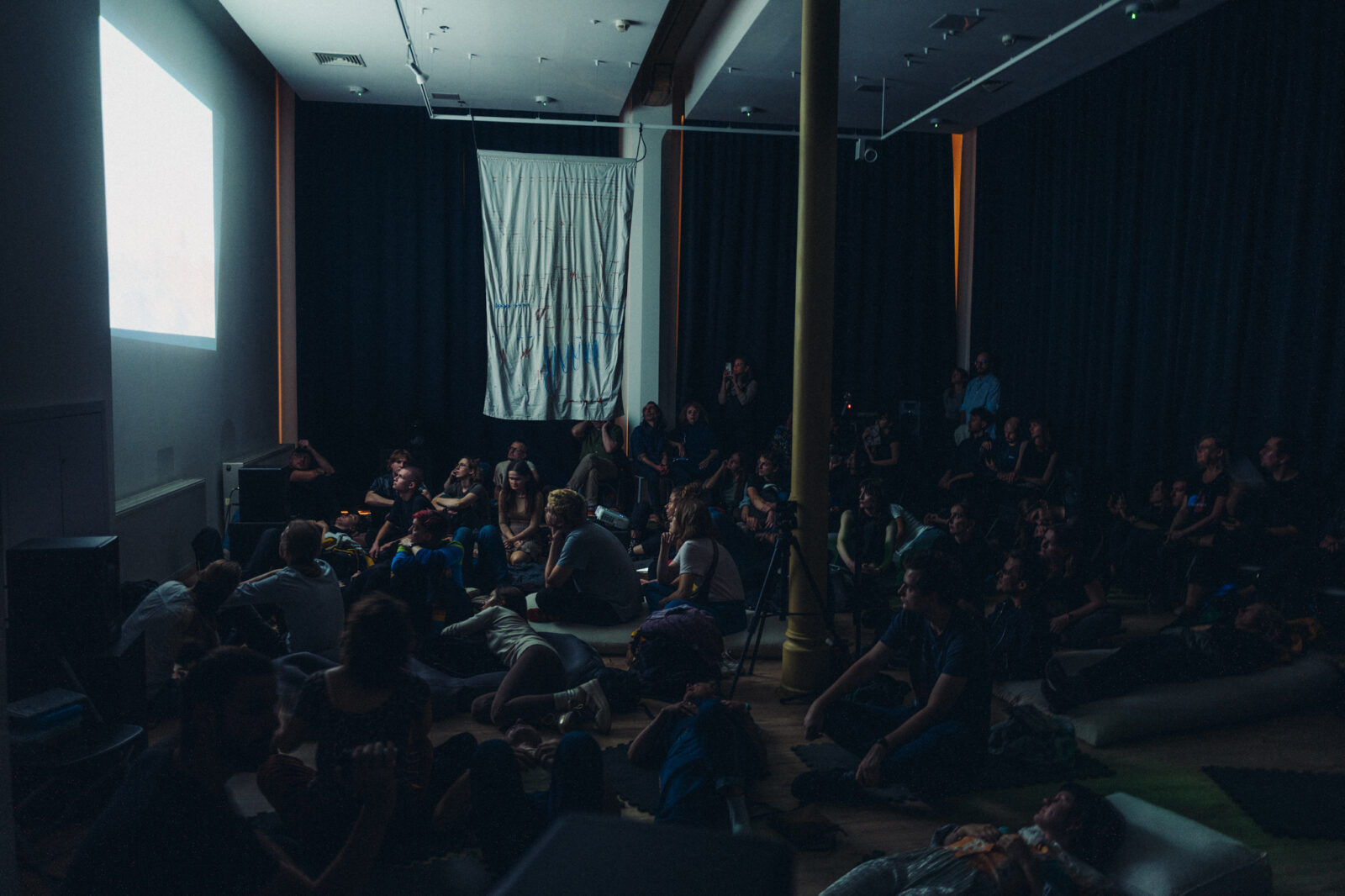
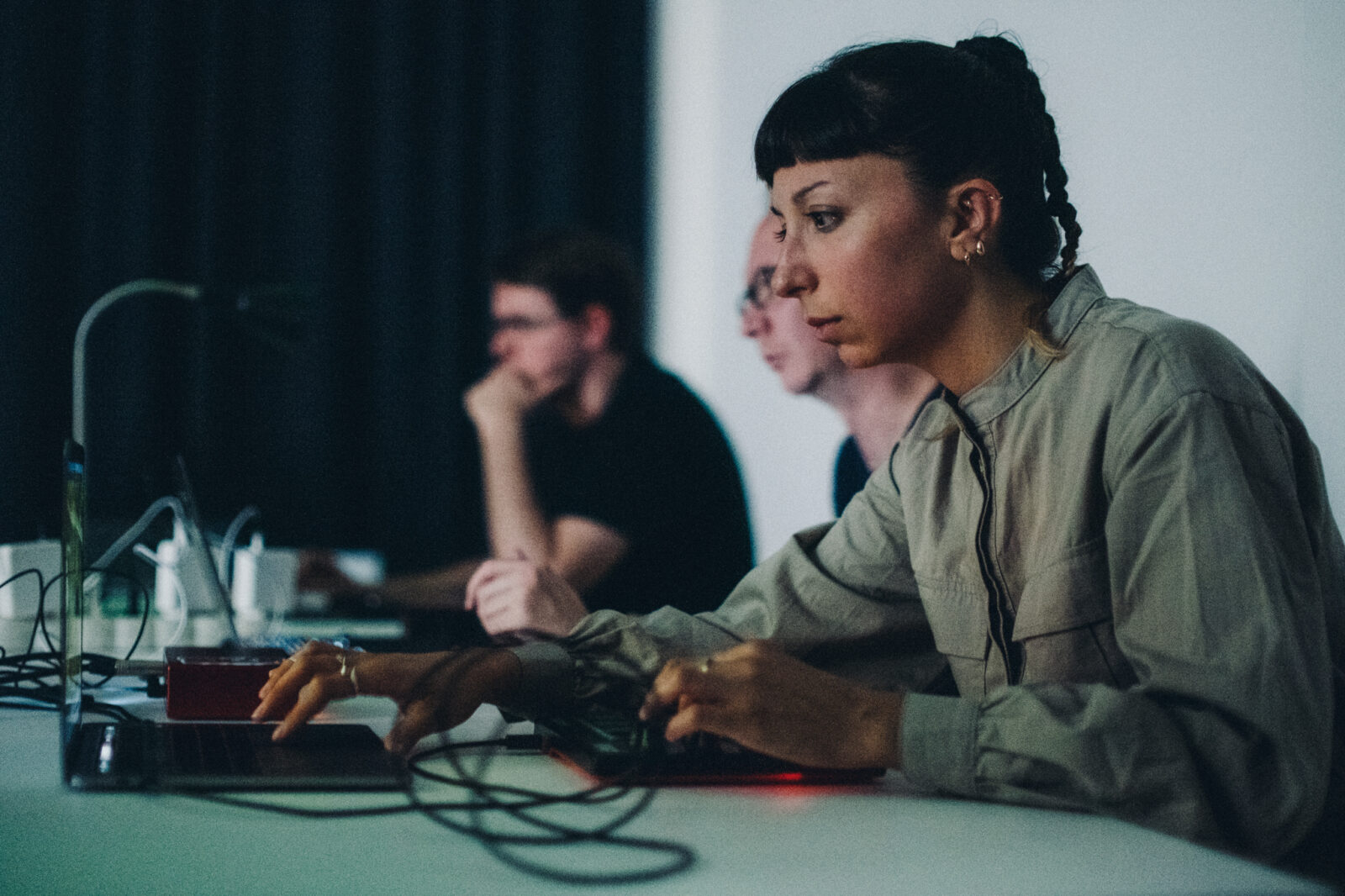
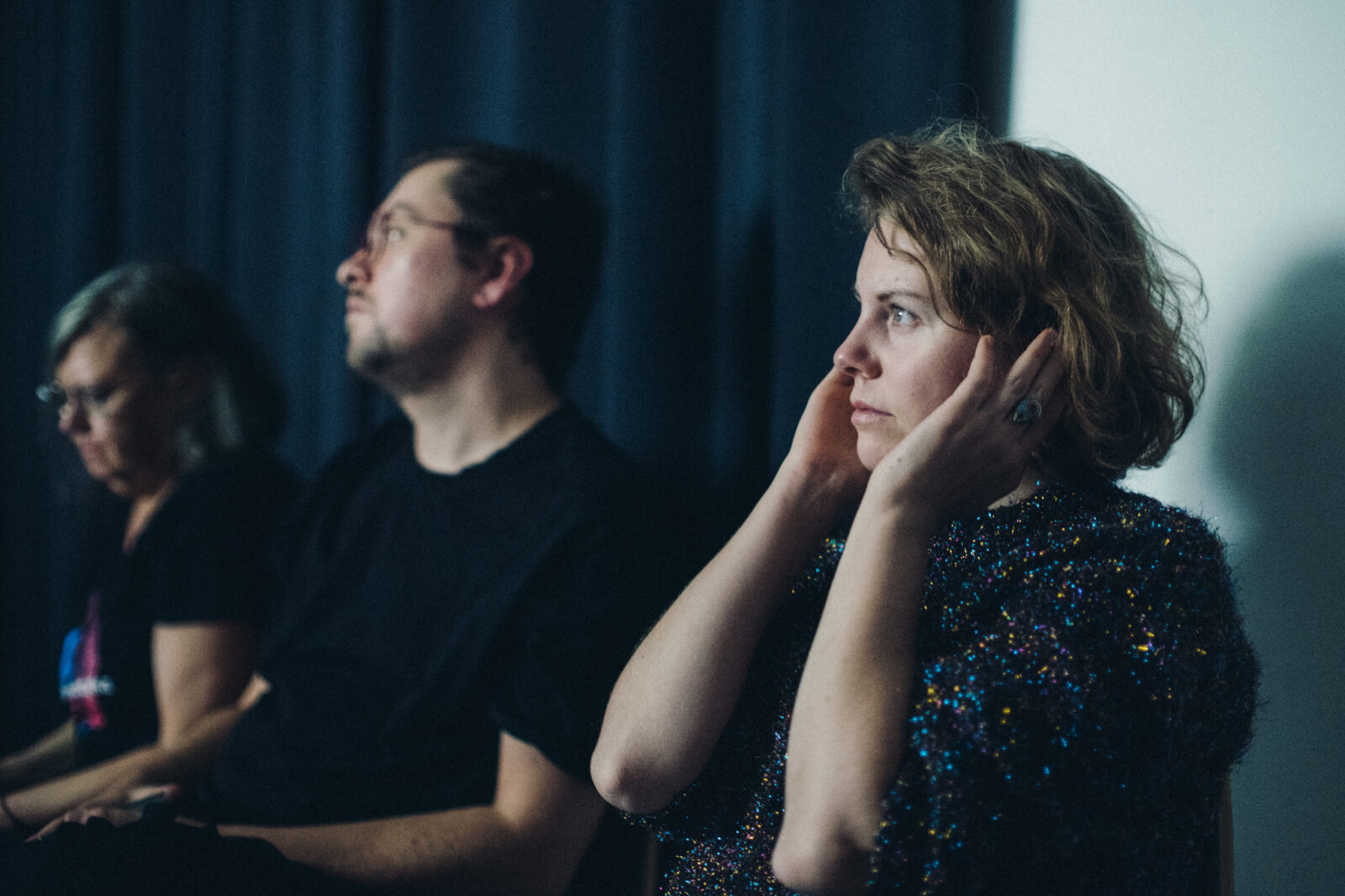
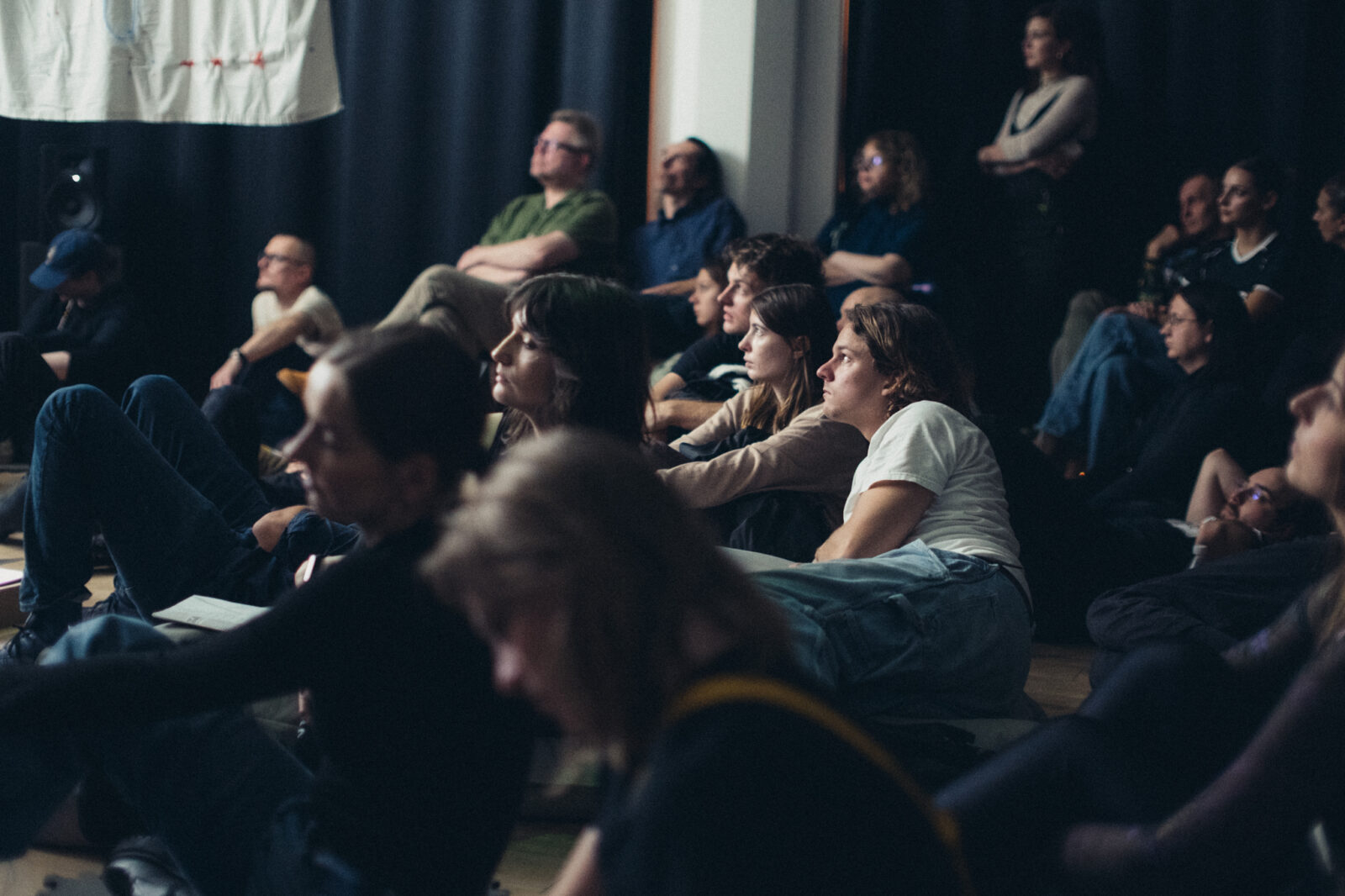
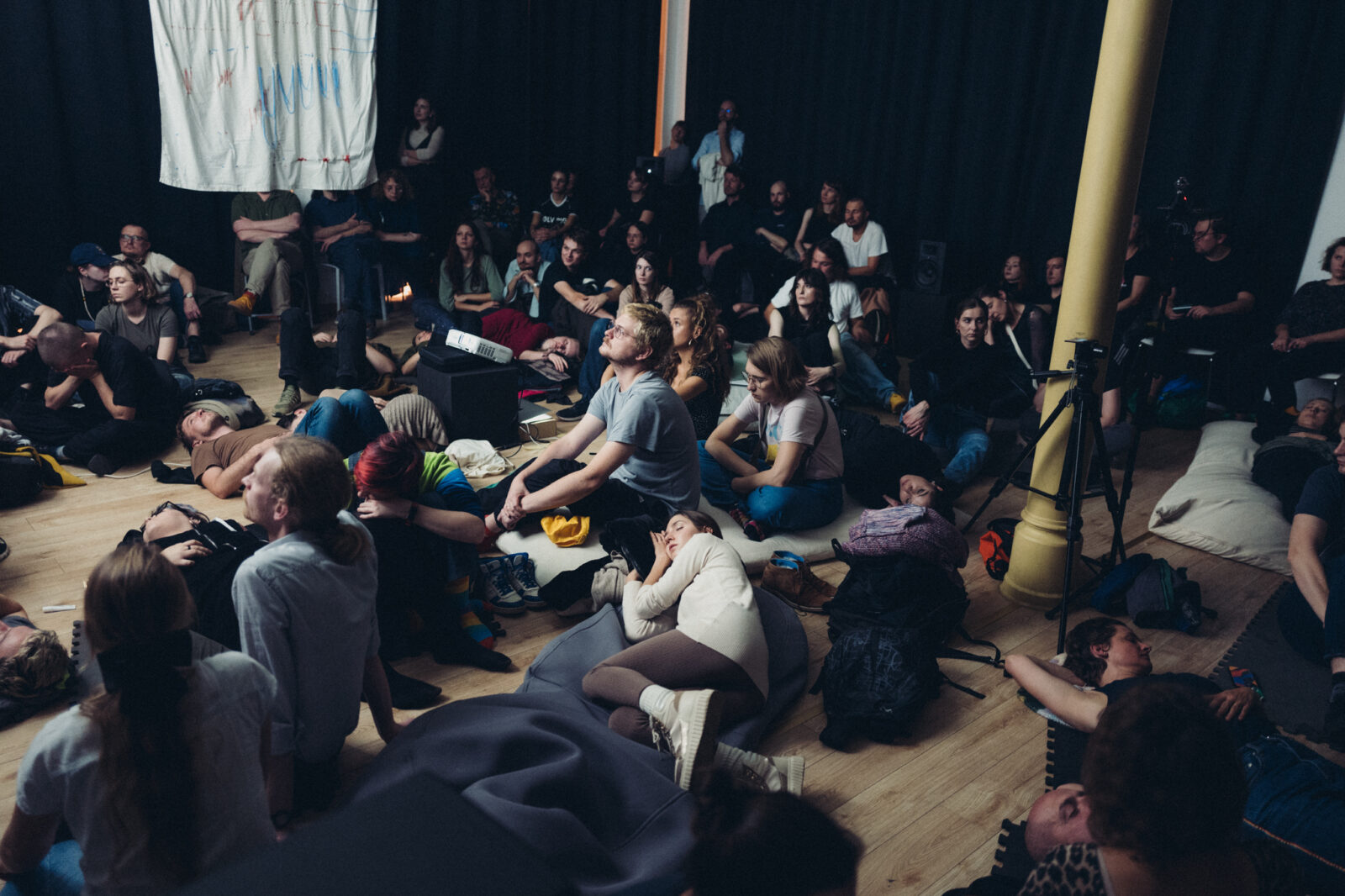
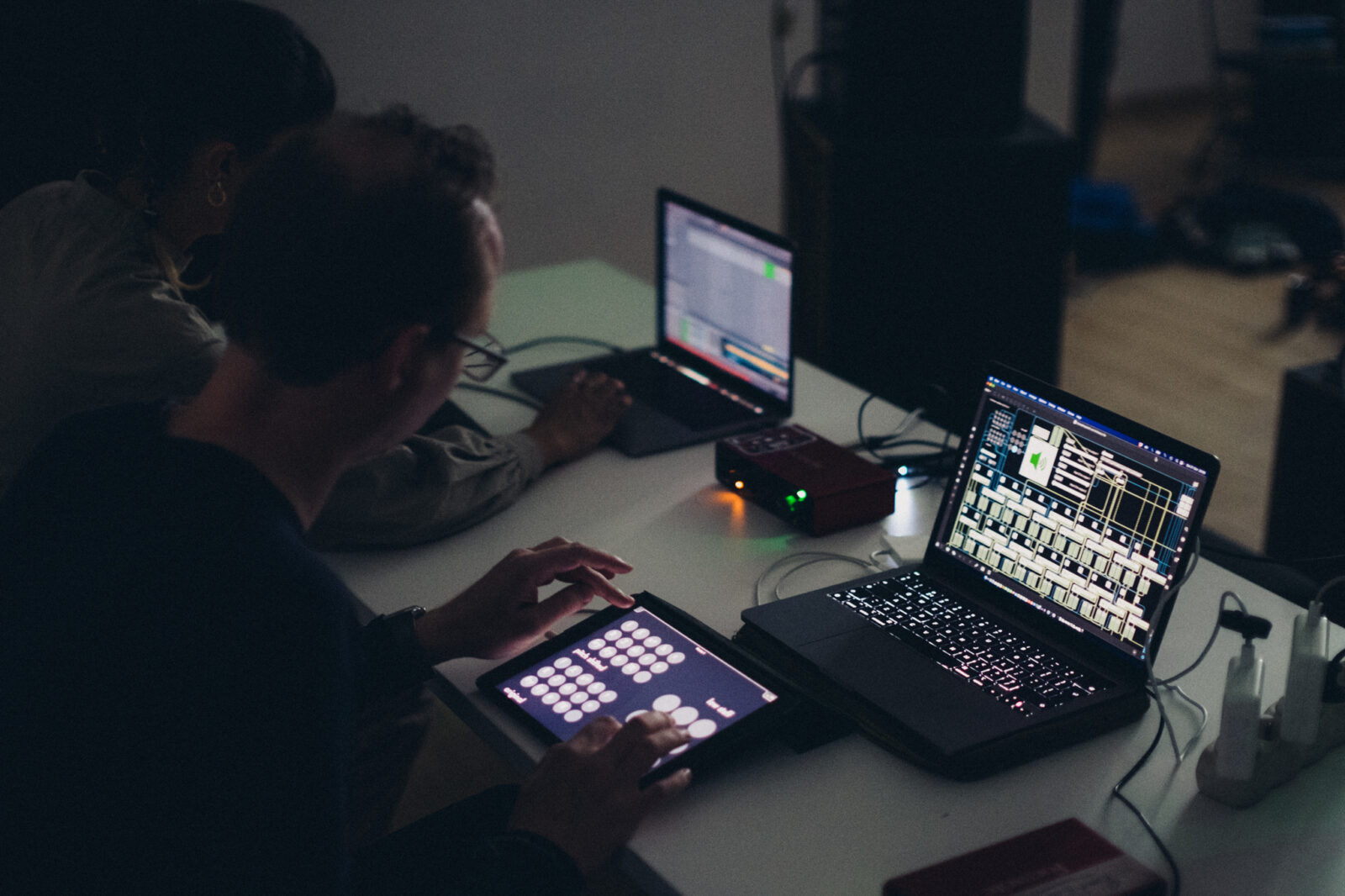
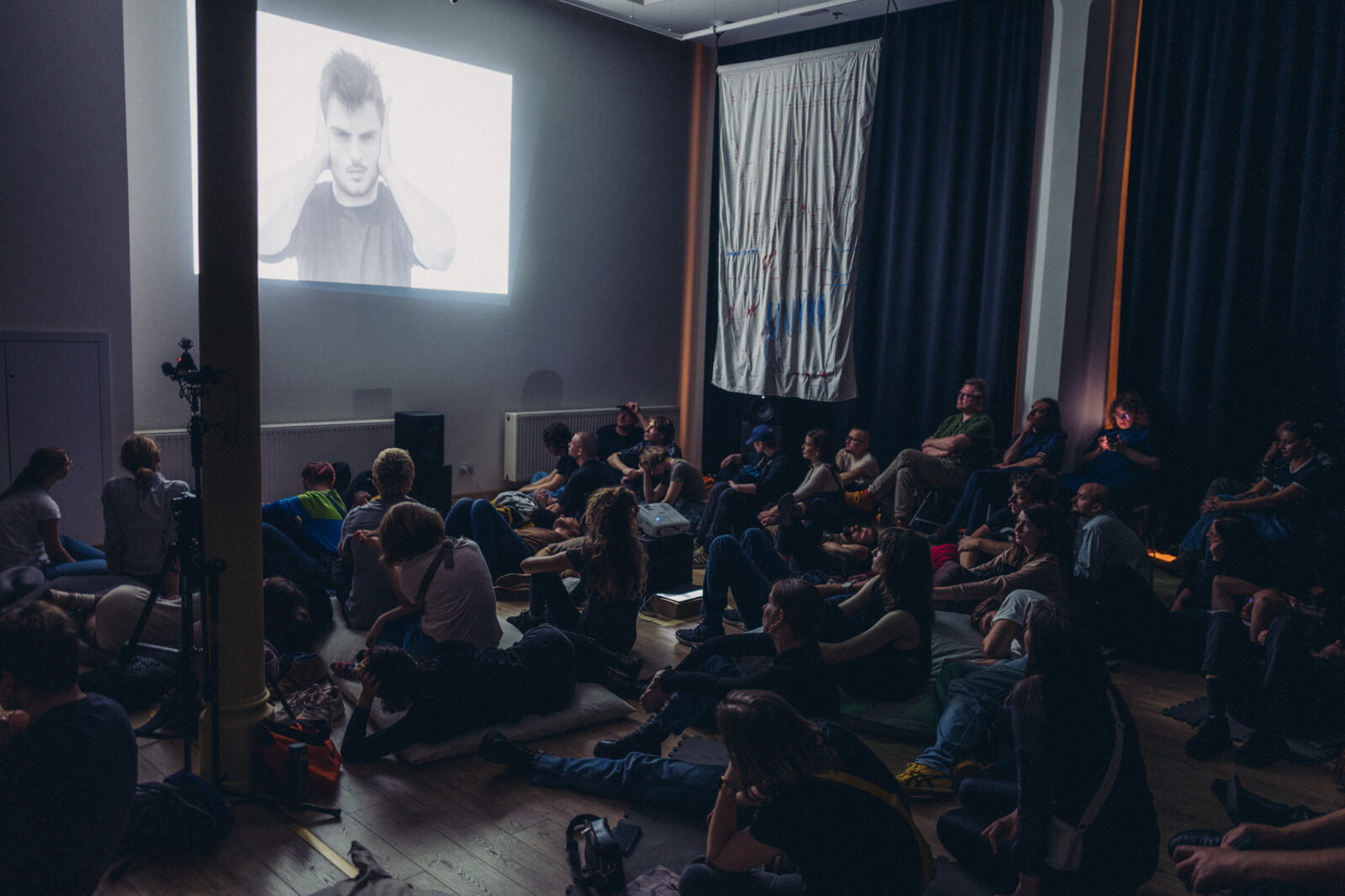
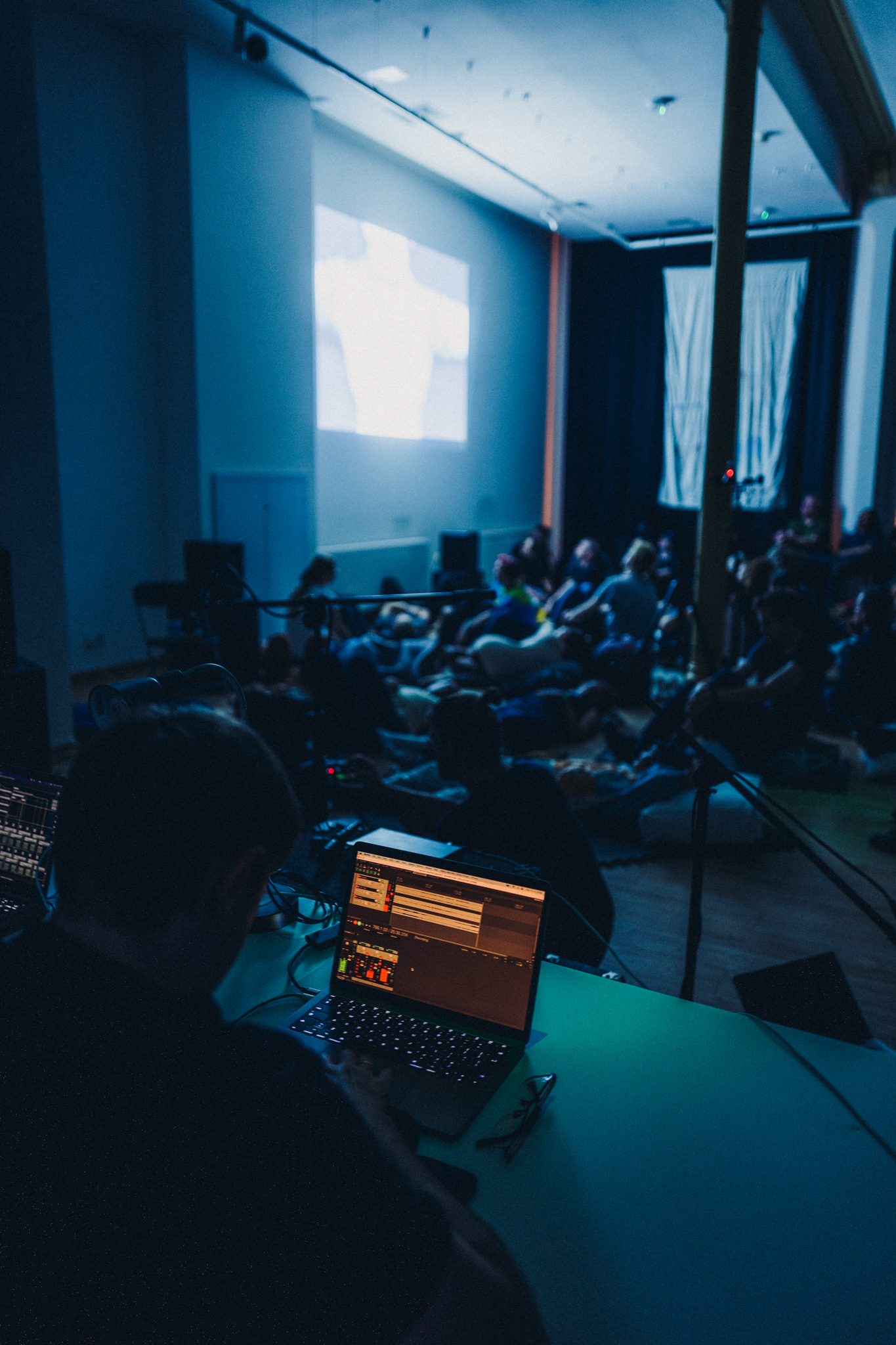
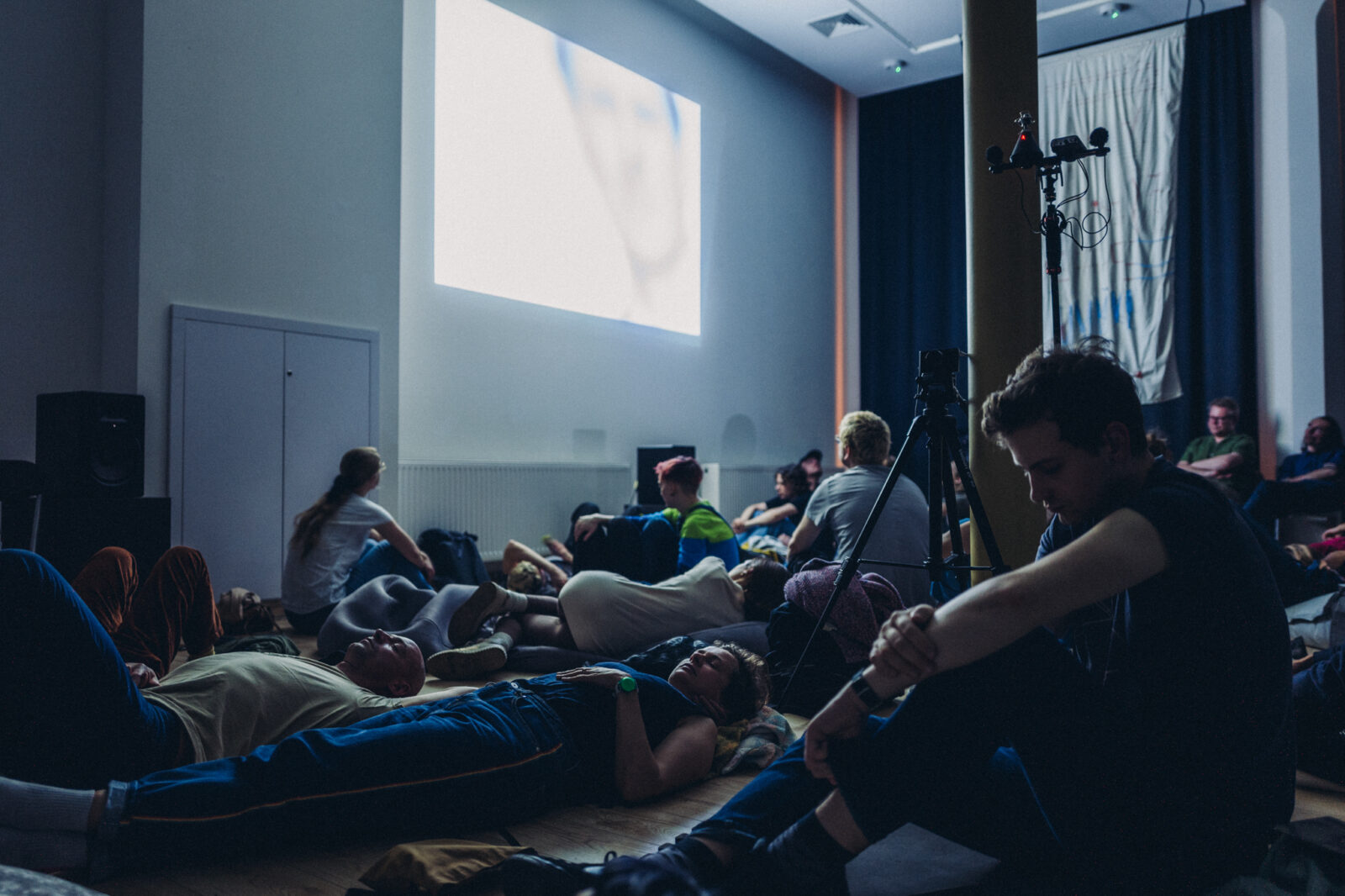
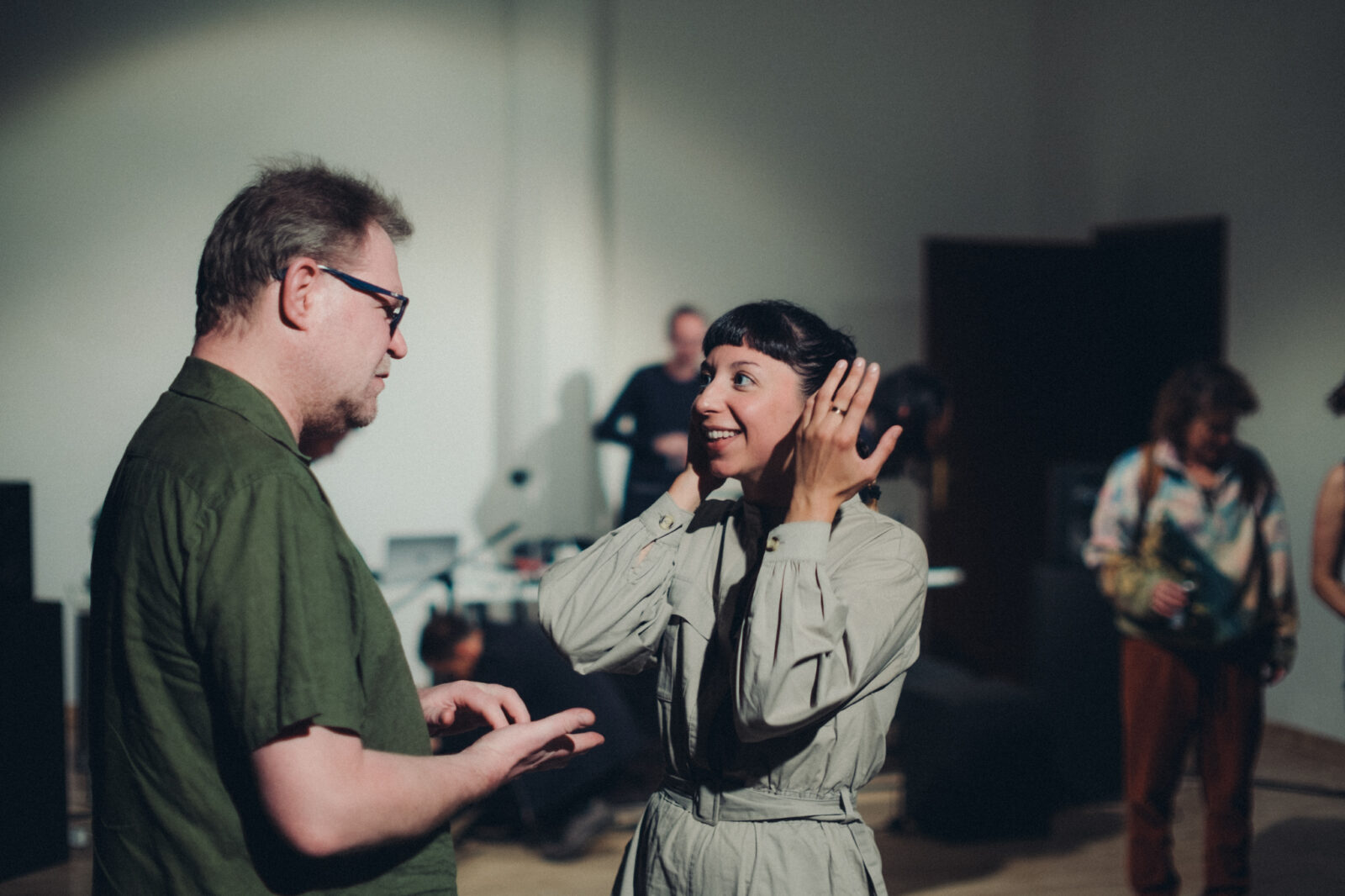
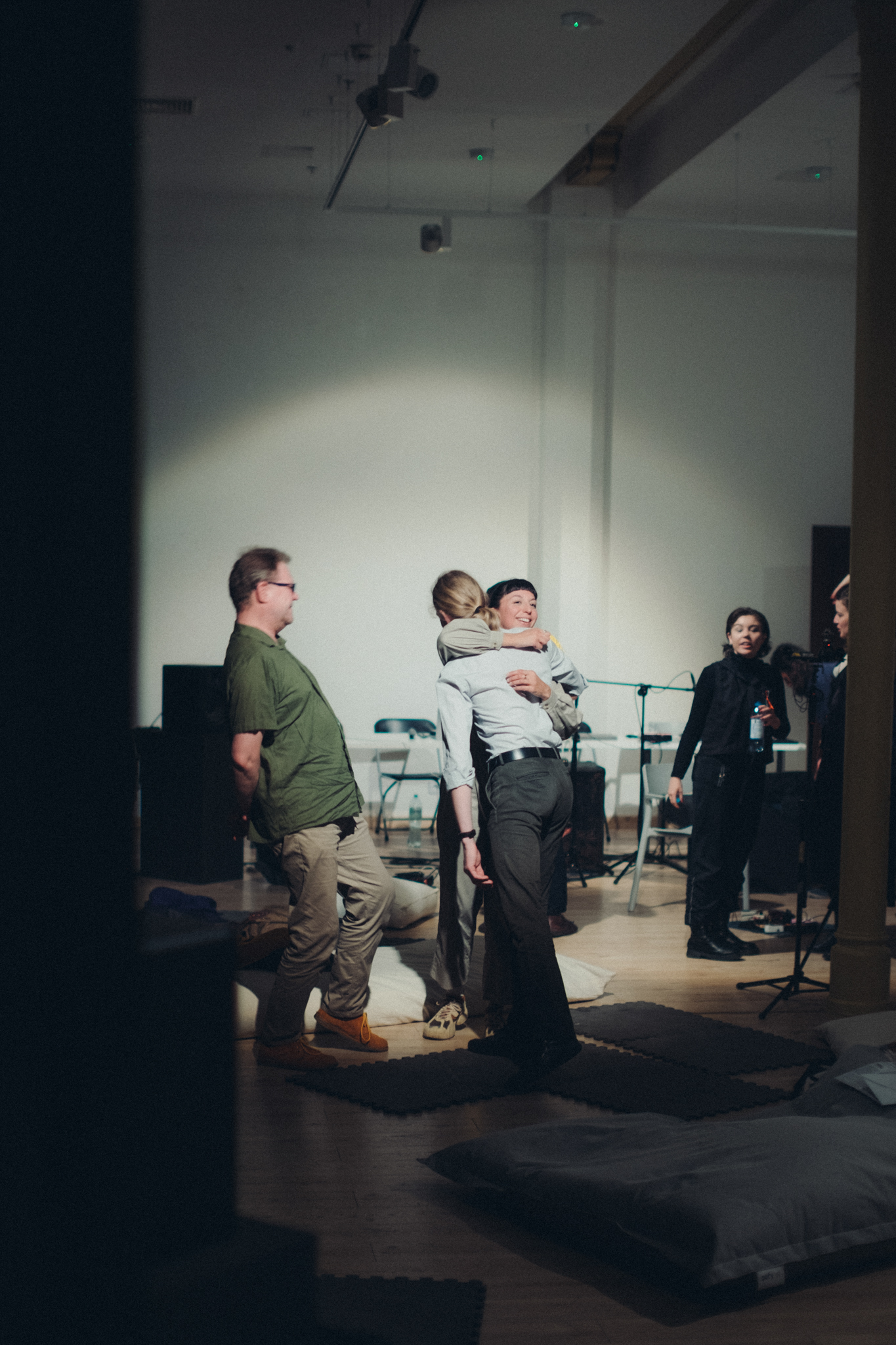
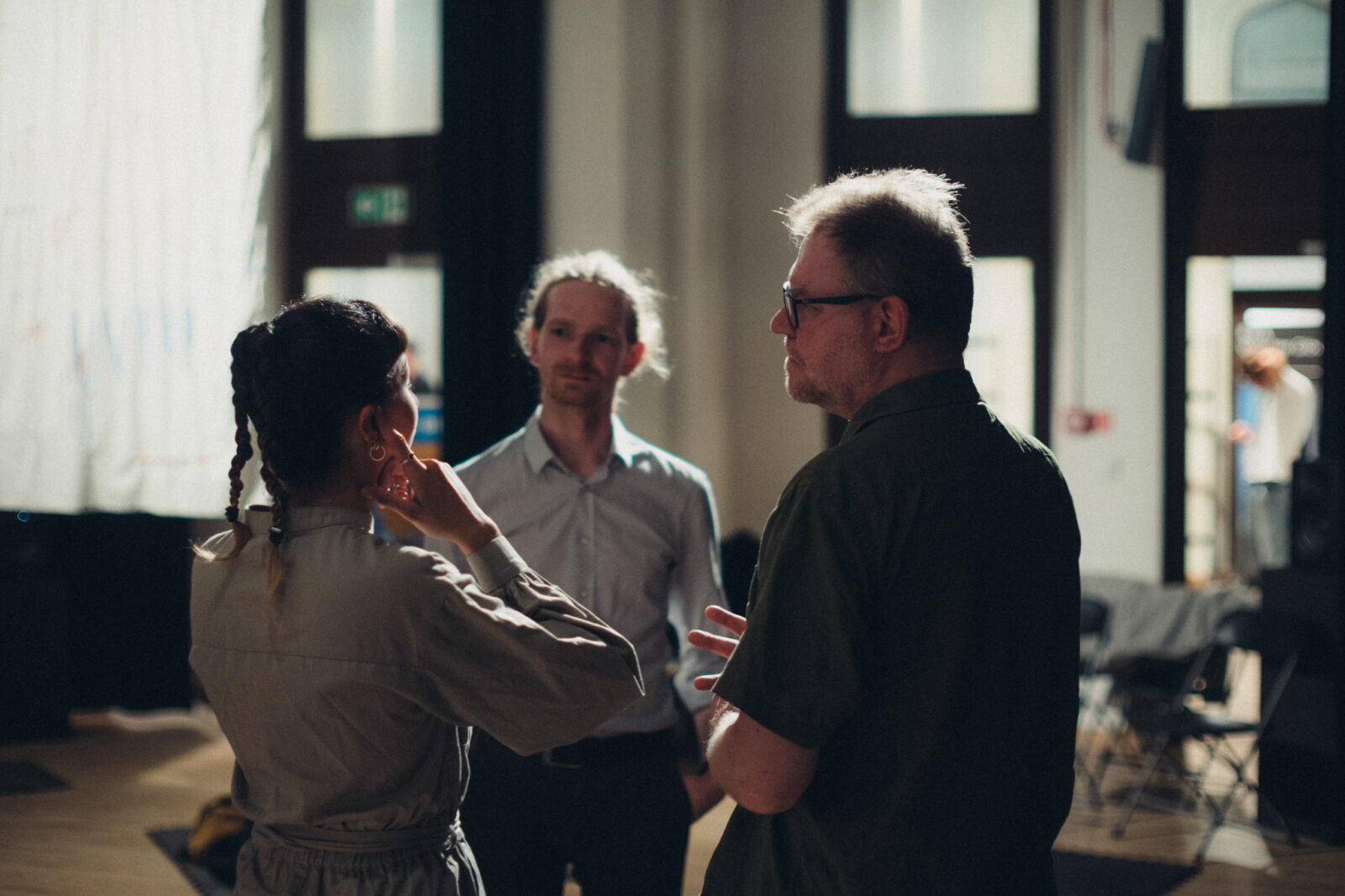
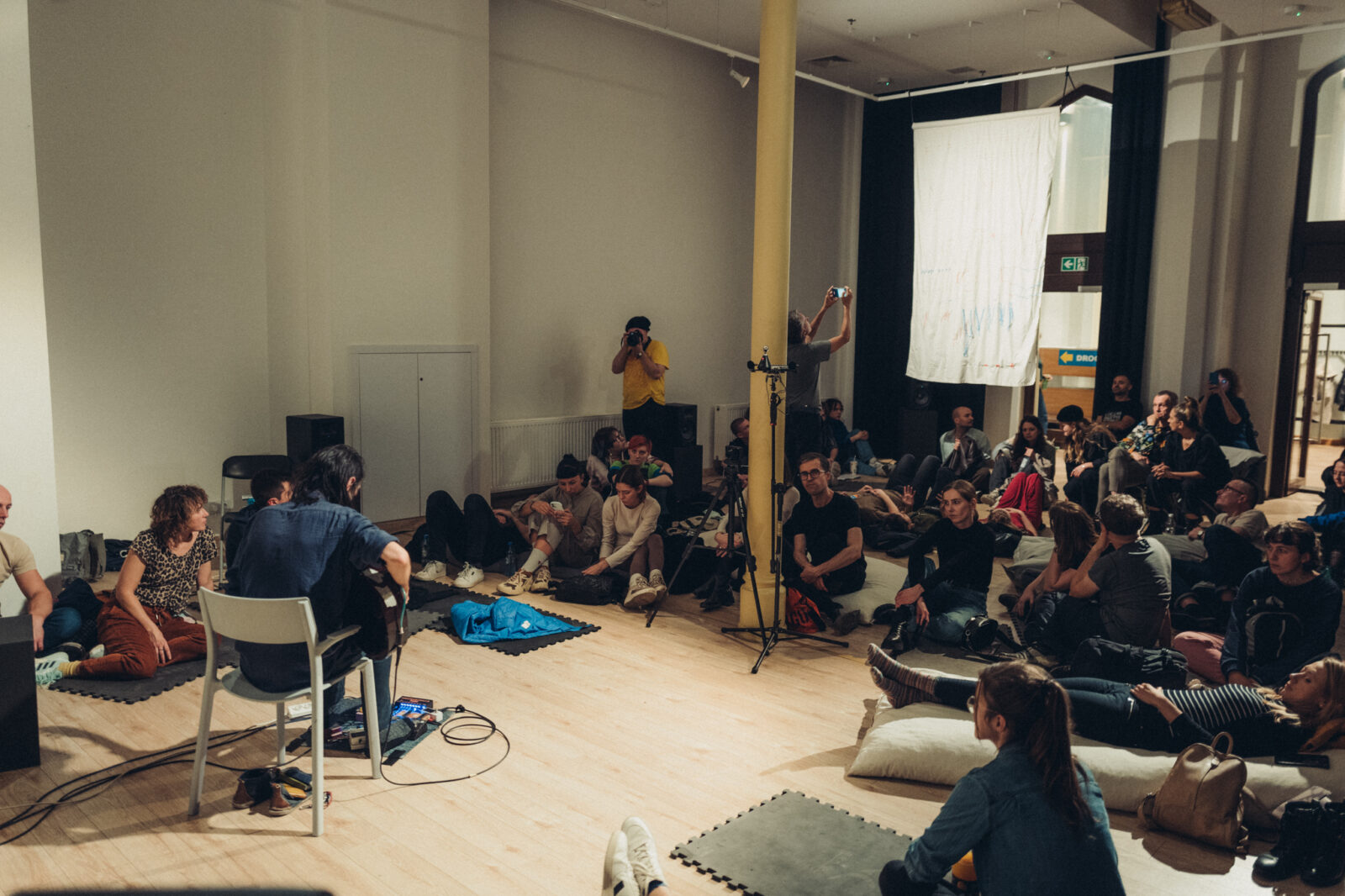
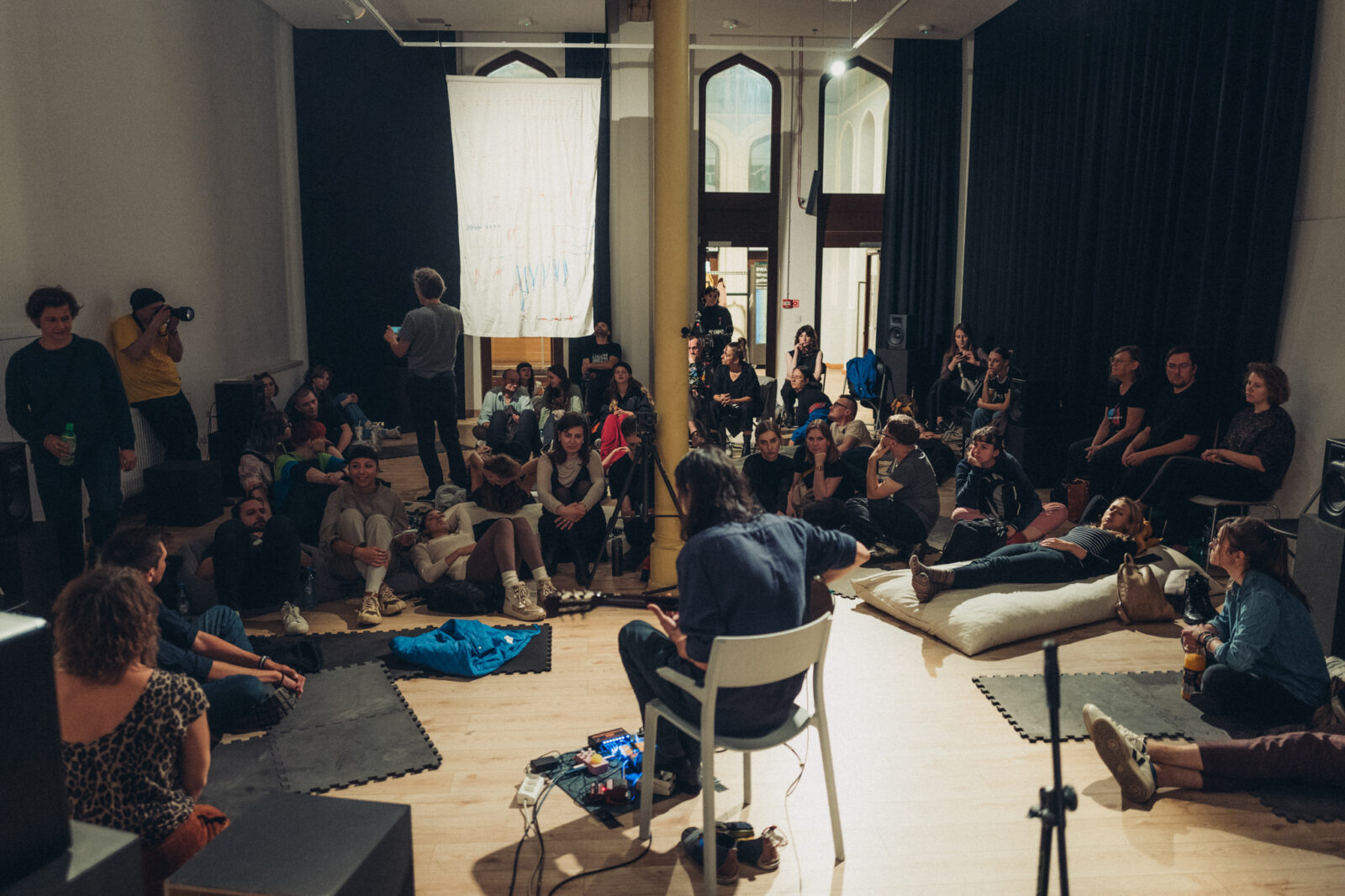
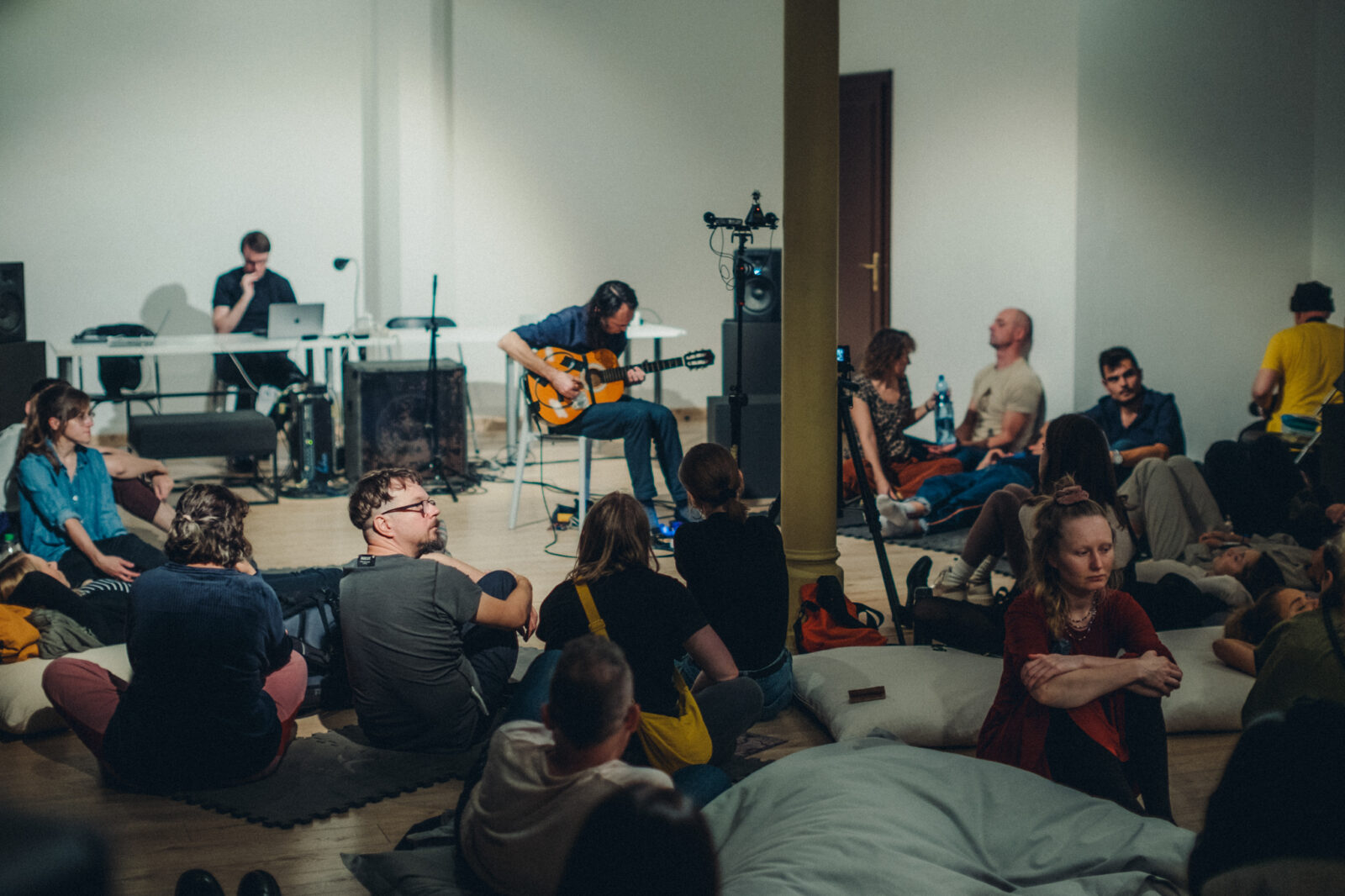
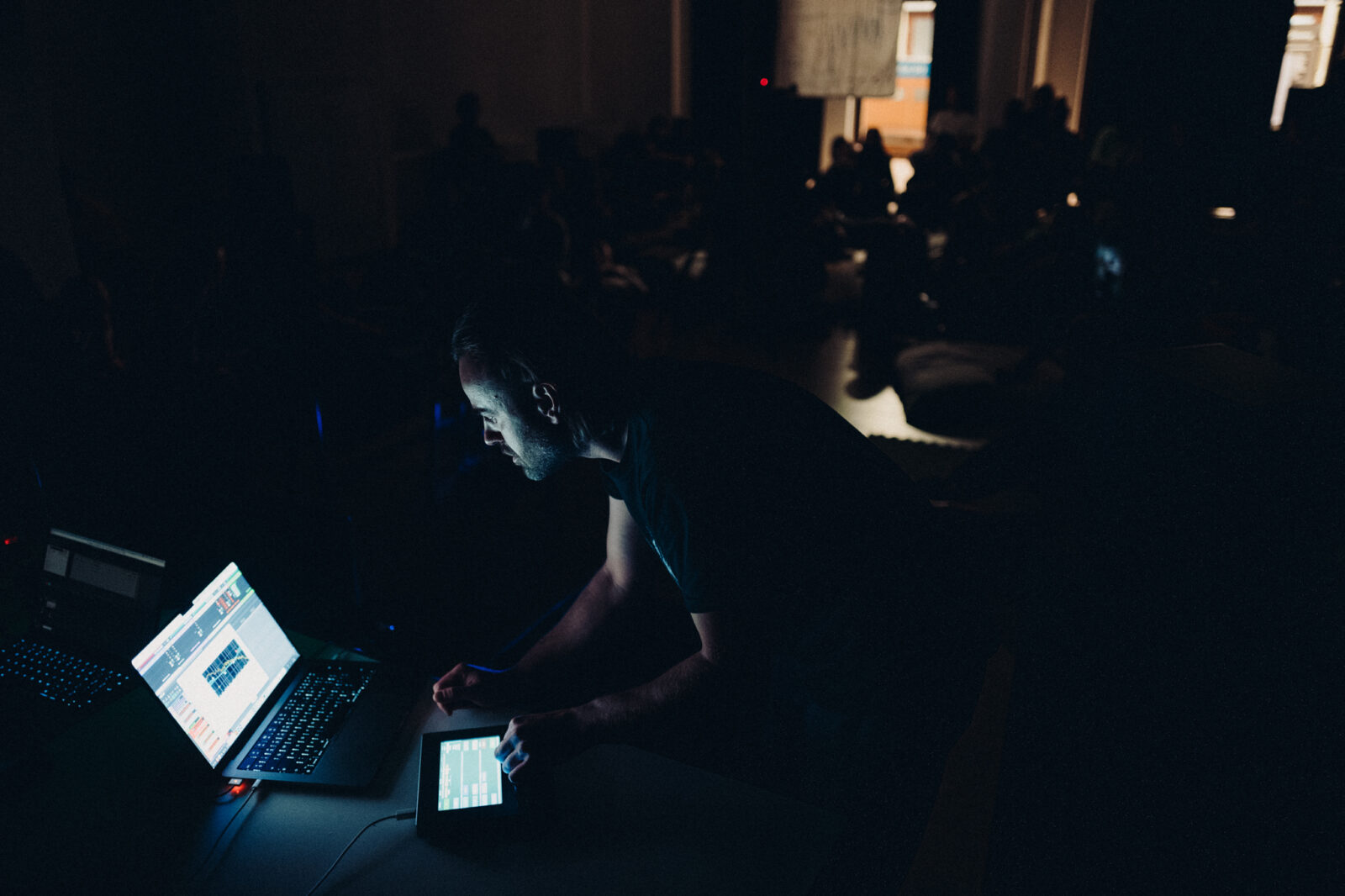
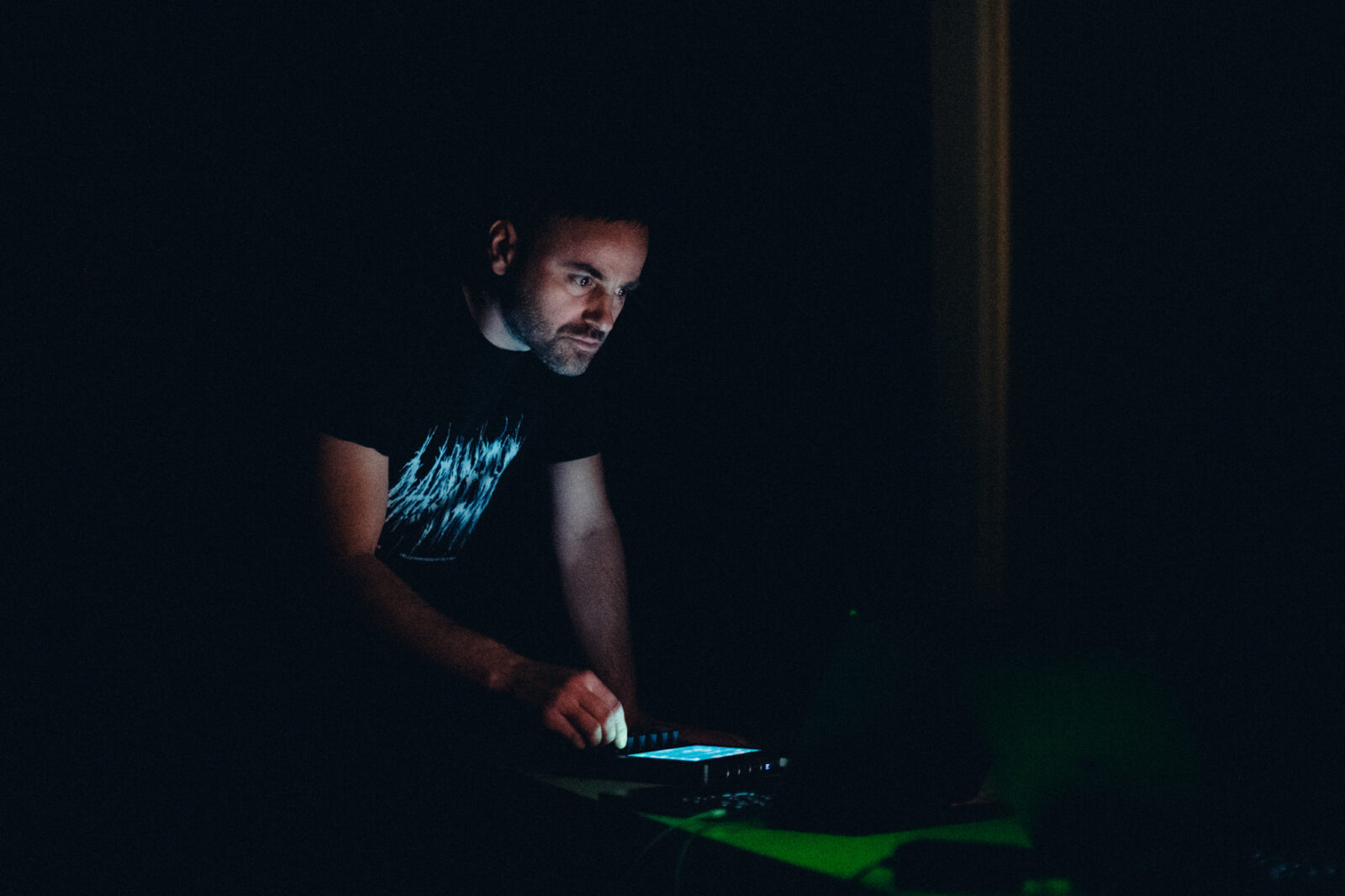
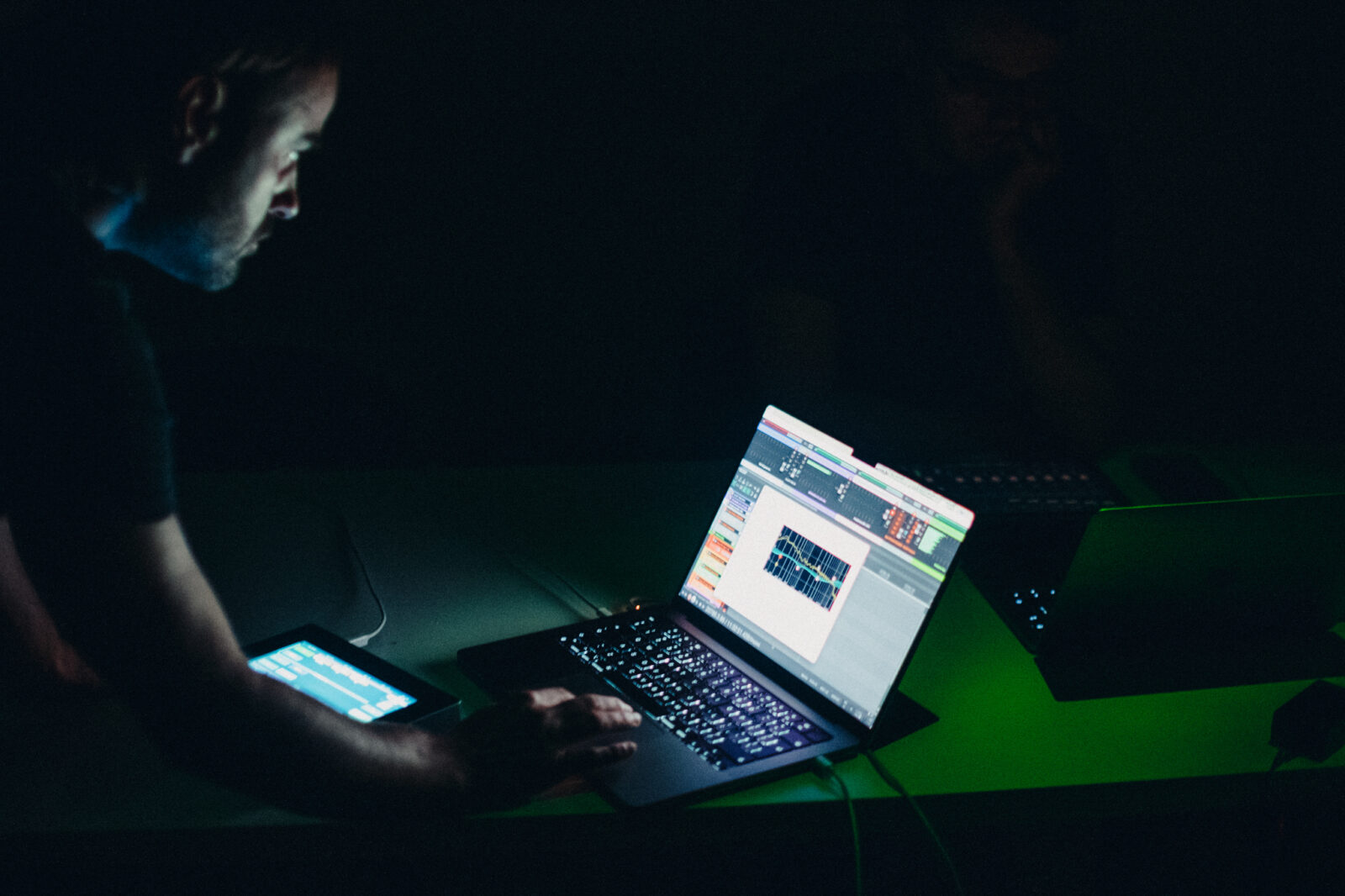
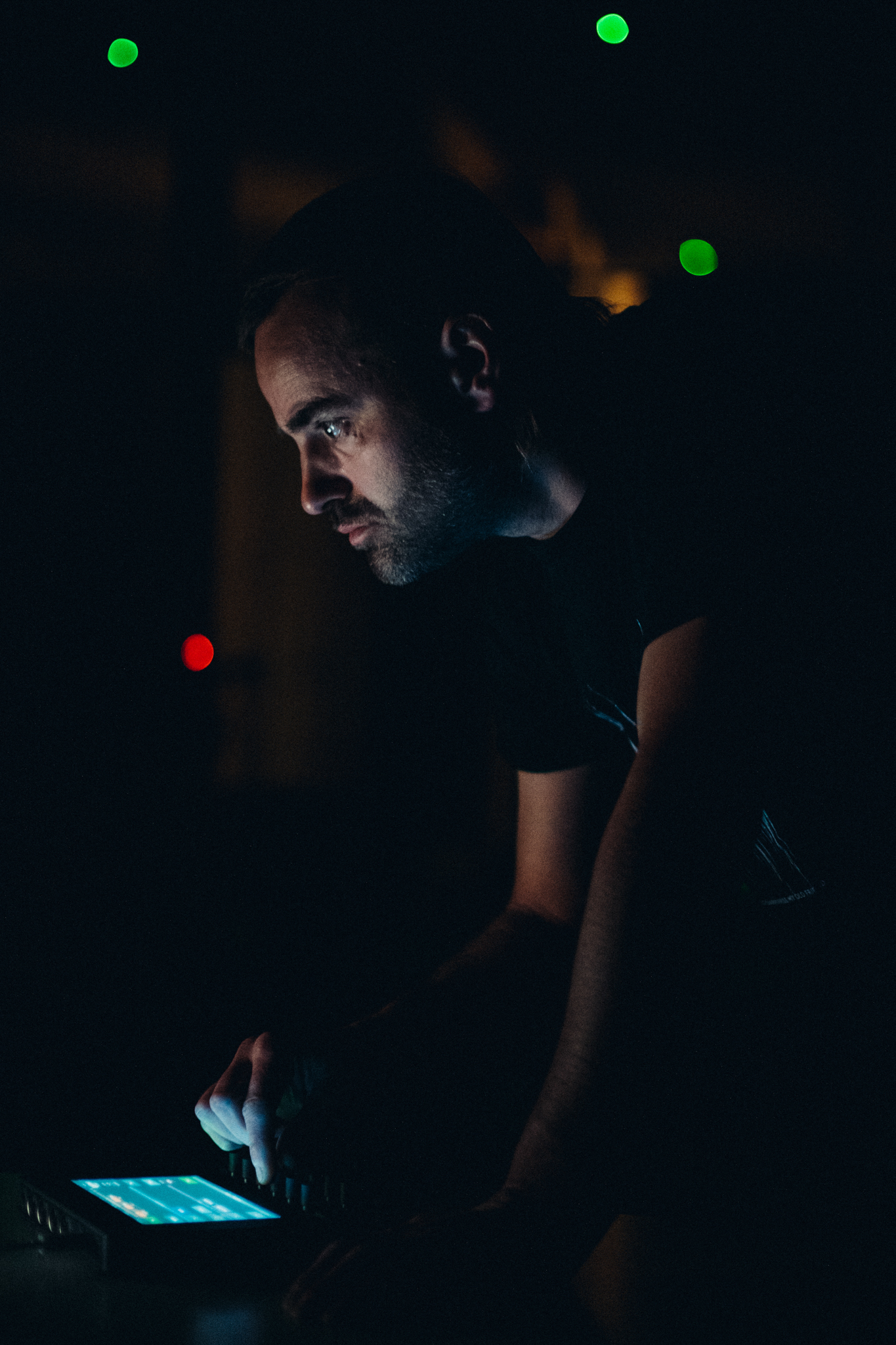
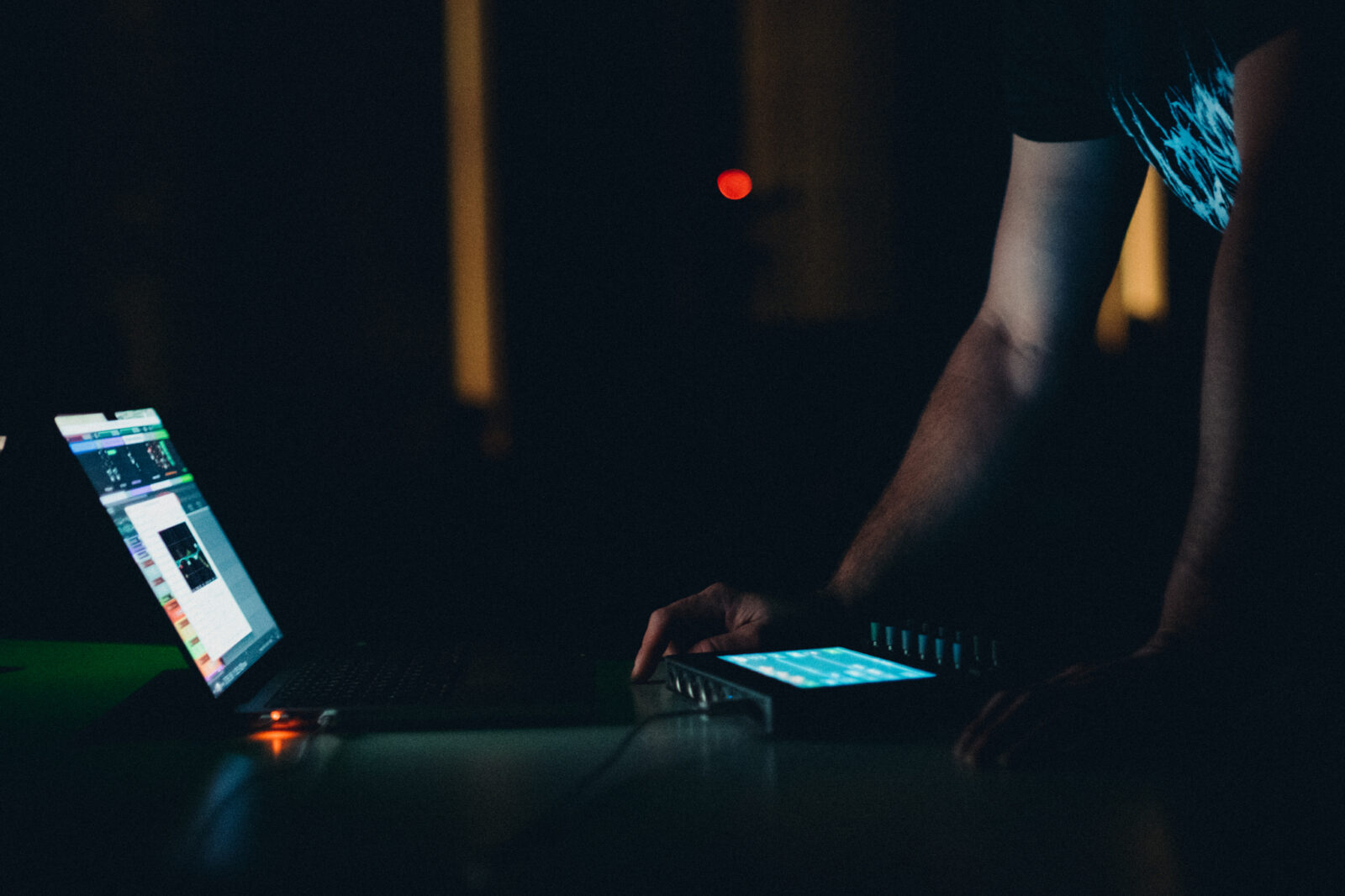
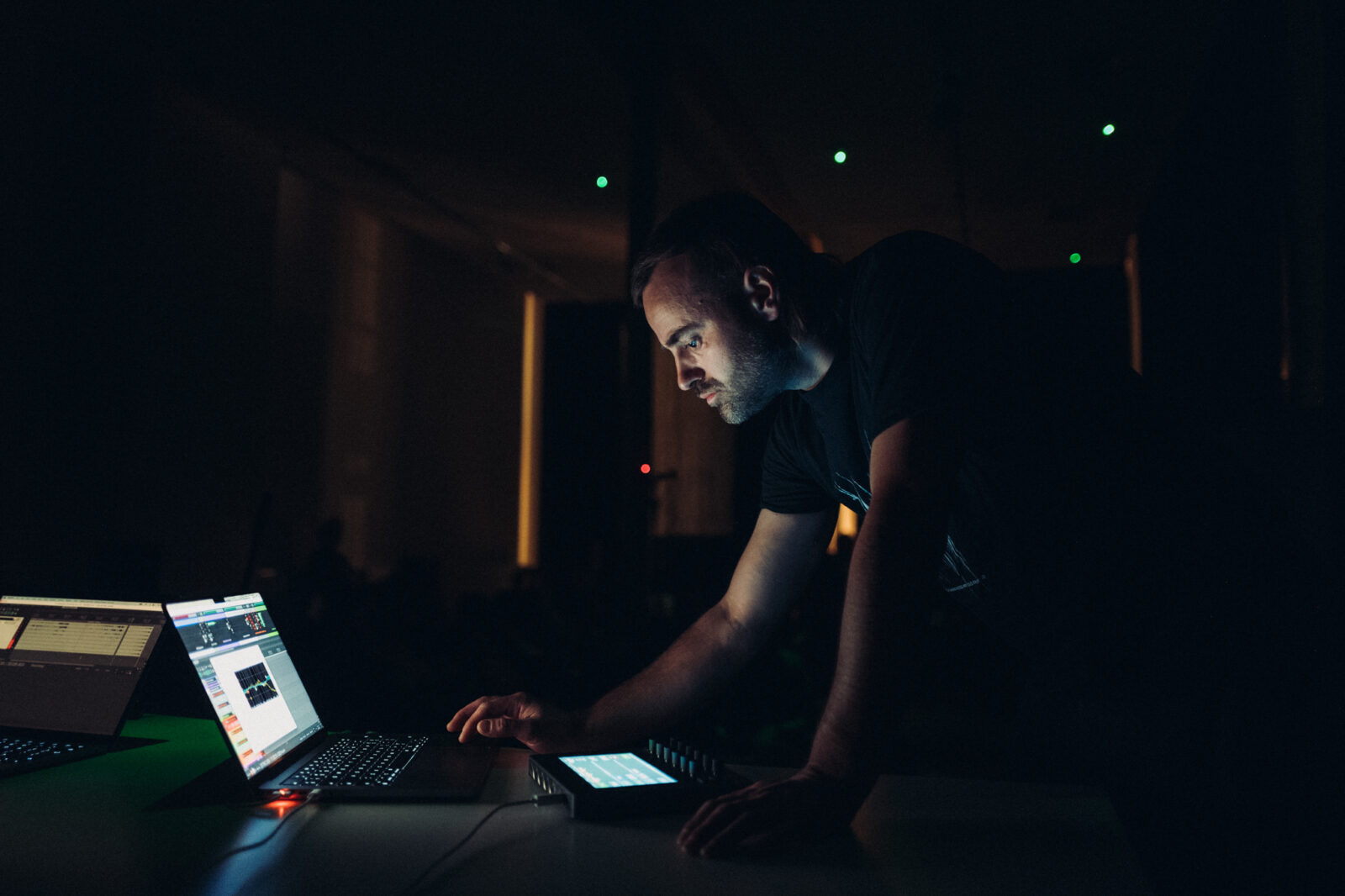
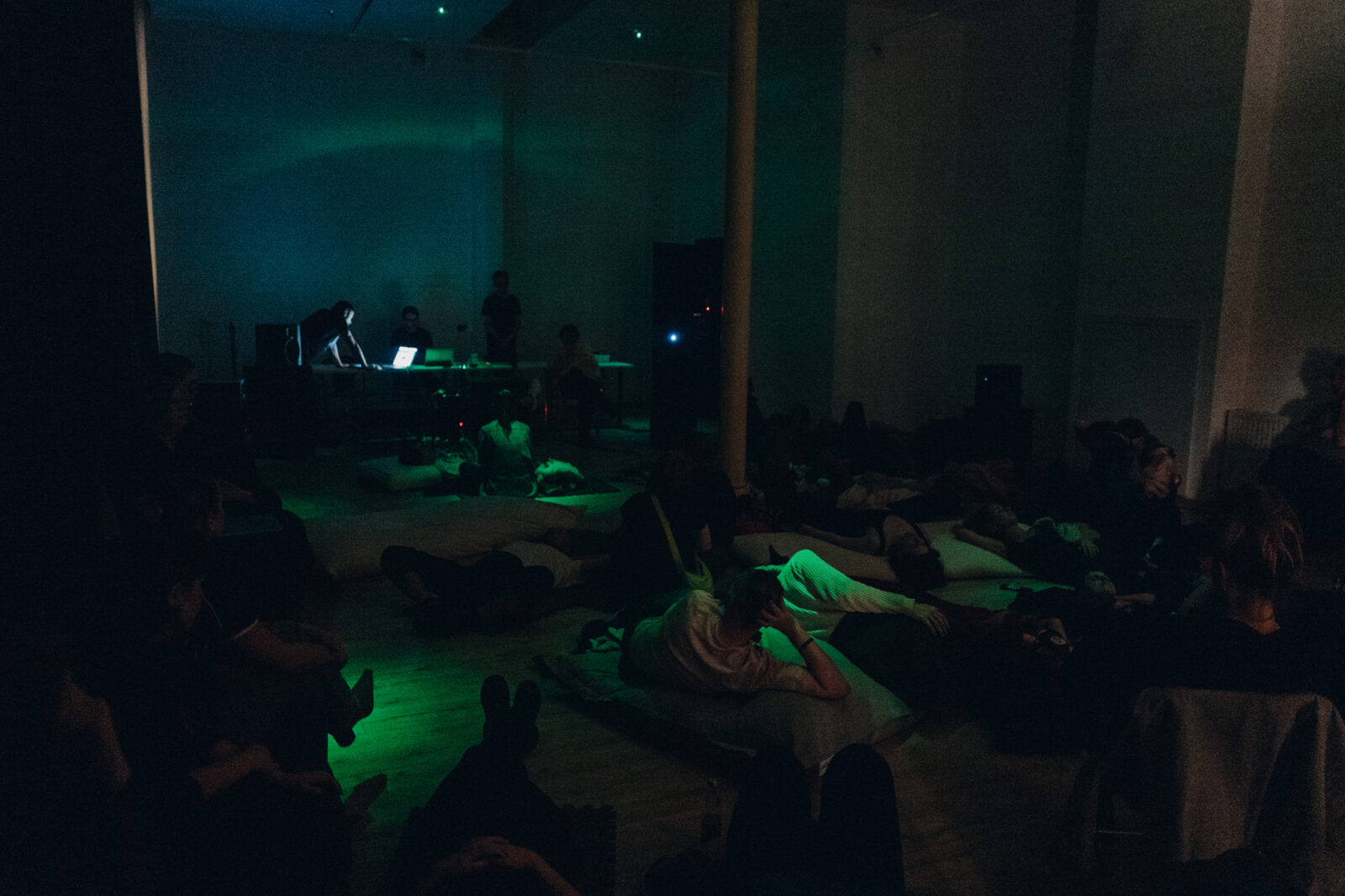
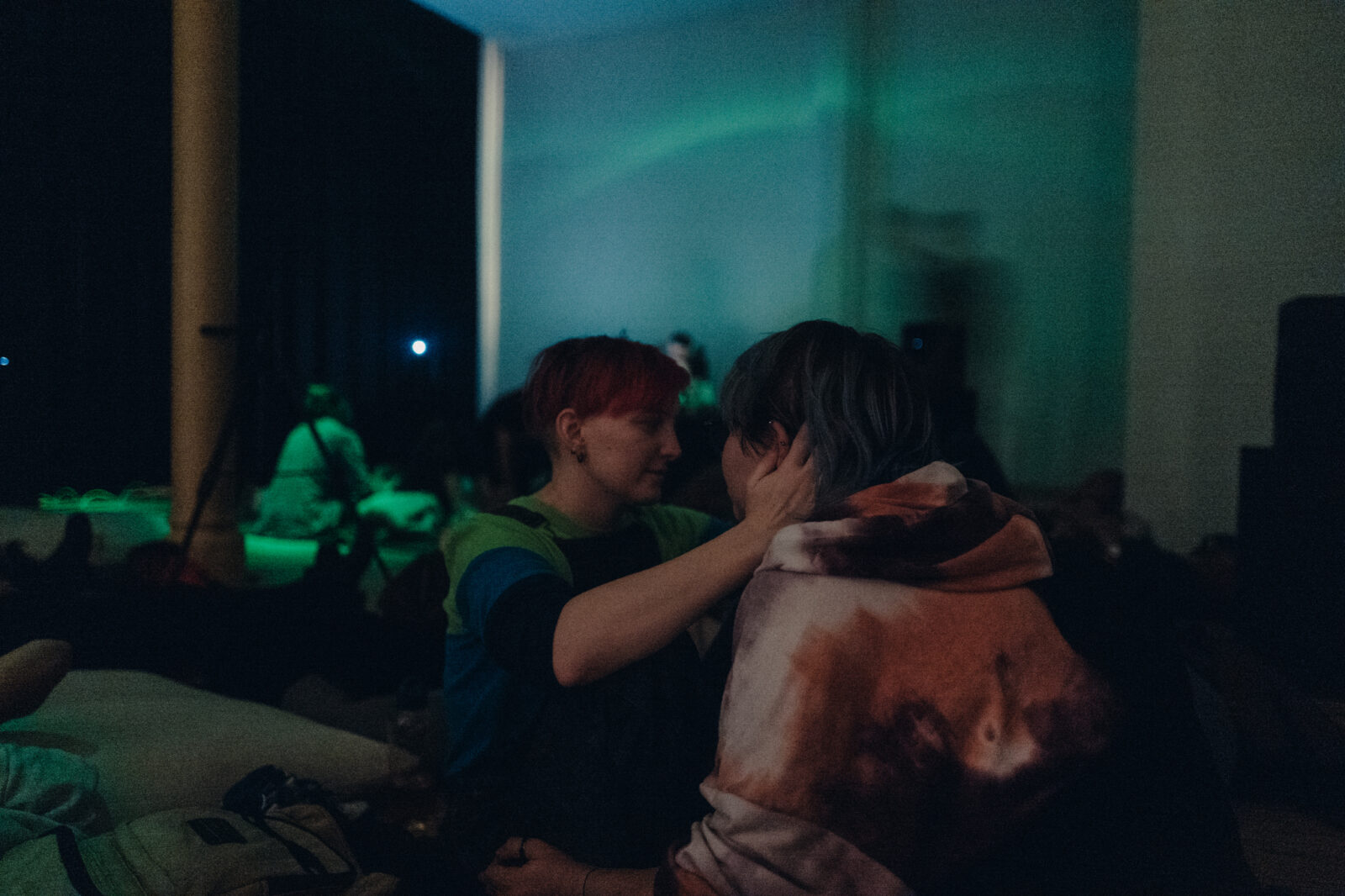
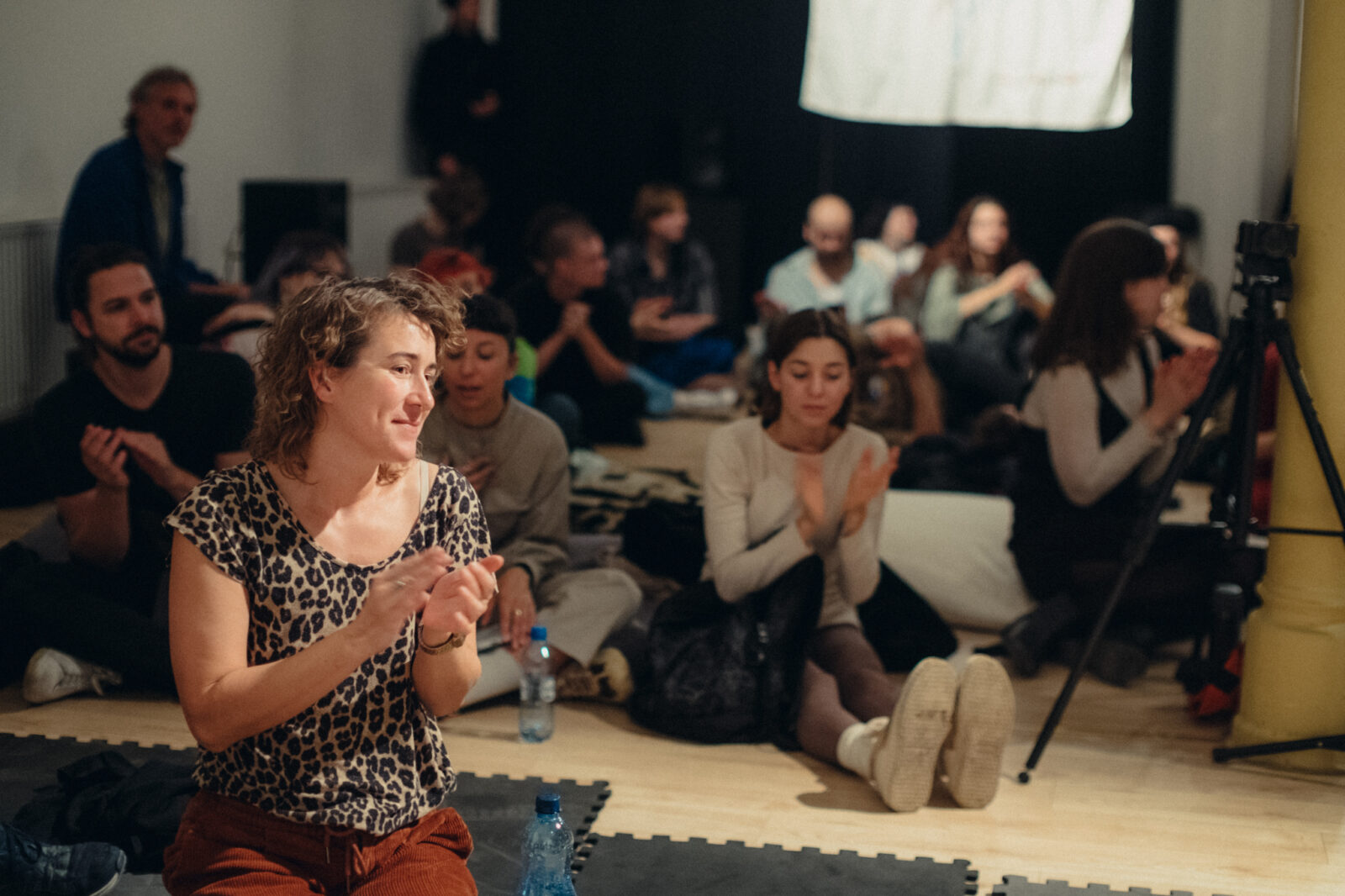
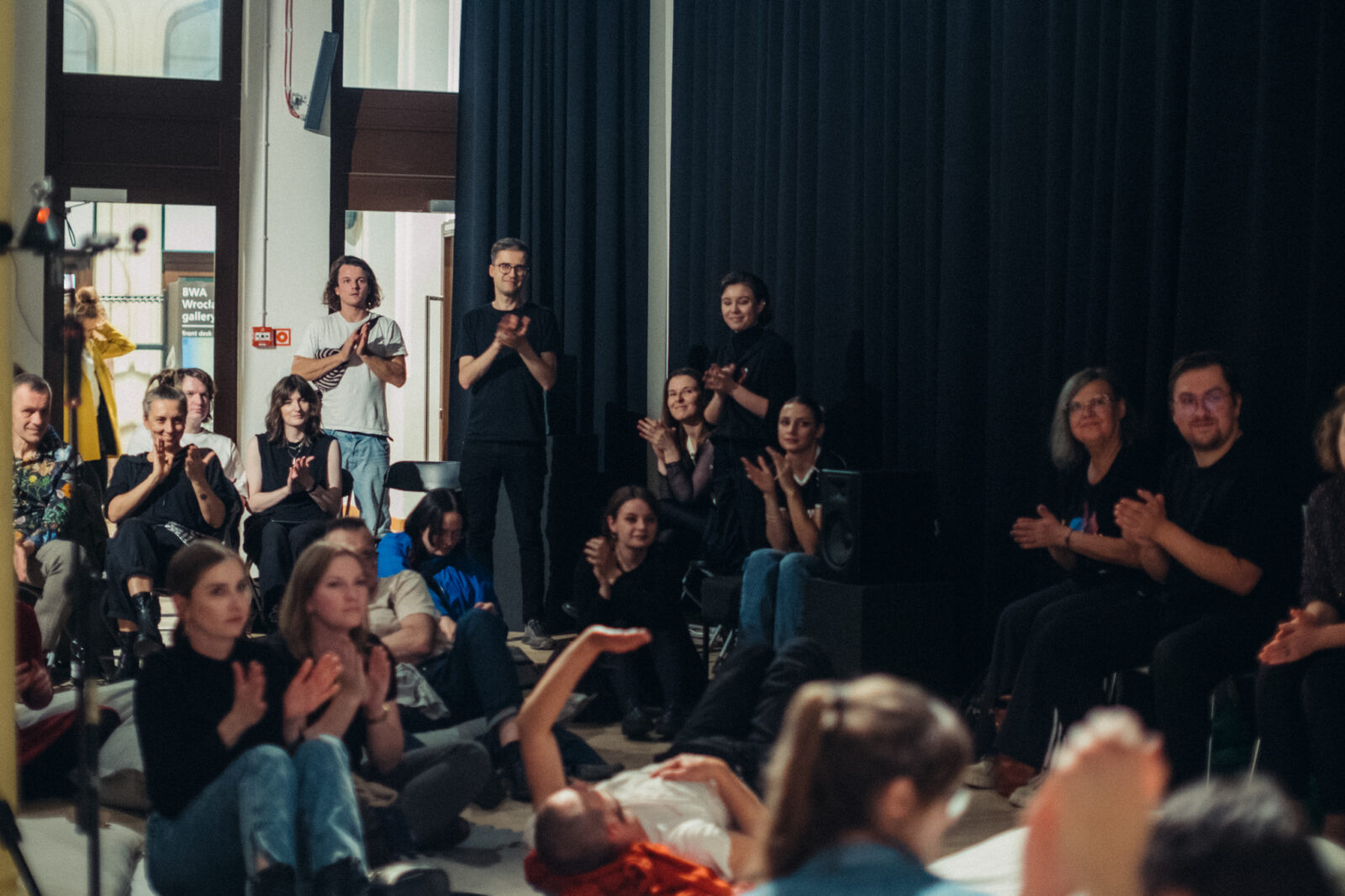
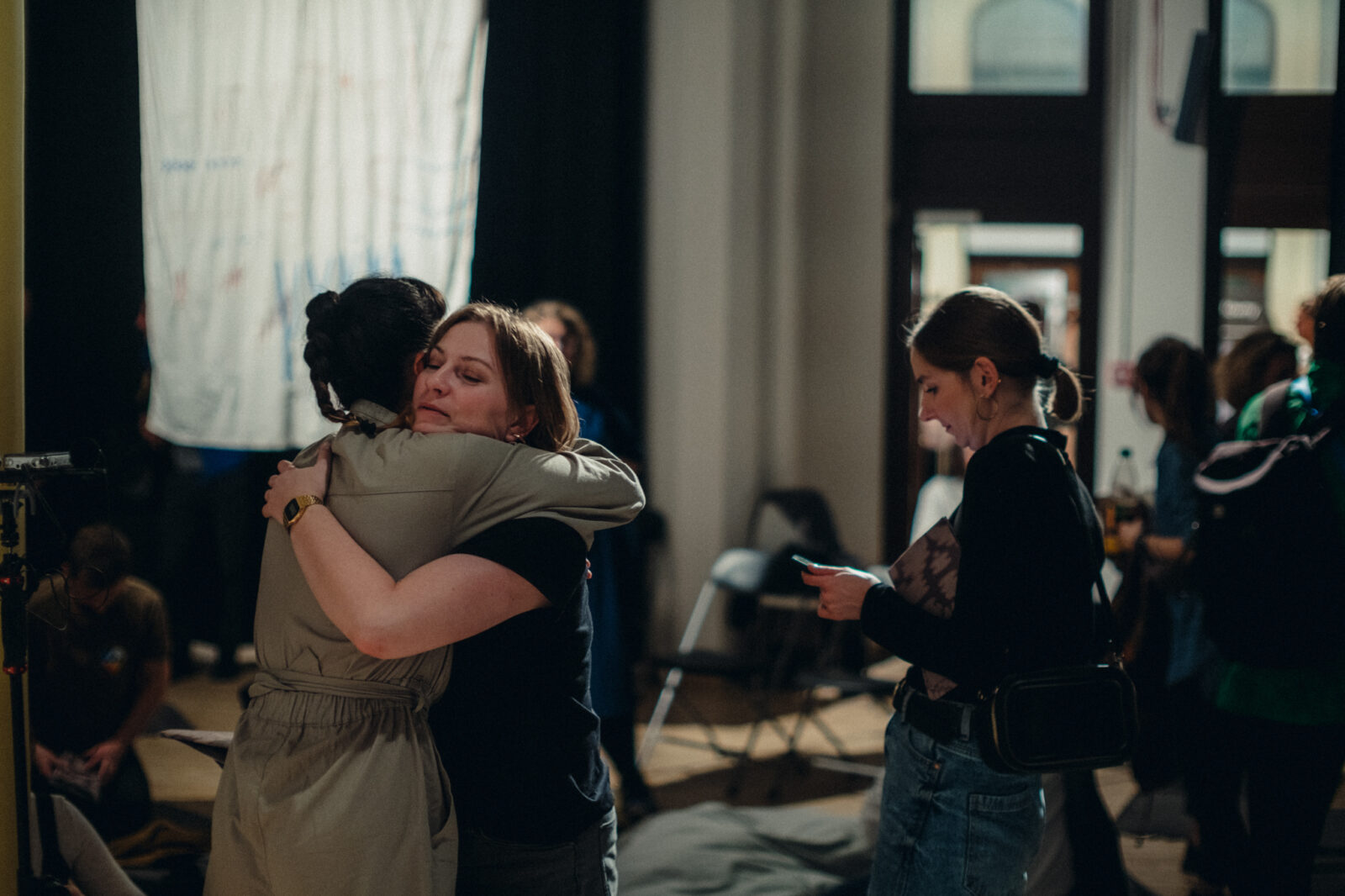
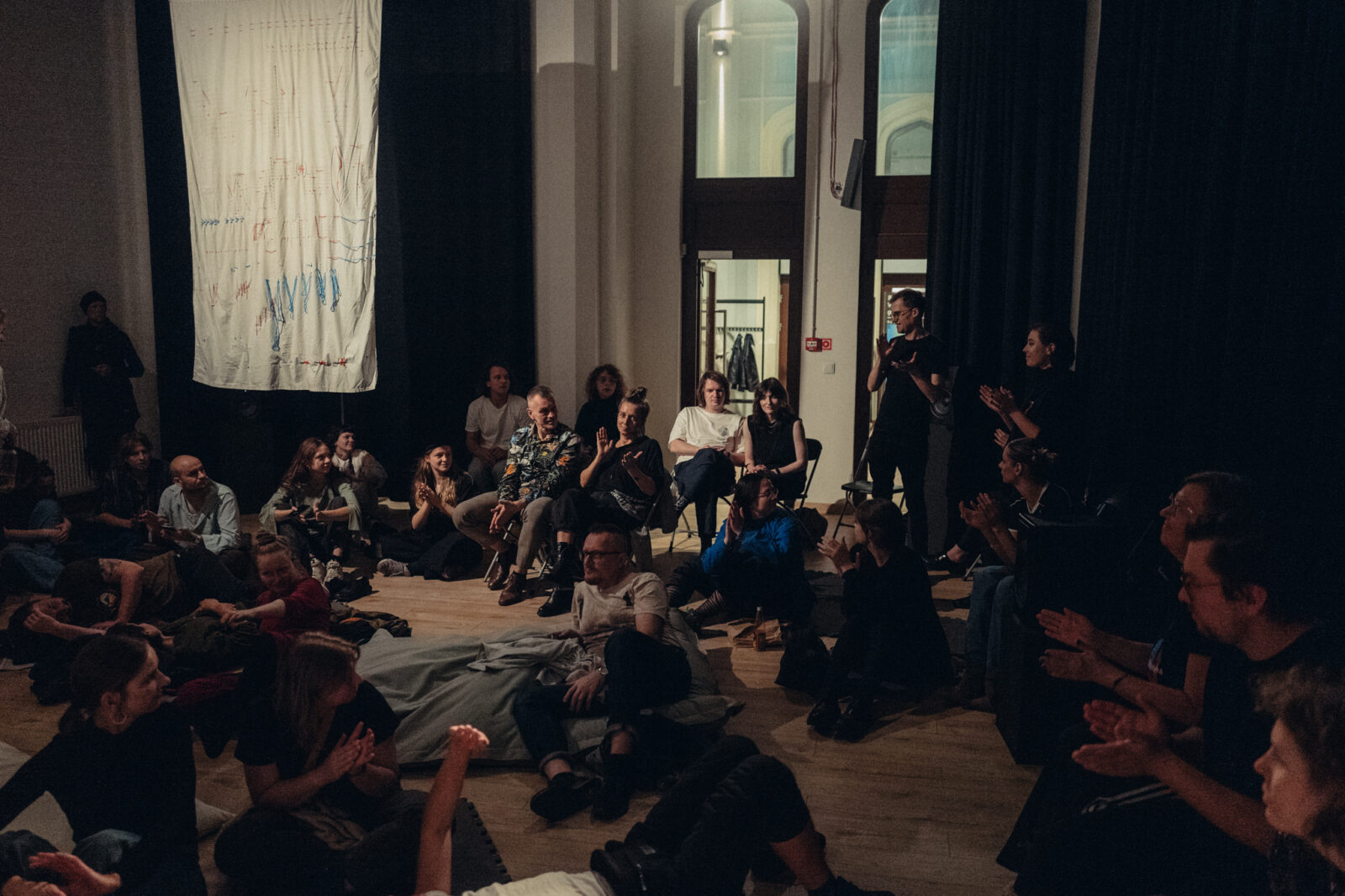
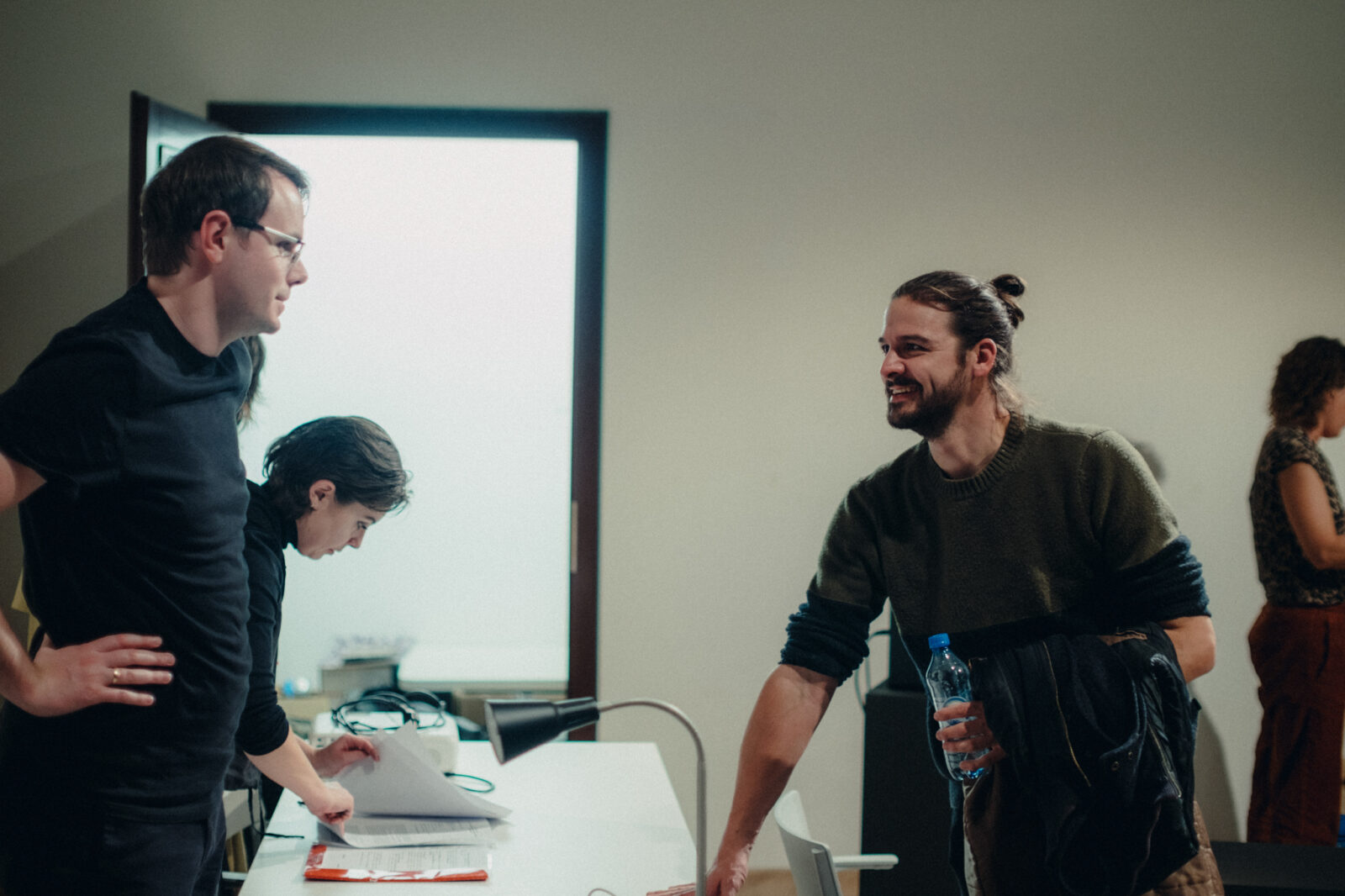
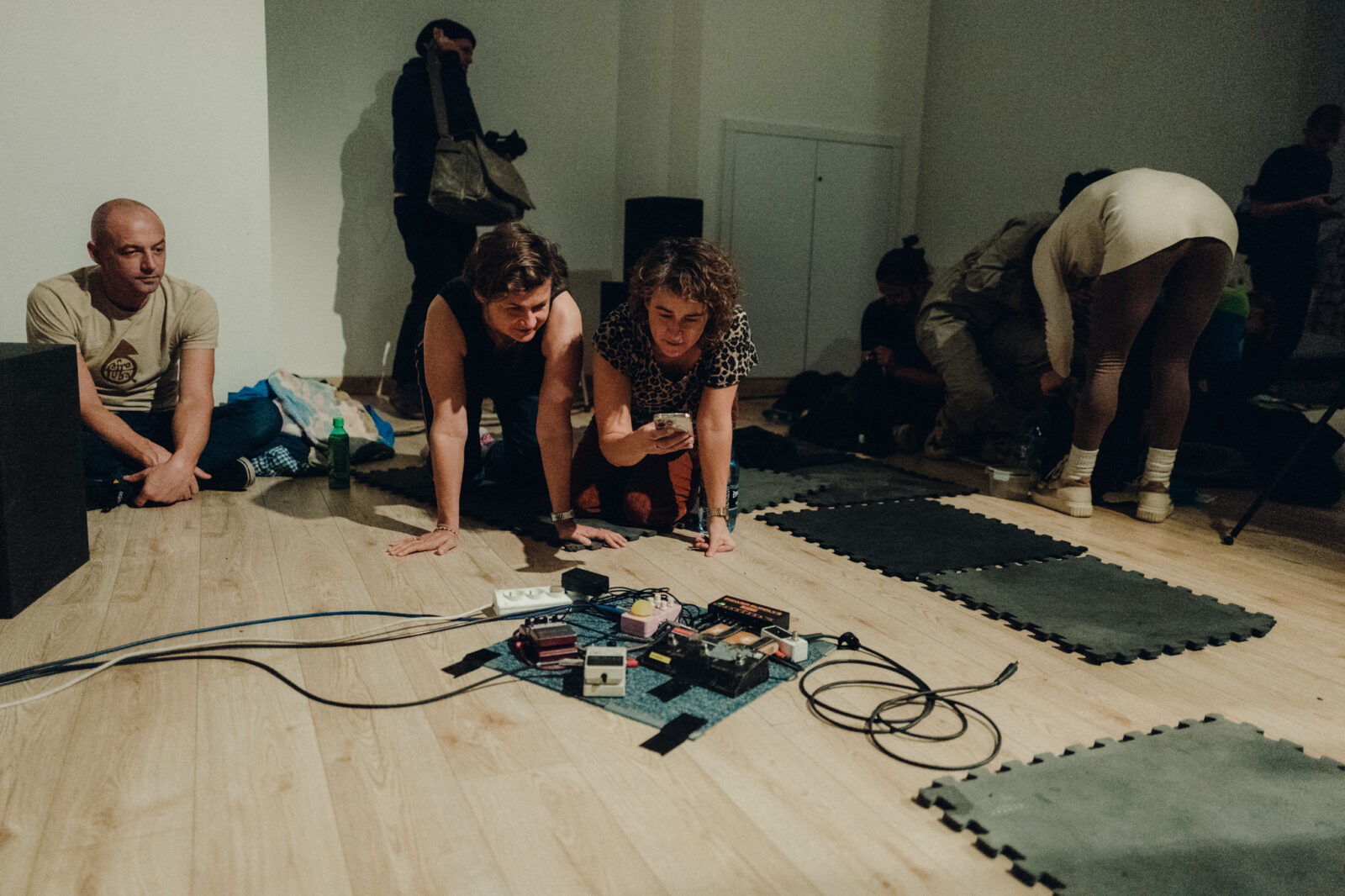
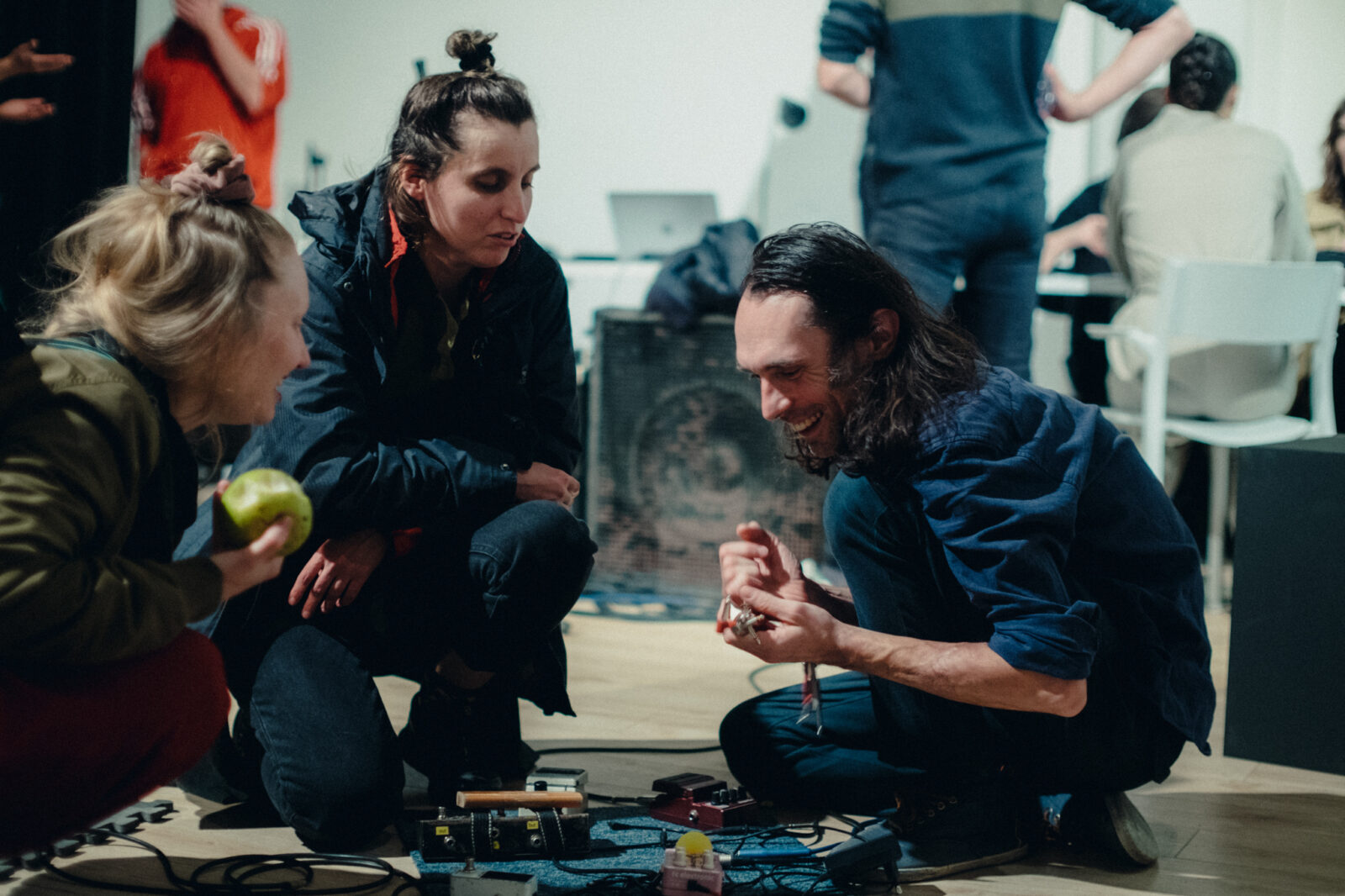
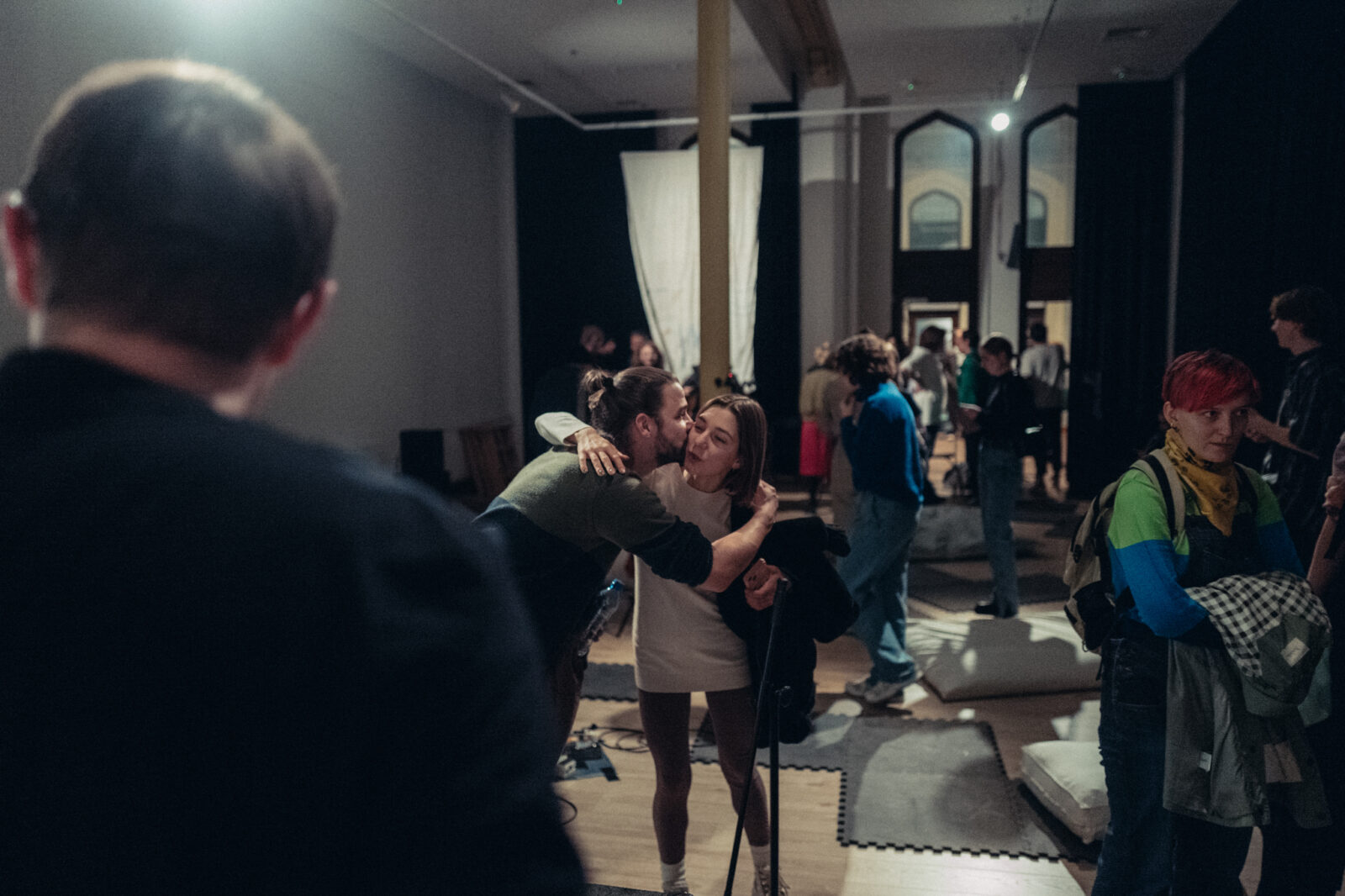
The concert took place on 21.10.2024 at the BWA Wrocław Główny Gallery.
GALLERY, by Wojciech Chrubasik
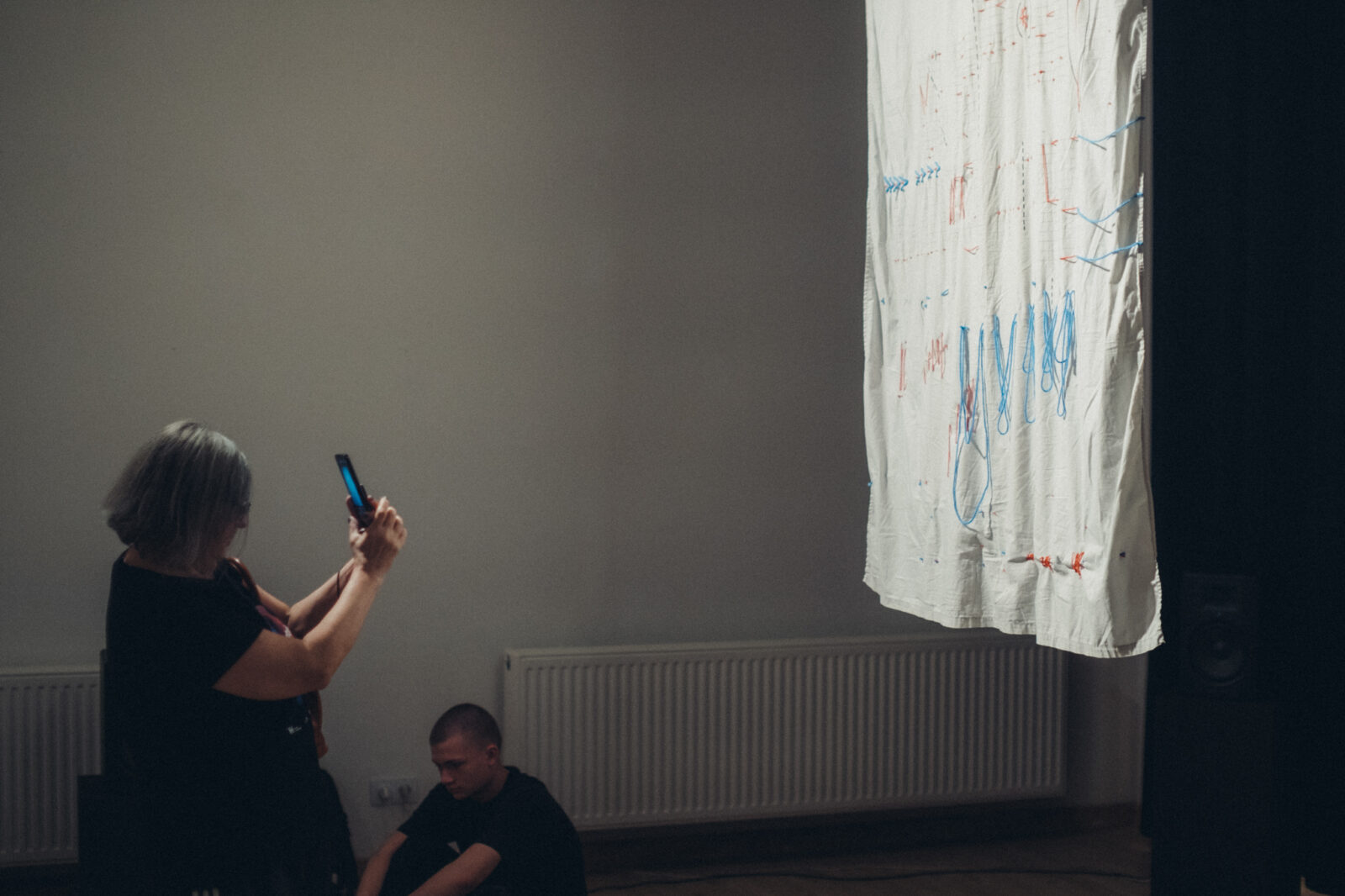
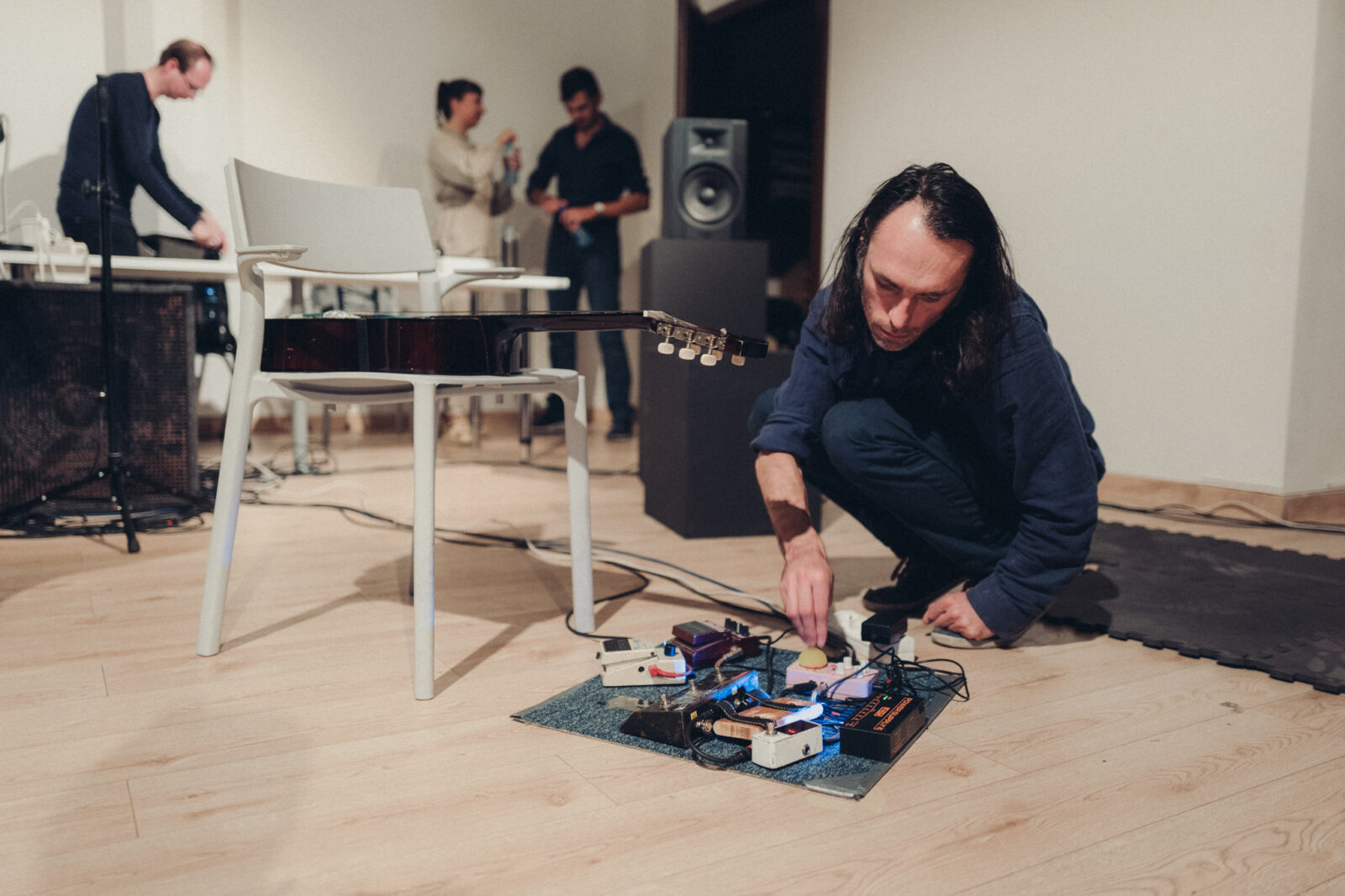
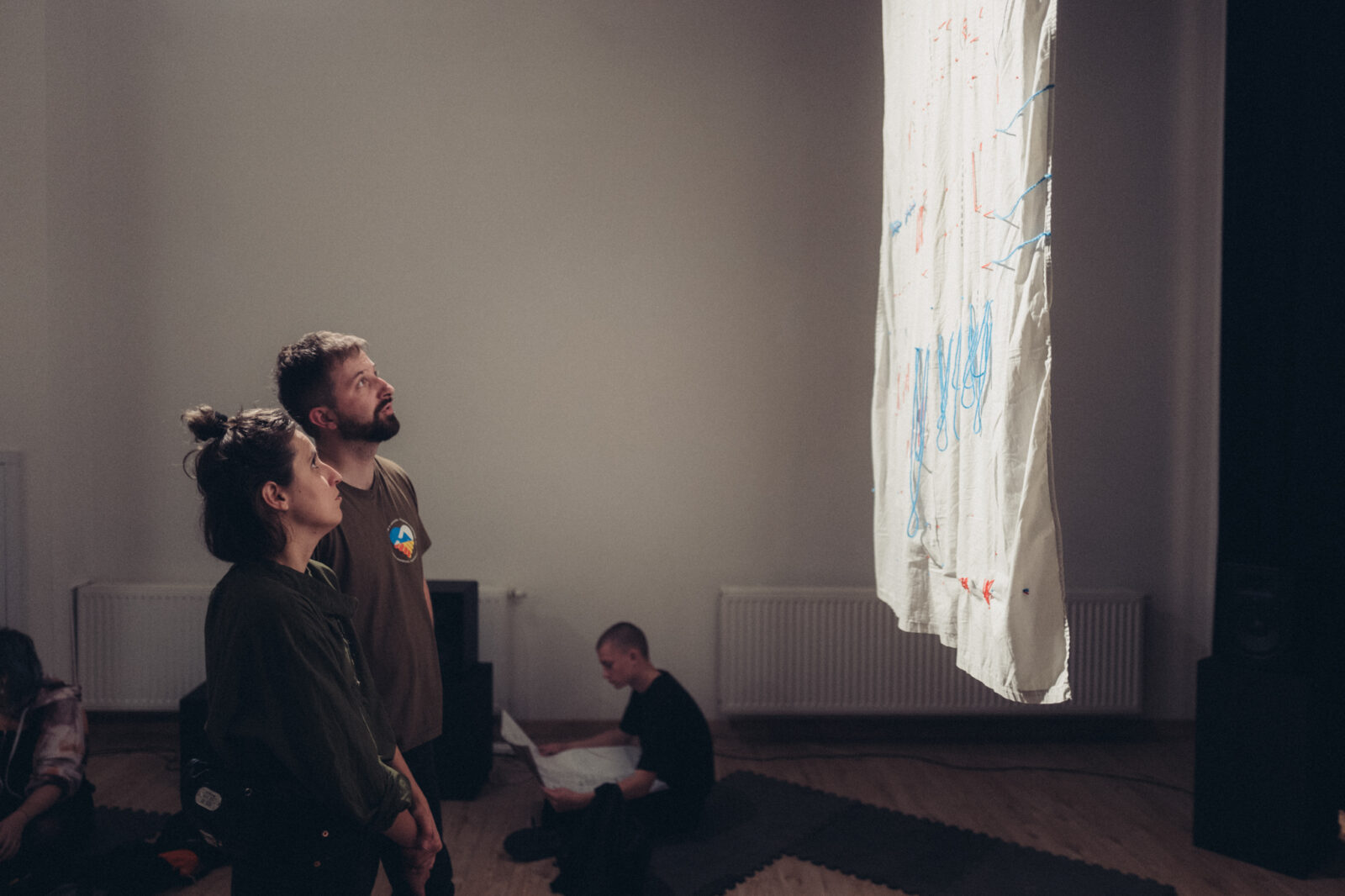
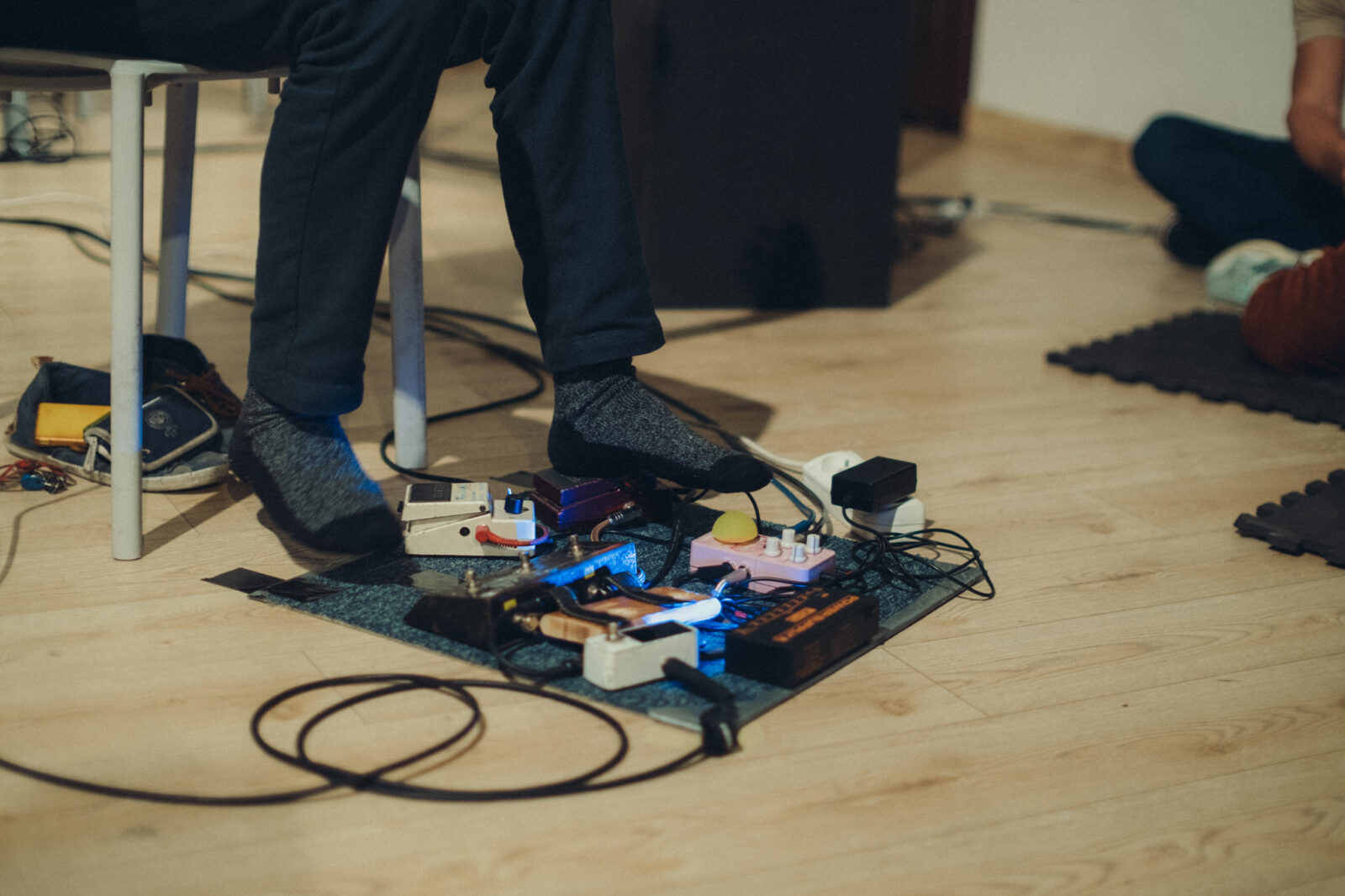
REVIEW [PL only]:
“Dźwięk ukryty w geście”, Agata Pasińska for Ruch Muzyczny
TEAM
Zespół / the team:
Daniel Brożek (curator), Marta Konieczna (producer, co-curator), Emilia Konwerska (PR)
Visual identity: Karolina Pietrzyk + Mateusz Zieleniewski
Organiser: Fundacja PozyTYwka
Partner: BWA Wrocław Galerie Sztuki Współczesnej
Series co-financed by the City of Wrocław | www.wroclaw.pl


