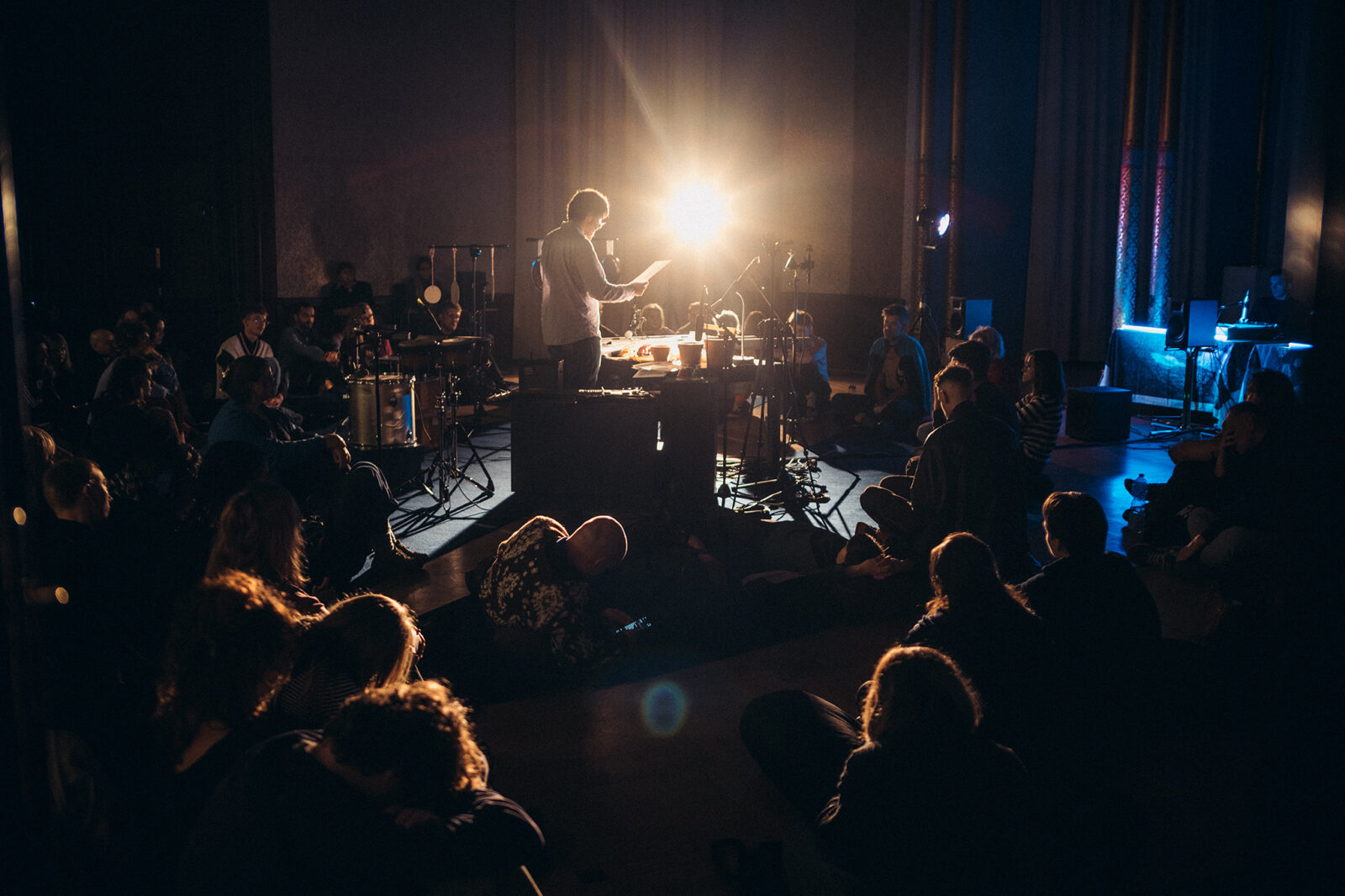


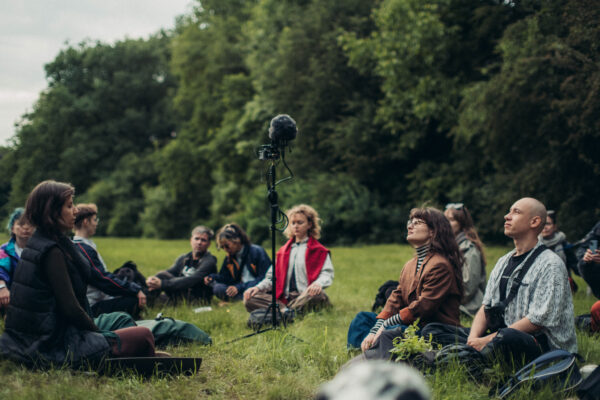


Canti Spazializzati will remain at Żyjnia / Galeria Dizajn BWA Wrocław until the end of 2022!
During the gallery’s opening hours, you can listen to two sound installations prepared by Dorota Błaszczak and Beniamin Głuszek on request.
PROGRAMME:
Dorota Błaszczak
Pola dźwięku (2022)(multi-channel sound installation, animated score)
Our perception of sound and time is arranged on a logarithmic scale, because what matters for the auditory experience is the ratio of physical stimuli, not their difference. This doubling of frequency creates an octave interval in the range of audible vibrations, and doubling the time counted in seconds creates quarter notes and whole notes.
When we move to the next time zone, we become aware of the divisions of time in a day and a night, the seasons and the whole year, when the difference of a quarter note is negligible. But we can no longer hear this rhythm of ecological time.
Ecoacoustics, equipped with the ability to process large collections of recordings using algorithms, is capable of transcending this anthropocentric perspective. It can change the scale of time and thus create the possibility of an alternative perception of sounds and events that escape our attention.
At the heart of the sound installation “Sound Fields” is an algorithm that selects fragments of field recordings from the Wrocław Irrigation Fields (WPI) from 2022, analyzing them in terms of the interpenetration of biophonic, geophonic, and anthropophonic phenomena, but also comparing the same times of day, days of the week, and months.
The form of a hyper-real soundscape, based on compressing and stretching the time distances between successive events, allows for a different perspective on the WPI space.
Beniamin Głuszek installs Alvin Lucier “Clocker” (1978)
(interactive sound installation for amplified clock, galvanic skin response sensor, digital delay)
“𝐈 𝐰𝐚𝐬 𝐫𝐞𝐚𝐝𝐢𝐧𝐠 𝐈𝐭𝐚𝐥𝐨 𝐂𝐚𝐥𝐯𝐢𝐧𝐨’𝐬 𝐈𝐟 𝐨𝐧 𝐚 𝐰𝐢𝐧𝐭𝐞𝐫’𝐬 𝐧𝐢𝐠𝐡𝐭 𝐚 𝐭𝐫𝐚𝐯𝐞𝐥𝐞𝐫. 𝐓𝐡𝐫𝐨𝐮𝐠𝐡𝐨𝐮𝐭 𝐭𝐡𝐞 𝐛𝐨𝐨𝐤 𝐈 𝐰𝐨𝐮𝐥𝐝 𝐜𝐨𝐦𝐞 𝐮𝐩𝐨𝐧 𝐢𝐦𝐚𝐠𝐞𝐬 𝐚𝐧𝐝 𝐢𝐝𝐞𝐚𝐬 𝐰𝐡𝐢𝐜𝐡 𝐬𝐞𝐞𝐦𝐞𝐝 𝐫𝐞𝐦𝐚𝐫𝐤𝐚𝐛𝐥𝐲 𝐜𝐥𝐨𝐬𝐞 𝐭𝐨 𝐭𝐡𝐨𝐬𝐞 𝐈 𝐮𝐬𝐞𝐝 𝐢𝐧 𝐭𝐡𝐢𝐬 𝐰𝐨𝐫𝐤. 𝐎𝐧 𝐩𝐚𝐠𝐞 𝟐𝟏, 𝐟𝐨𝐫 𝐞𝐱𝐚𝐦𝐩𝐥𝐞, 𝐈 𝐜𝐚𝐦𝐞 𝐚𝐜𝐫𝐨𝐬𝐬 𝐭𝐡𝐞 𝐟𝐨𝐥𝐥𝐨𝐰𝐢𝐧𝐠: “𝐓𝐡𝐞 𝐭𝐡𝐢𝐧𝐠 𝐈’𝐝 𝐥𝐢𝐤𝐞 𝐦𝐨𝐬𝐭 𝐢𝐧 𝐭𝐡𝐞 𝐰𝐨𝐫𝐥𝐝…𝐢𝐬 𝐭𝐨 𝐦𝐚𝐤𝐞 𝐜𝐥𝐨𝐜𝐤𝐬 𝐫𝐮𝐧 𝐛𝐚𝐜𝐤𝐰𝐚𝐫𝐝…𝐍𝐨, 𝐰𝐢𝐭𝐡 𝐭𝐡𝐨𝐮𝐠𝐡𝐭, 𝐛𝐲 𝐜𝐨𝐧𝐜𝐞𝐧𝐭𝐫𝐚𝐭𝐢𝐧𝐠 𝐮𝐧𝐭𝐢𝐥 𝐈 𝐟𝐨𝐫𝐜𝐞 𝐭𝐢𝐦𝐞 𝐭𝐨 𝐦𝐨𝐯𝐞 𝐛𝐚𝐜𝐤.” 𝐋𝐚𝐭𝐞𝐫 𝐢𝐧 𝐭𝐡𝐞 𝐛𝐨𝐨𝐤 𝐂𝐚𝐥𝐯𝐢𝐧𝐨 𝐝𝐞𝐬𝐜𝐫𝐢𝐛𝐞𝐬 “…𝐭𝐡𝐞 𝐜𝐚𝐭𝐨𝐩𝐭𝐫𝐢𝐜 𝐢𝐧𝐬𝐭𝐫𝐮𝐦𝐞𝐧𝐭𝐬 𝐨𝐟 𝐭𝐡𝐞 𝐬𝐞𝐯𝐞𝐧𝐭𝐞𝐞𝐧𝐭𝐡 𝐜𝐞𝐧𝐭𝐮𝐫𝐲, 𝐥𝐢𝐭𝐭𝐥𝐞 𝐭𝐡𝐞𝐚𝐭𝐫𝐞𝐬 𝐨𝐟 𝐯𝐚𝐫𝐢𝐨𝐮𝐬 𝐝𝐞𝐬𝐢𝐠𝐧 𝐰𝐡𝐞𝐫𝐞 𝐚 𝐟𝐢𝐠𝐮𝐫𝐞 𝐢𝐬 𝐬𝐞𝐞𝐧 𝐦𝐮𝐥𝐭𝐢𝐩𝐥𝐢𝐞𝐝 𝐛𝐲 𝐭𝐡𝐞 𝐯𝐚𝐫𝐢𝐚𝐭𝐢𝐨𝐧𝐬 𝐨𝐟 𝐚𝐧𝐠𝐥𝐞𝐬 𝐛𝐞𝐭𝐰𝐞𝐞𝐧 𝐭𝐡𝐞 𝐦𝐢𝐫𝐫𝐨𝐫𝐬.” 𝐇𝐞 𝐰𝐚𝐧𝐭𝐬 𝐭𝐨 𝐫𝐞𝐜𝐨𝐧𝐬𝐭𝐫𝐮𝐜𝐭 𝐚 “𝐩𝐨𝐥𝐲𝐝𝐲𝐩𝐭𝐢𝐜 𝐭𝐡𝐞𝐚𝐭𝐫𝐞, 𝐢𝐧 𝐰𝐡𝐢𝐜𝐡 𝐚𝐛𝐨𝐮𝐭 𝐬𝐢𝐱𝐭𝐲 𝐥𝐢𝐭𝐭𝐥𝐞 𝐦𝐢𝐫𝐫𝐨𝐫𝐬 𝐥𝐢𝐧𝐢𝐧𝐠 𝐭𝐡𝐞 𝐢𝐧𝐬𝐢𝐝𝐞 𝐨𝐟 𝐚 𝐥𝐚𝐫𝐠𝐞 𝐛𝐨𝐱 𝐭𝐫𝐚𝐧𝐬𝐟𝐨𝐫𝐦 𝐚 𝐛𝐨𝐮𝐠𝐡 𝐢𝐧𝐭𝐨 𝐚 𝐟𝐨𝐫𝐞𝐬𝐭, 𝐚 𝐥𝐞𝐚𝐝 𝐬𝐨𝐥𝐝𝐢𝐞𝐫 𝐢𝐧𝐭𝐨 𝐚𝐧 𝐚𝐫𝐦𝐲, 𝐚 𝐛𝐨𝐨𝐤𝐥𝐞𝐭 𝐢𝐧𝐭𝐨 𝐚 𝐥𝐢𝐛𝐫𝐚𝐫𝐲.” 𝐏𝐞𝐫𝐡𝐚𝐩𝐬 𝐂𝐚𝐥𝐯𝐢𝐧𝐨 𝐰𝐨𝐮𝐥𝐝𝐧’𝐭 𝐡𝐚𝐯𝐞 𝐦𝐢𝐧𝐝𝐞𝐝 𝐢𝐟 𝐈 𝐚𝐝𝐝𝐞𝐝 𝐭𝐨 𝐡𝐢𝐬 𝐥𝐢𝐬𝐭 𝐨𝐟 𝐥𝐨𝐯𝐞𝐥𝐲 𝐢𝐦𝐚𝐠𝐞𝐬: “𝐀 𝐜𝐥𝐨𝐜𝐤 𝐢𝐧𝐭𝐨 𝐚 𝐫𝐨𝐨𝐦 𝐟𝐮𝐥𝐥 𝐨𝐟 𝐜𝐥𝐨𝐜𝐤𝐬.”
~ Alvin Lucier
The piece, based on a galvanic skin response sensor (commonly known as a “lie detector”), assumed that the performer could slow down, speed up, and stop the ticking of the clock with his thoughts. It is a study of the perception of time, but also another attempt by Lucier to draw attention to the process of listening as a performative gesture.
The multiplied sounds of the clock at different frequencies, bouncing off the walls of the room, create the impression of a changing space, affecting the performer’s emotional state and his attempts to control the passage of time.
Music organizes sounds in time, sound art organizes sounds in space. Lucier organizes space with time.
ABOUT THE ARTISTS:
Dorota Błaszczak
She conducts eco-acoustic observations of her immediate surroundings. Her work spans the analog and digital worlds: radio sound archives, interactive sound education, sound installations and works, old and new VR, and early computer games.
Beniamin Głuszek
Creator of sound installations, music theorist. The main subject of his interest is the sonification of the electrical activity of the human brain (EEG). He has presented his works in the Czech Republic, the Netherlands, Scotland and Poland – including at the “Warsaw Autumn” and “AudioArt” festivals, during the Art Review “Survival”.
https://www.polskieradio.pl/8/2565/Artykul/2030150,Fale-mozgowe-w-sztuce-i-medycynie?
ABOUT THE EVENT:
On December 10, 2022, both installations premiered at the Dizajn BWA Wrocław “Żyjnia” Gallery. The premiere was accompanied by a discussion with the authors of the works. The installations were available for listening in the gallery space until the end of 2022.
Facebook event – premiere and discussion
Facebook event – installations in the gallery
TEAM:
Daniel Brożek (kurator / curator), Marta Konieczna (producentka / producer, współpraca kuratorska / co-curator), Jan Chrzan (PR), Katarzyna Roj (kuratorka / curator Dizajn BWA Wrocław)
identyfikacja wizualna / visual identity: Karolina Pietrzyk + Mateusz Zieleniewski
Organizator / organiser: Fundacja PozyTYwka
Partner: BWA Wrocław Galerie Sztuki Współczesnej
Cykl współfinansowany ze środków Miasta Wrocławia / Series co-financed by the City of Wrocław | www.wroclaw.pl