

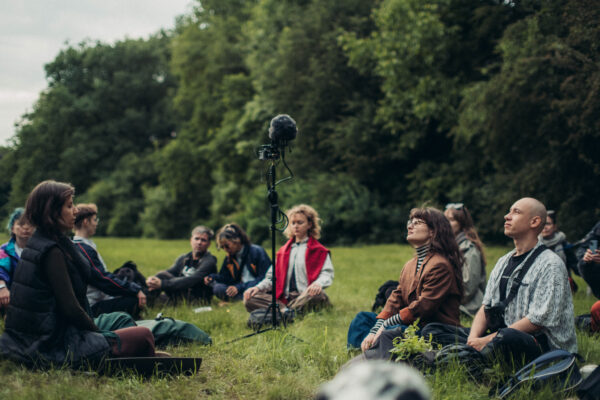


Launched in 2020 together with Katarzyna Roj, the project of listening to the Wrocław Drain Fields, focusing on the study of biodiversity and the level of anthropogenic noise pollution, is presently being extended to incorporate the issue of time. The latest methods used in acoustic ecology (long time recorders, algorithms for large archive analysis) offer the possibility to work with extensive collections of recordings that may comprise up to months of material. Exploring them to search for events and sounds, tracing their temporal repetitions across months and years, and analysing the relationship between bio-, geo- and anthropophony not only constitutes a powerful tool in the field of sound studies but is also slowly becoming a method of field recording practice. This year’s edition of the Canti Spazializzati series raises the question of how these technologies affect the perception of time and space from the perspective of the artist and the listener.
In her article ‘Soundwalking, Sonification and Activism’ (in The Routledge Companion to Sounding Art, M. Cobussen, V. Meelberg, B. Truax, eds., London 2016), Andrea Polli defines the concept of the humanization of data: “creating sonifications using soundwalking and soundscape composition as a model may serve to humanize the resulting sonification work by bringing the data to the human scale and by allowing audiences to relate to the sonification on a physical level. This might serve to increase environmental knowing by allowing listeners to experience data through their bodies”. The moment of sound embodiment in the creation of a multi-channel sonic space offers the potential for deep listening, hyper-real listening, between the thickening and stretching of time, space and the sound texture itself. Listening that penetrates deep into matter and processes, disrupting the traditional, anthropomorphic sound.
cytat z Polli w PL: Tworzenie sonifikacji przy wykorzystaniu soundwalkingu i komponowania opartego na modelu krajobrazu dźwiękowego może służyć humanizacji powstałych sonifikacji poprzez sprowadzenie danych do ludzkiej skali i umożliwienie odbiorcom nawiązania relacji z sonifikacją na poziomie fizycznym. Może to przyczynić się do poszerzenia świadomości środowiska poprzez możliwość doświadczania przez słuchaczy danych poprzez ich ciała.
No ideas but things, the well-known motto of the founding father of sound art Alvin Lucier, who passed away at the end of last year, heralded not only art that analysed the nature of sound phenomena, but more importantly, strived to change the relationship between the listener, the performer, and the medium of sound. He subjected space and time, key parameters affecting the perception of sound, to a gesture not only of a compositional but above all of an auditory nature. Lucier spoke of a state of meditation, which “completely changed my conception of performance and led to the attentive rather than manipulative attitude toward materials which typified most of my subsequent works”. “I’m Sitting in a Room”, and “Music for Solo Performer” are sound meditations.
In contrast, the lesser-known “Clocker” and “Bird and Person Dyning” featured in the programme emphasised the process of listening as a means of performing a piece, understanding its concept, as well as reaching the essence of the sound matter. They were meditations of time, space and sound. Lucier’s name is rarely mentioned in narratives on acoustic ecology, but it is his works that have made listening as insightful and sensitive as it is methodical, conscious of technology as a medium.
The invited artists (and anyone else interested!) were given access to the archive of field recordings from the Wrocław Drain Fields carried out every month, for a dozen or so days, non-stop, 24/7. We asked for their interpretations – of the sound, time and space within these recordings. We asked them to share their view of the selection and listening to the recordings themselves, but also of the relation to the wide range of time that our collection covers. We give voice to the fields, we give voice to the archives of recordings, we explore modes of listening to them, and we continue to create spaces of understanding the phenomena contained within them.
PROGRAMME
Beniamin Głuszek
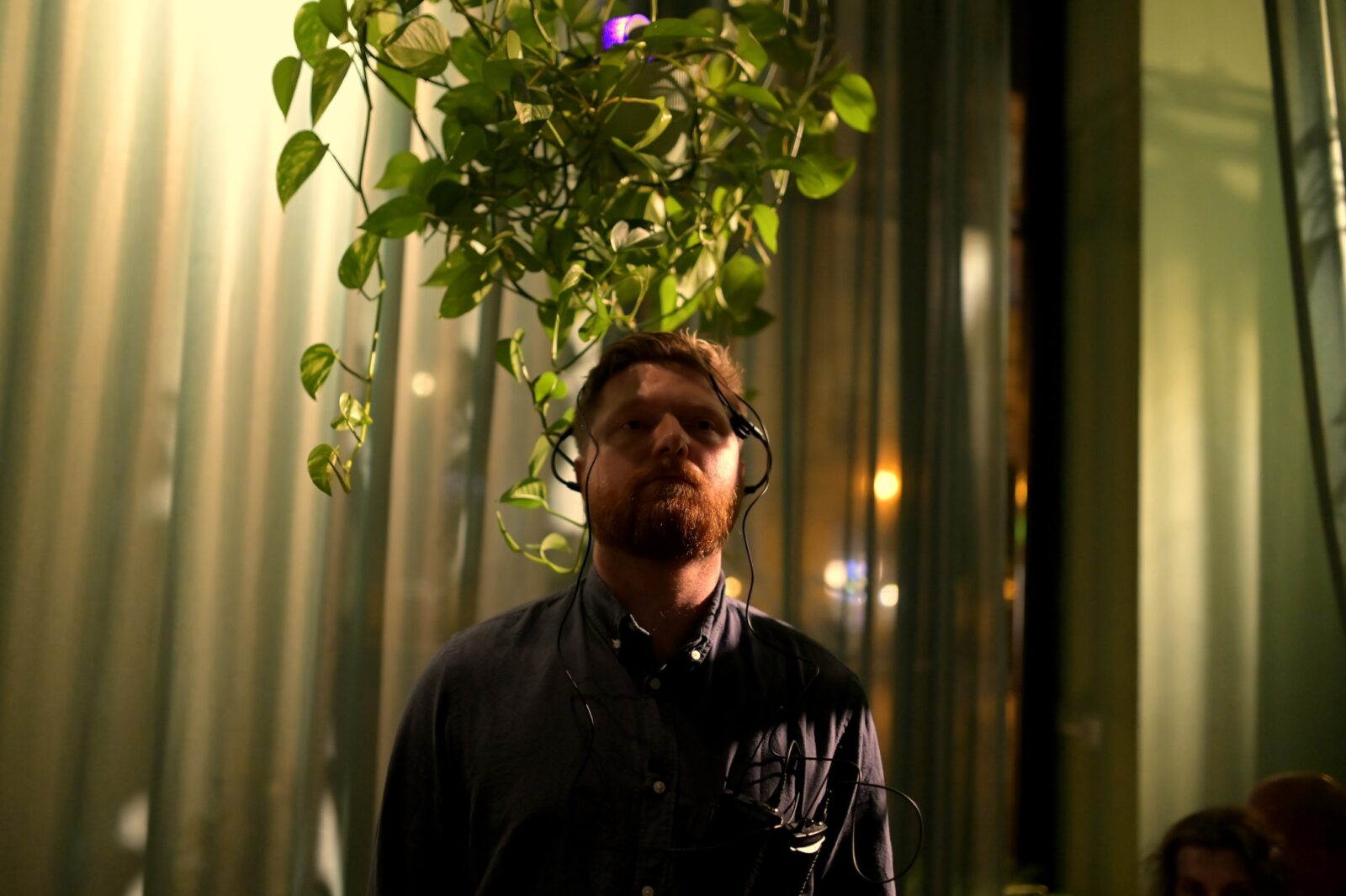
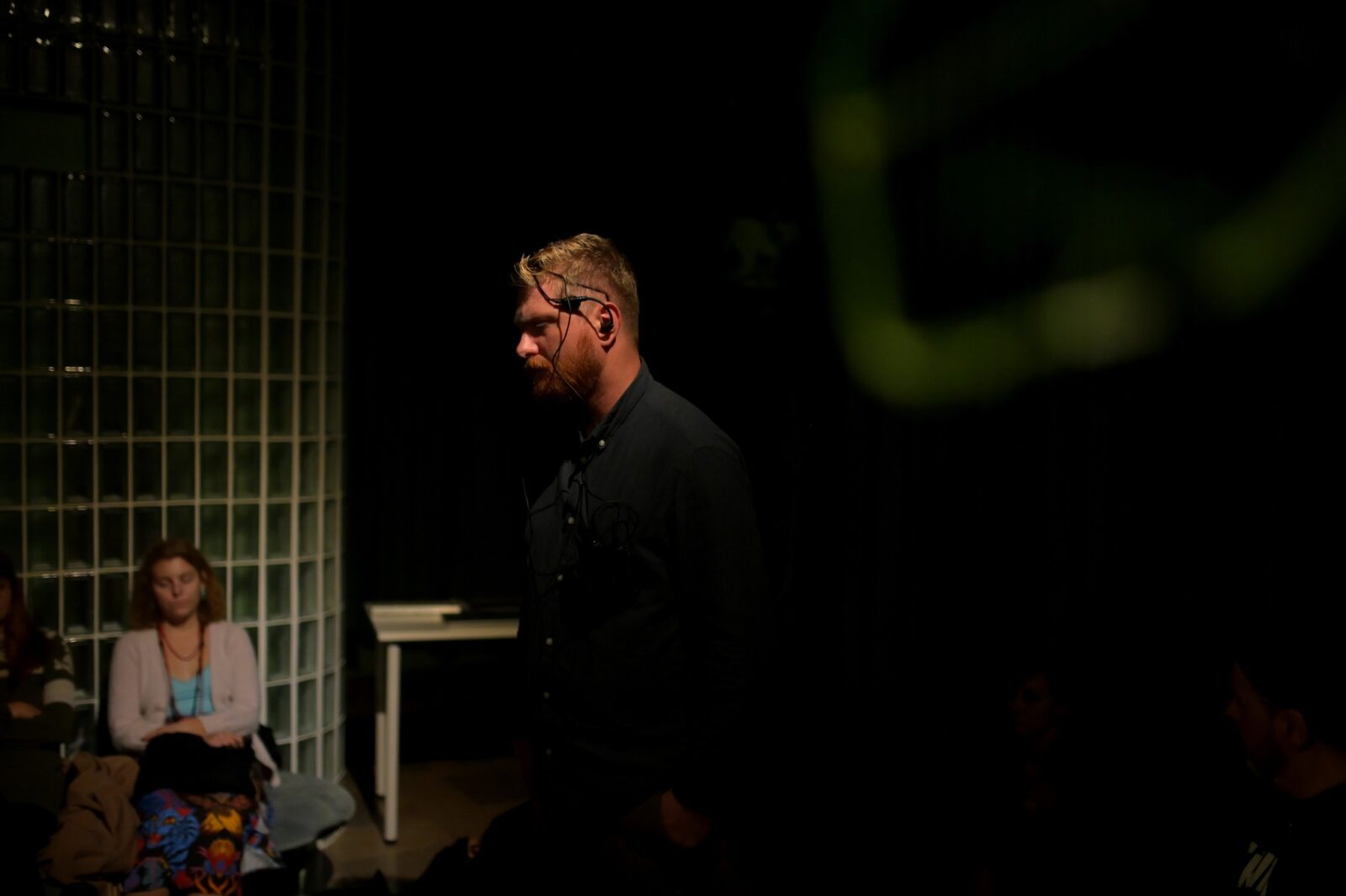
plays Alvin Lucier „Bird and person dyning” (1975)
a work for a performer, microphone, amplifier, loudspeakers and a sound object
“I began experimenting by moving the sounds of the bird between two speakers, listening to them through the two mini microphones inserted in my ears, as I walked slowly through the space between the two speakers. The amplified chirps moved left and right according to my movements, creating small time delays and phase’shifts in relation to the position of the motionless bird. Sometimes the microphones would resonate with the loudspeakrs, thus generating a Larsen feedback, and I could control the timbre and volume with small head movements.”
Alvin Lucier, liner note wydawnictwa “Bird and Person Dyning”, Cramps Records
Lucier’s piece is not only a study of how sound exists in space, its relationship to the body and movement. It is also an example of embodied listening, of the way our body and perception influence what and how we listen. Lastly, the performer’s spatialised ‘listening’ is an attempt to sonify the process of listening, to transpose the roles of a listener and a performer – after all, we listen to listening.
Agata Zemla
time_space (2022)
From the settling tanks, the wastewater was transferred to the flooding plots using a system of feeders and appropriate inlets with penstocks. This system allows for the flooding of successive plots separately, following a set spatial and temporal schedule.
Wojciech Łyczko, Pola irygacyjne Osobowice – historia i teraźniejszość
I was first introduced to the Wrocław Drain Fields as a biologist. In 2014, while conducting research there, I observed how fast the drainage system and the watercourse network carried rainwater deep into the ground: so efficiently that no trace of it remained. I also measured the inexorable drop in groundwater levels. And I still remember the heat intensifying these factors. Everything above the water accumulated in the ground would dry up.
And how does time pass in the Fields? Does it flow rapidly through the watercourse network or does it run down the drainage system? How does it relate to the space? Does it penetrate it, getting deeper and deeper, inevitably lowering its level? Is time also running dry in the Fields?
Years later, I once again turn to the piles of notes taken down during my research and return to the Fields as a composer. How to capture the time there with the movement of a hand, how to make it slow down? How to contain the vast space of the Fields in a small gallery with the same hand? The morphology of gestures made while walking and touching the meadow might prove similar to the one I employ when making music with motion controllers. Time itself, however, may become unstable. The typology I have developed, will both stabilise and destabilise it. I will translate the flooding mechanism of the Wroclaw Drain Fields into composed music, transforming space-time into other dimensions in the spirit of gestalt. Time and space, sp_time, time_ace.
Zaumne
A Visitor (2022)
I find access to hundreds of hours of meticulously captured sound recordings from a very specific area to be a unique but also intimidating experience. I decided to return to the Drain Fields on a selected day every month. To listen to the micro-events and note each one individually. To explore this space with my sense of hearing and to closely follow the transformations of the soundscape. To intuitively draw a map of the most significant moments captured on a given day. To assume the role of a curious phantom.
I will reconstruct and interpret the space that is now confined only to digital files in order to extract from it the most distinctive sound moments. My monthly visits, along with excerpts of recordings selected at the time, will constitute the building blocks of a composition that I will present during my concert.
Justyna Stasiowska
Martwa natura z polami (2022)
I consider the drain fields as artificial nature, developed as water treatment technology that has formed a distinct environment. In creating the composition, I will mirror this process and use the field recordings as a basis to produce artificial sounds imitating the drain fields’ acoustic landscape. This process of recreating nature is found in acoustic research, in which the sounds of a specific element, such as a bird’s voice, is filtered out of the entire sound recording. It is then presented to the audience, like a stuffed and suspended specimen. I am interested in how forms of environmental conservation through the medium of sound preserve a given acoustic environment, at the same time turning it into a spectrum that we shall never experience in reality again.
ABOUT THE ARTISTS
Beniamin Głuszek
Creator of sound installations, music theorist. The main subject of his interest is the sonification of the electrical activity of the human brain (EEG). He has presented his works in the Czech Republic, the Netherlands, Scotland and Poland – including at the “Warsaw Autumn” and “AudioArt” festivals, during the Art Review “Survival”.
https://www.polskieradio.pl/8/2565/Artykul/2030150,Fale-mozgowe-w-sztuce-i-medycynie?
Zaumne
Poznan-based sound artist. Researcher of human moods and the culture of the Internet and its sound content. Creatively interested in the non-conceptual and intuitive. In his compositions he uses meticulously processed vocal samples and tickling sounds that evoke the ASMR phenomenon. His catalog includes albums exploring themes of personal experience (Przeżycia, Emo dub) and paranormal sensations and dreams (Flash, Contact and Dreams of Teeth Falling Out). He has been associated with the labels Perfect Aesthetics, czaszka.rec and Mondoj. Last year, on the latter label, he released the album Élévation, on which whispered verses from Baudelaire’s “Flowers of Evil” intertwine with minimalist melodies and field recordings. He also collaborated with Zachęta – National Gallery of Art for which he produced a series of radio plays called Inner Focus based on field recordings, ambient music and spoken word. For the Museum of Modern Art in Warsaw, he soundtracked the hydro-feminist film From the Water (Zakole Group, 2021), musicalizing the soundscape of river microorganisms. Currently, he is working with Krystyna Szmek on the exhibition Epidermis at the Laznia Center for Contemporary Art in Gdansk.
Justyna Stasiowska
She works on theory through sound, performing as a composer, sound artist, sound designer and publishing in scientific and music journals. She is the managing editor of the thematic issue “37: sound design” of Glissando magazine. Her sound installation “Sweetening” was presented as part of the exhibition “Jokes with Jokes” (CCA Ujazdowski 2020). Her sound material was released by the Nawia Records label in 2019 as an EP and as part of a compilation in 2020. She also creates sound settings for exhibitions, performances and theatrical activities.
Agata Zemla
She is a graduate of the Music School in the piano class, biology at the University of Wroclaw and music theory at the Academy of Music in Wroclaw, where she studies composition in the class of Prof. Cezary Duchnowski. In her thesis in theory, she undertook a consideration of the influence of rhythm on the phenomenon of trance, in a psychological and somatic context, thus realizing a cross-sectional study from the music of African tribes to club dance music. She composes contemporary classical music that will affect the current world as a manifesto, a postulate, a document – at the same time being innovative, based on electroacoustic music. She creates in what she describes as a journalistic trend, touching on political, sociological, psychological, as well as naturalistic aspects. Her works have been presented at the NOSPR, the AMKL Courtyard Concerts, and the Art Media Biennale Reverso 2021 at the WroArt Center, among others. Agata also composes music for performances, which could be heard, among others, as part of the XXX National Festival of Puppet Theaters in Opole. In addition to composing, she is also a performer and sound designer, and performs intermedia performances, as well as live sets.
ABOUT THE EVENT
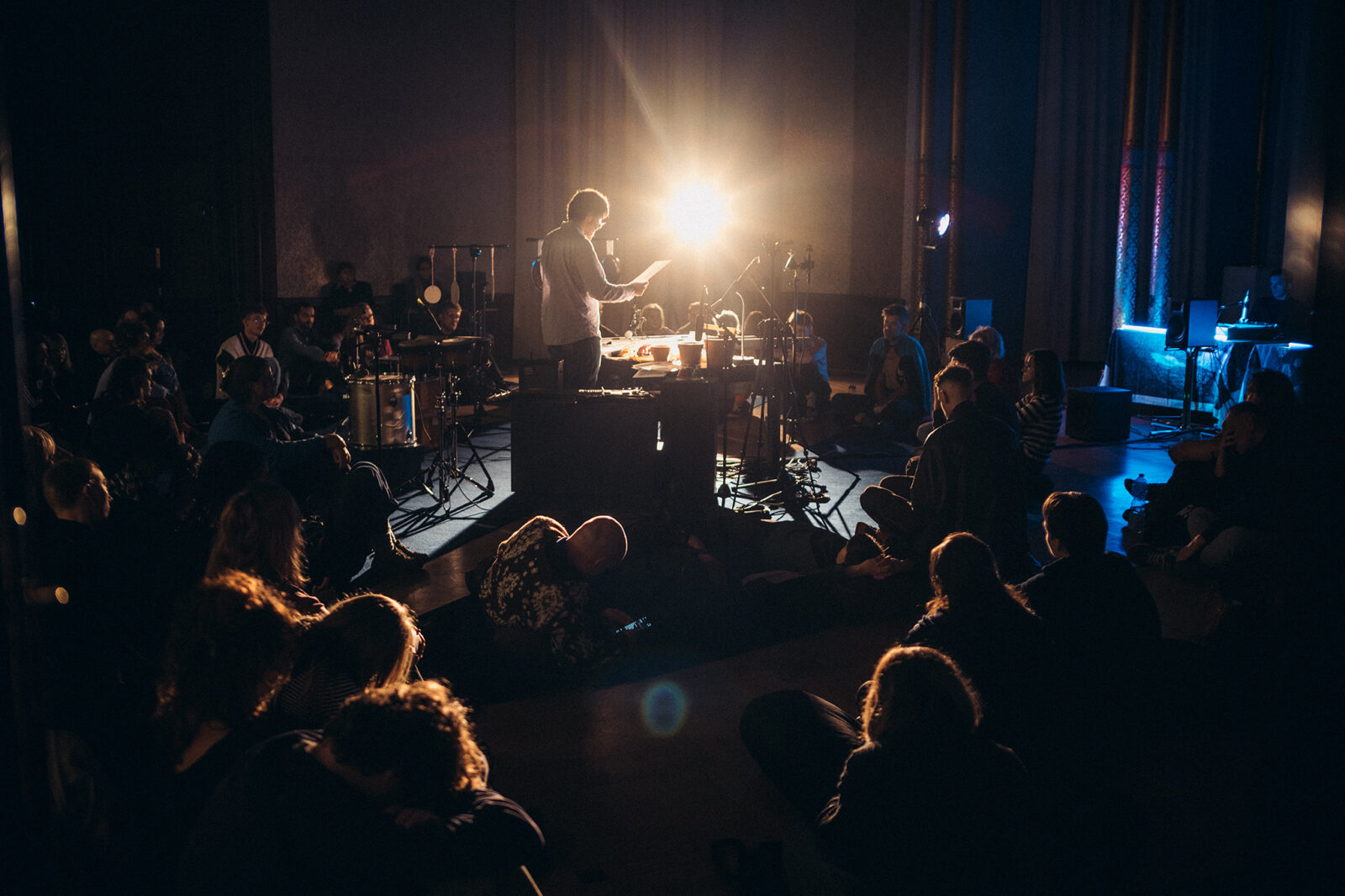
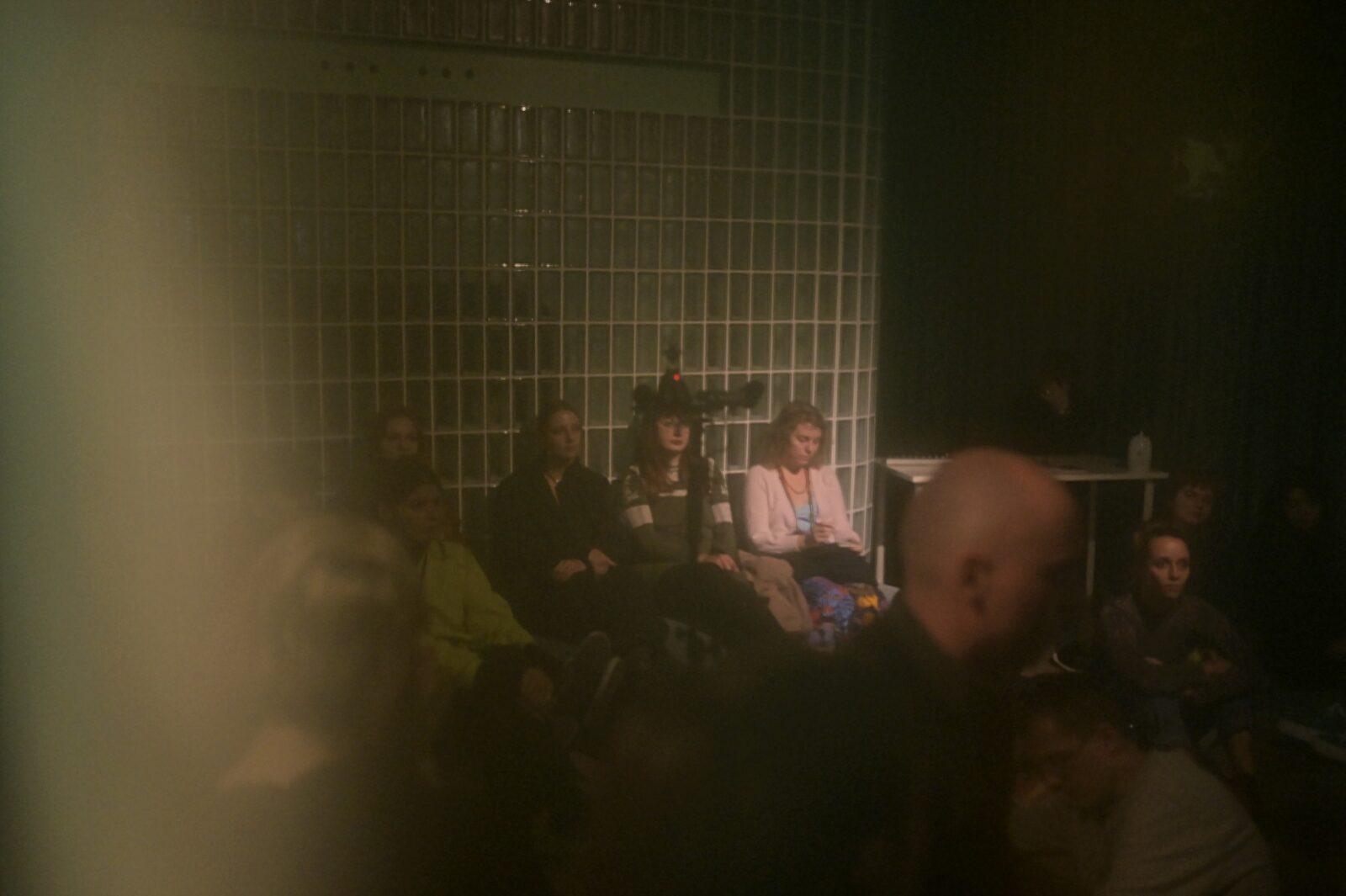
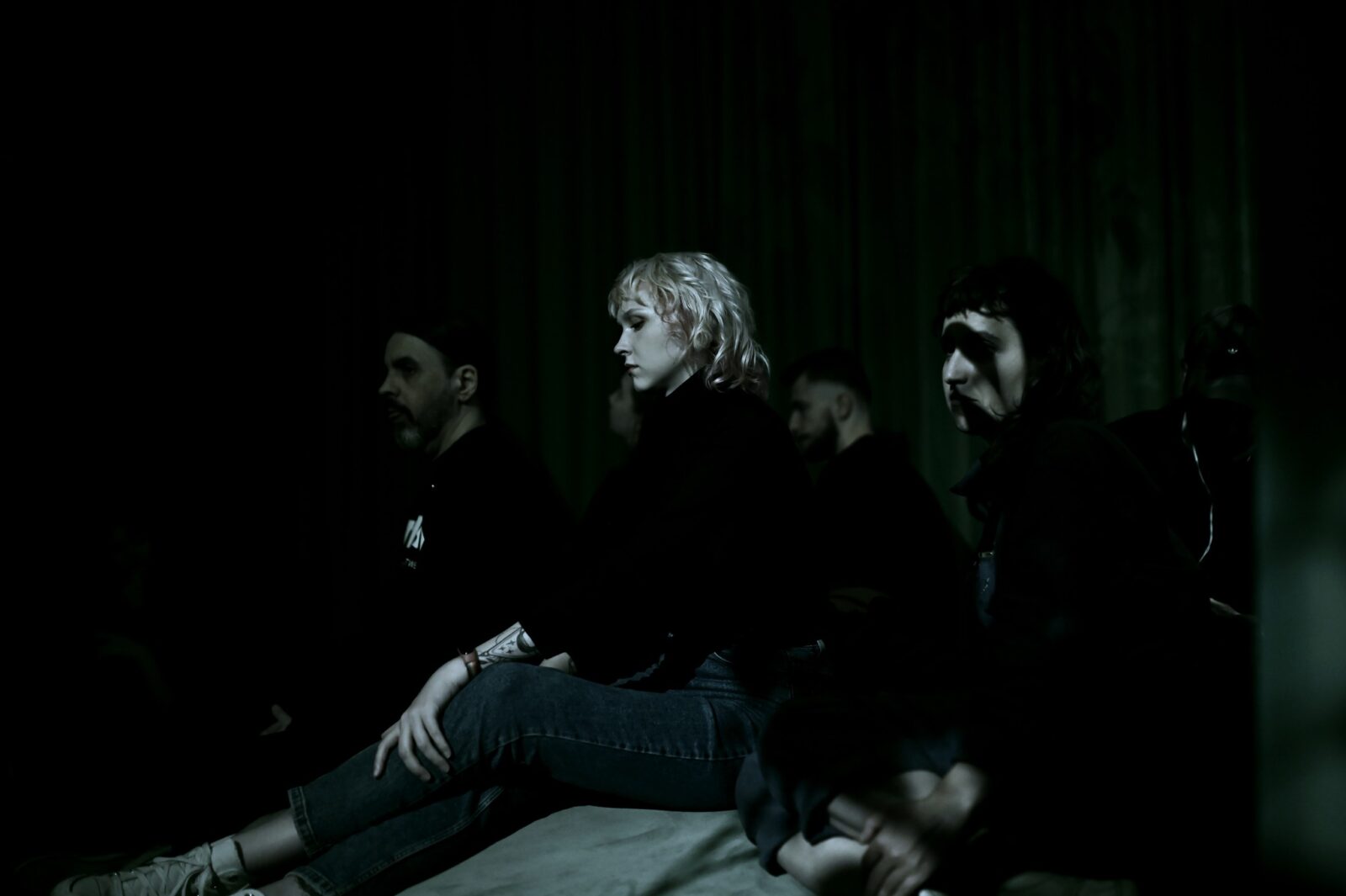
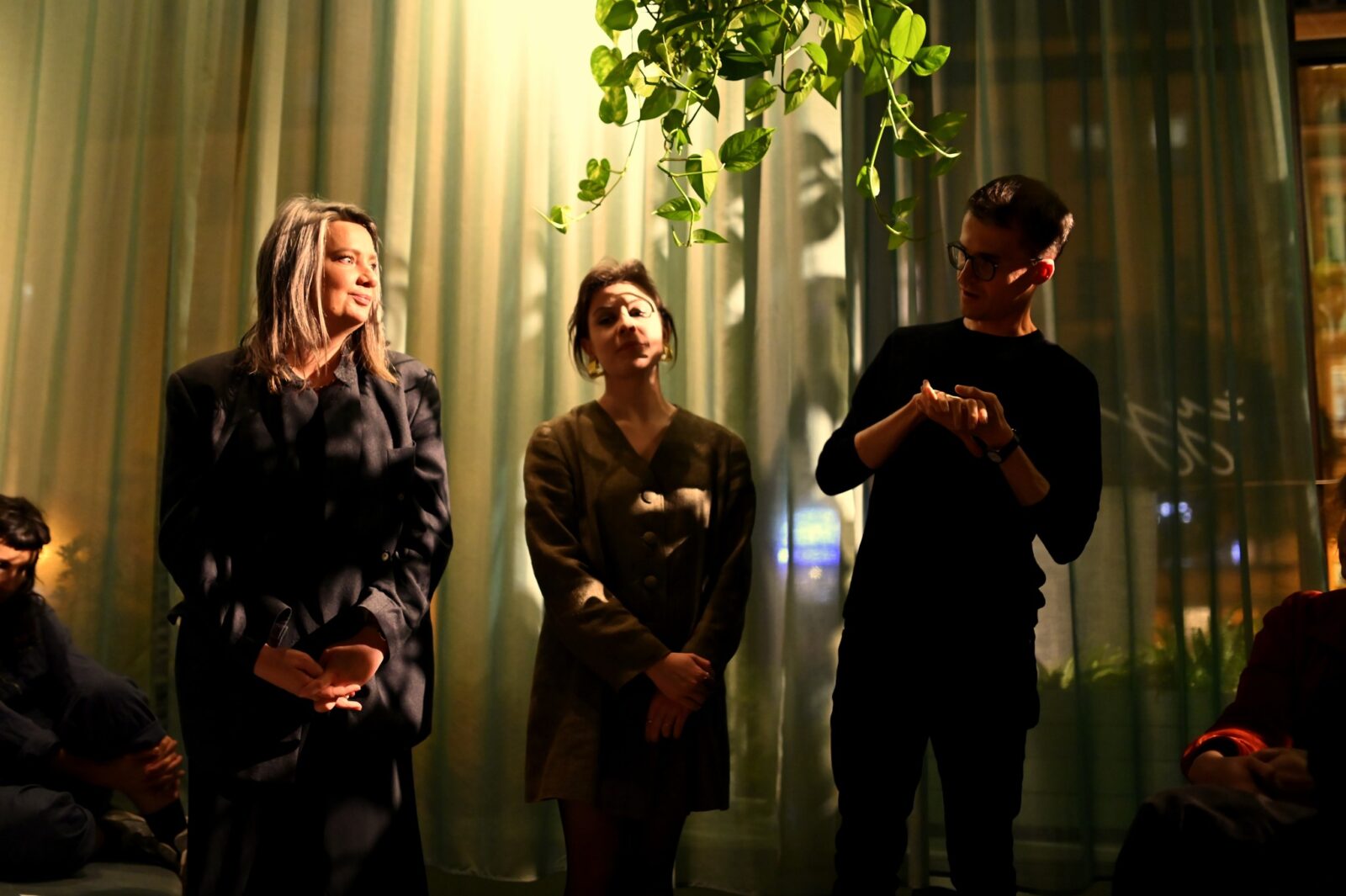
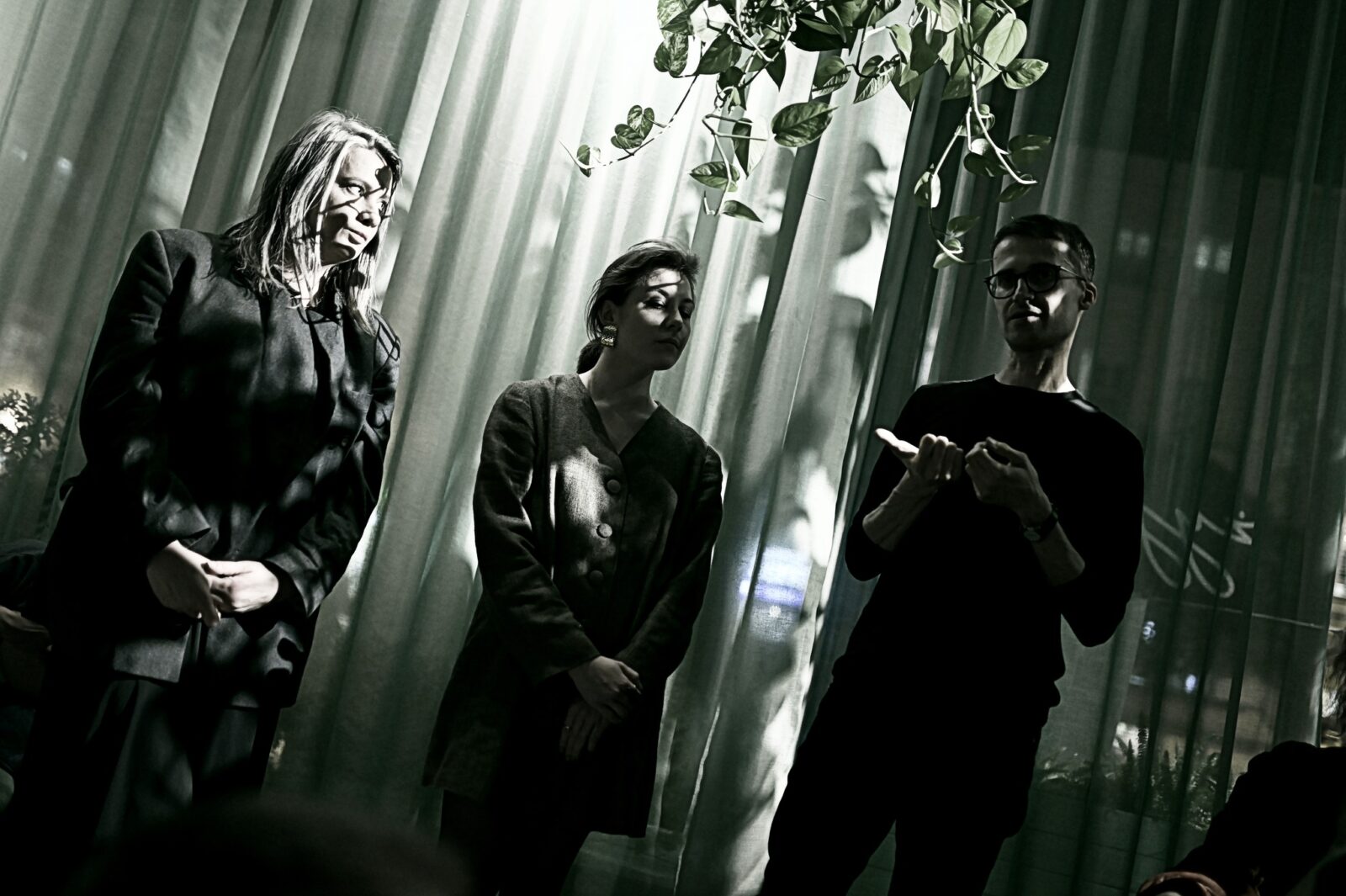
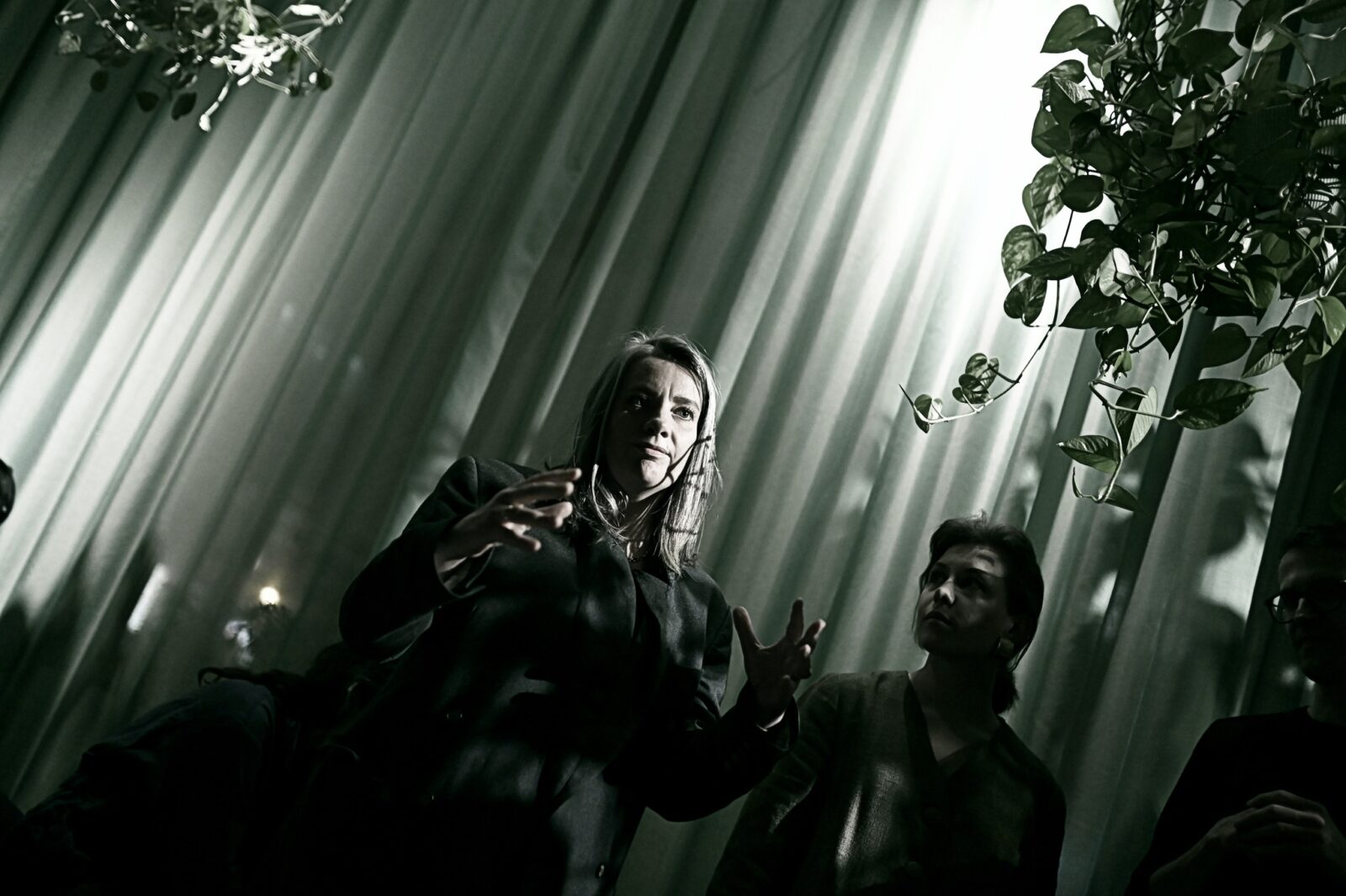
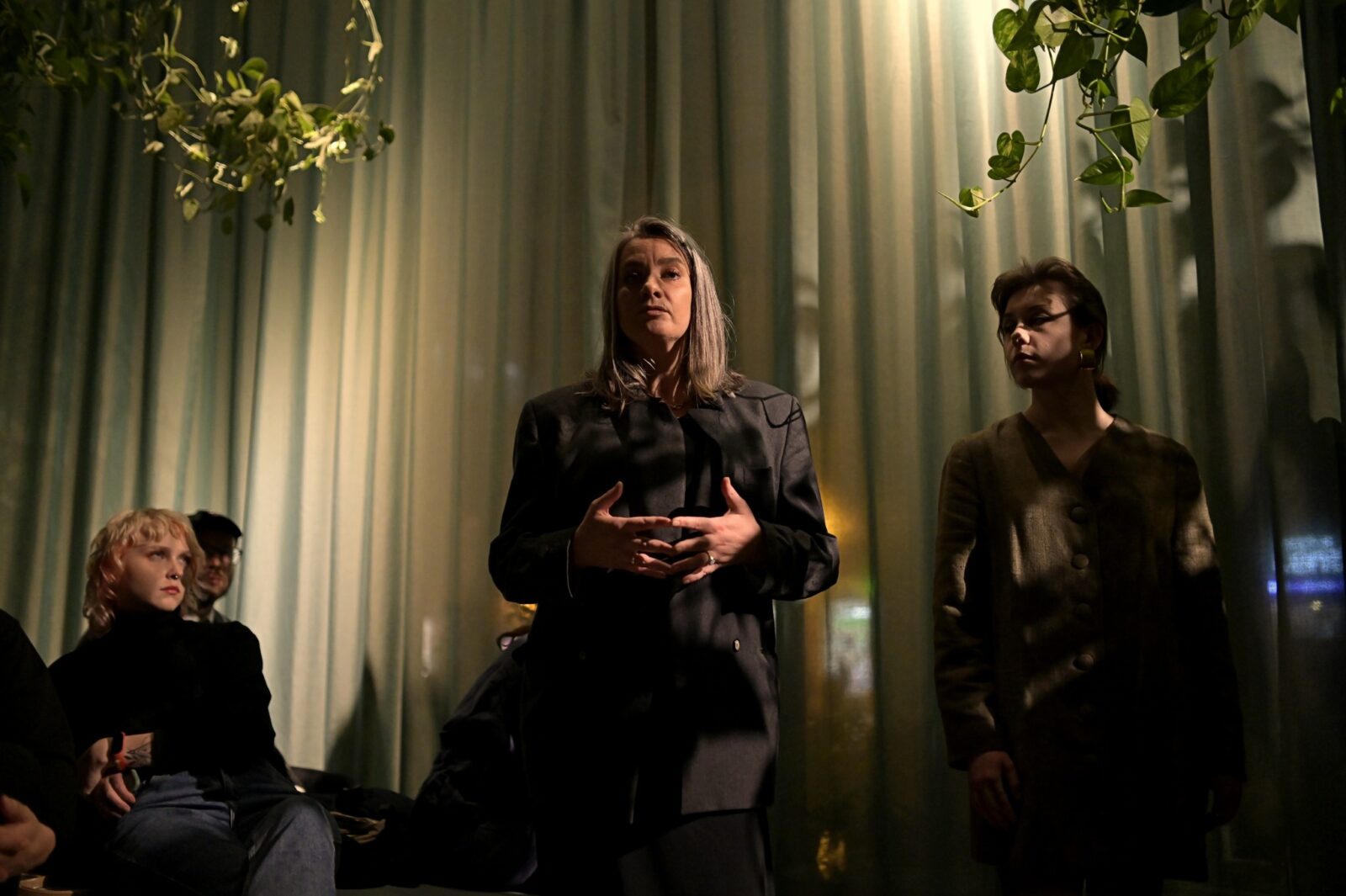
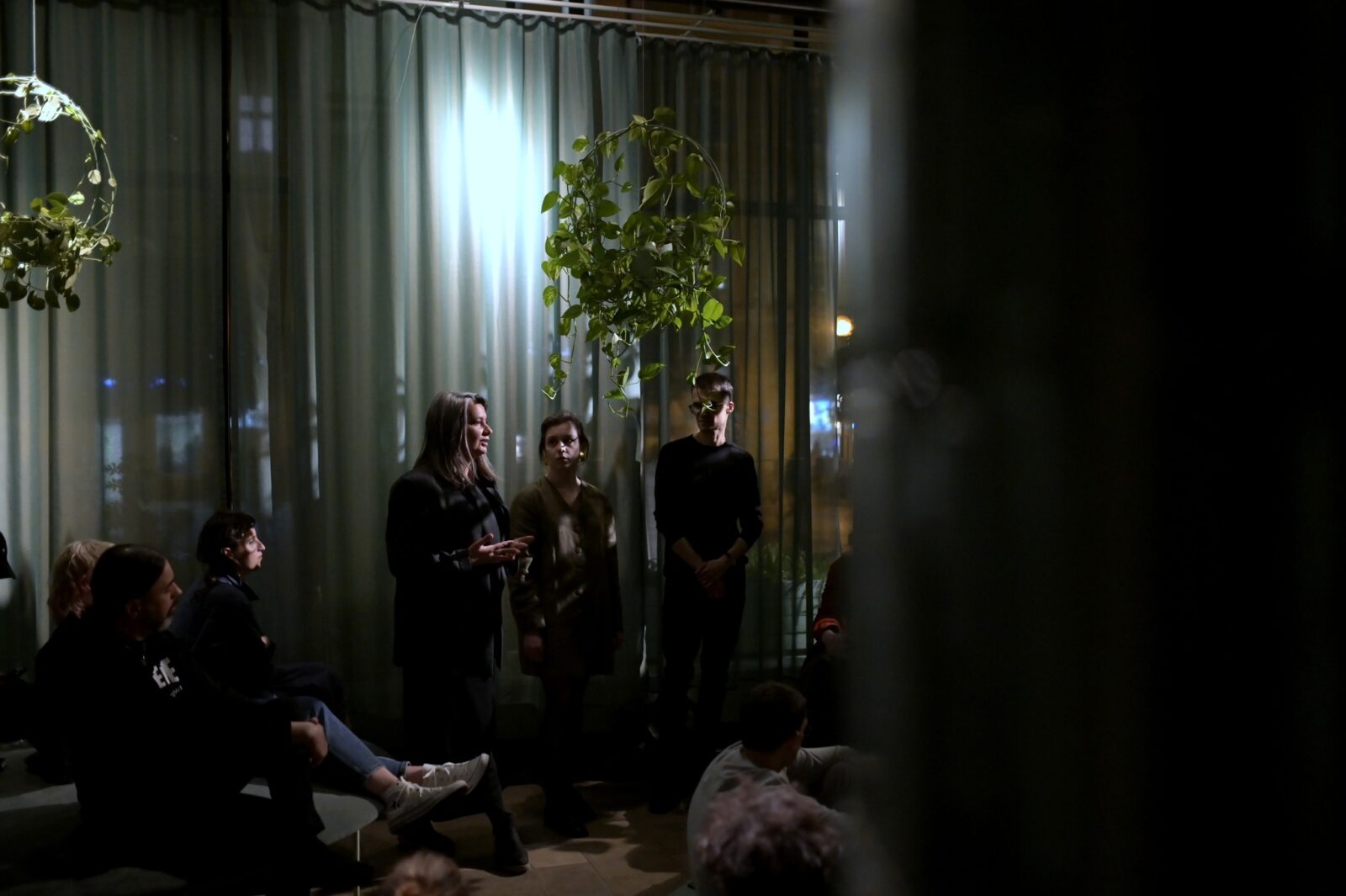
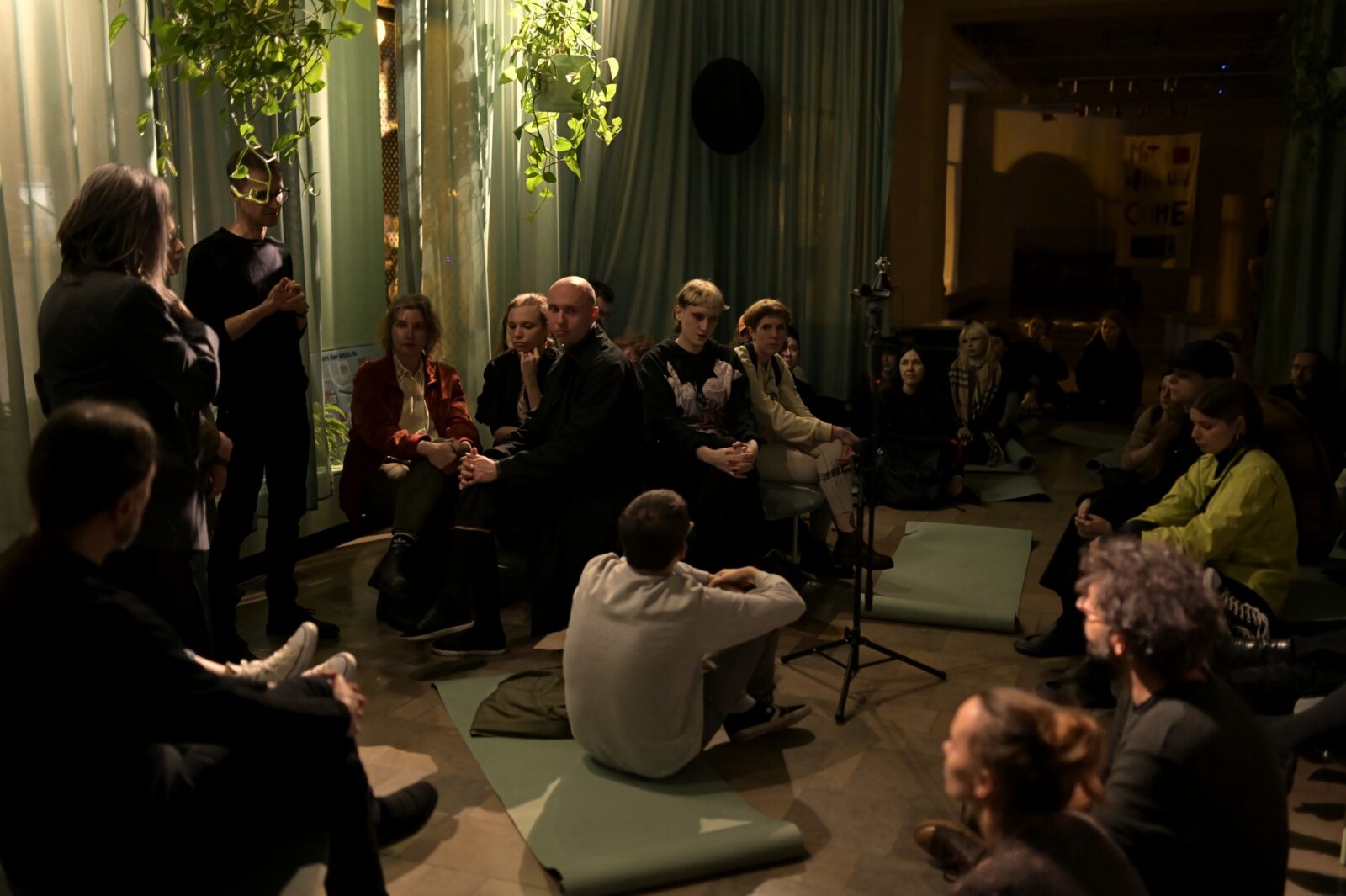
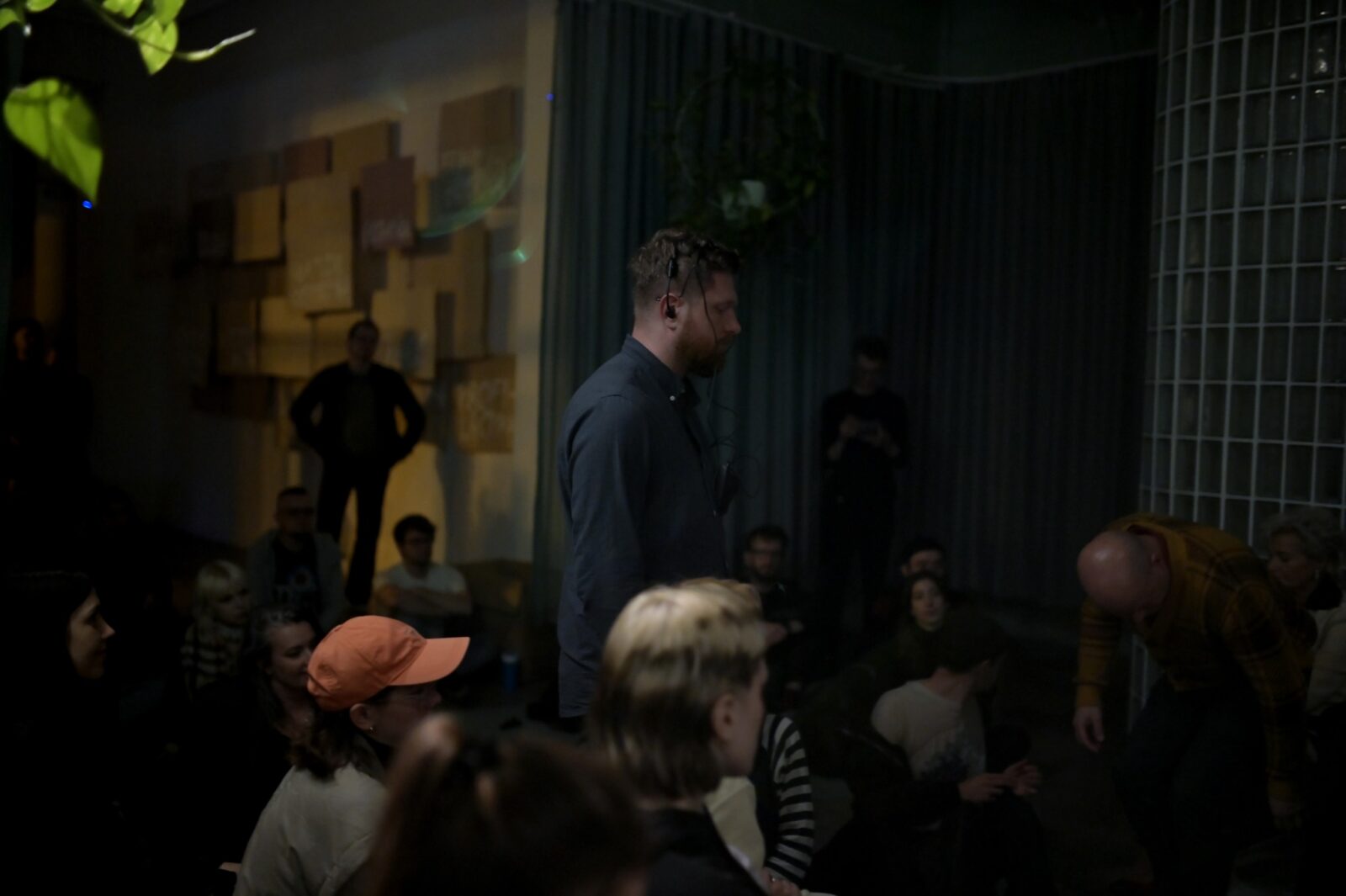
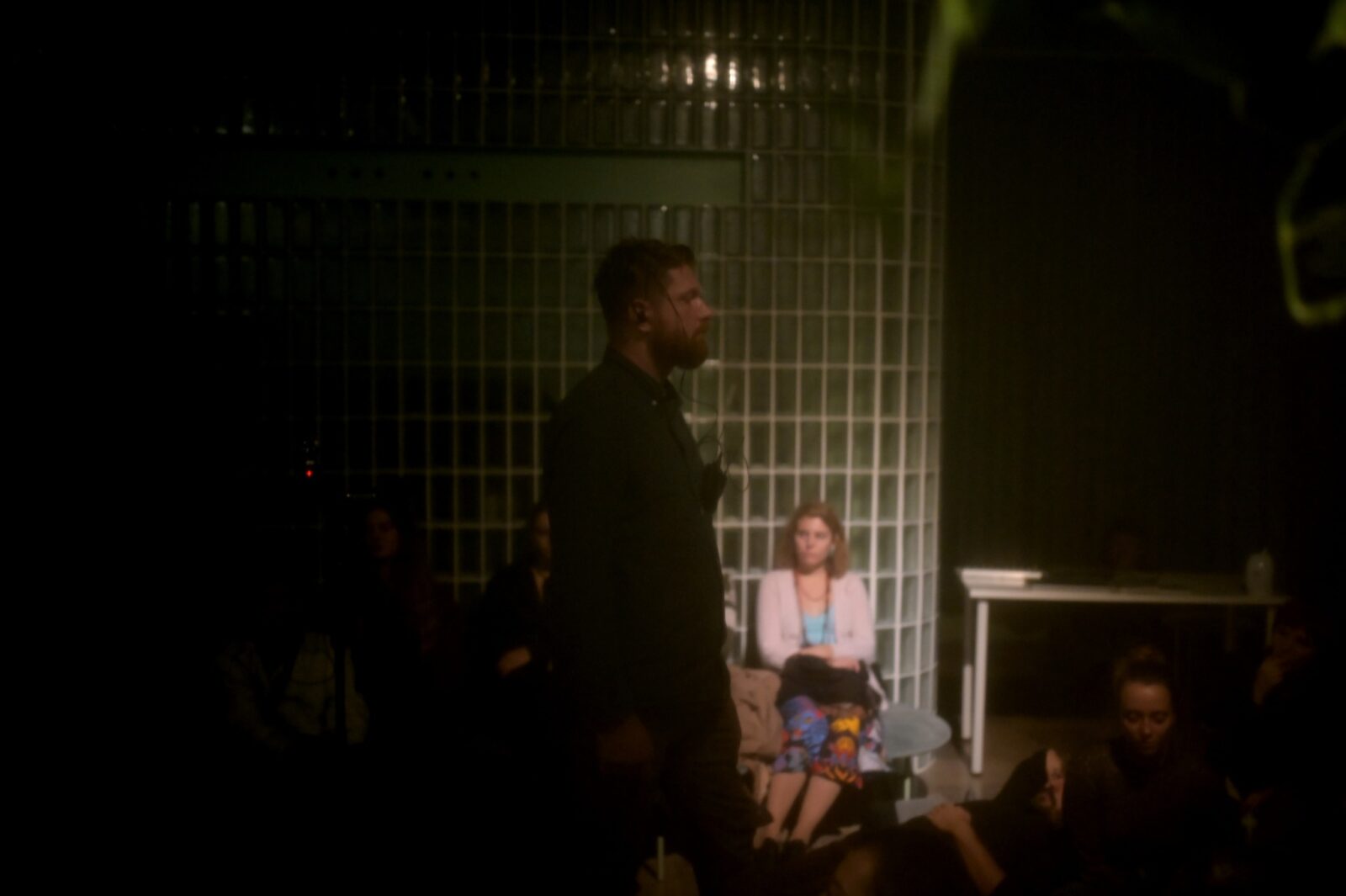
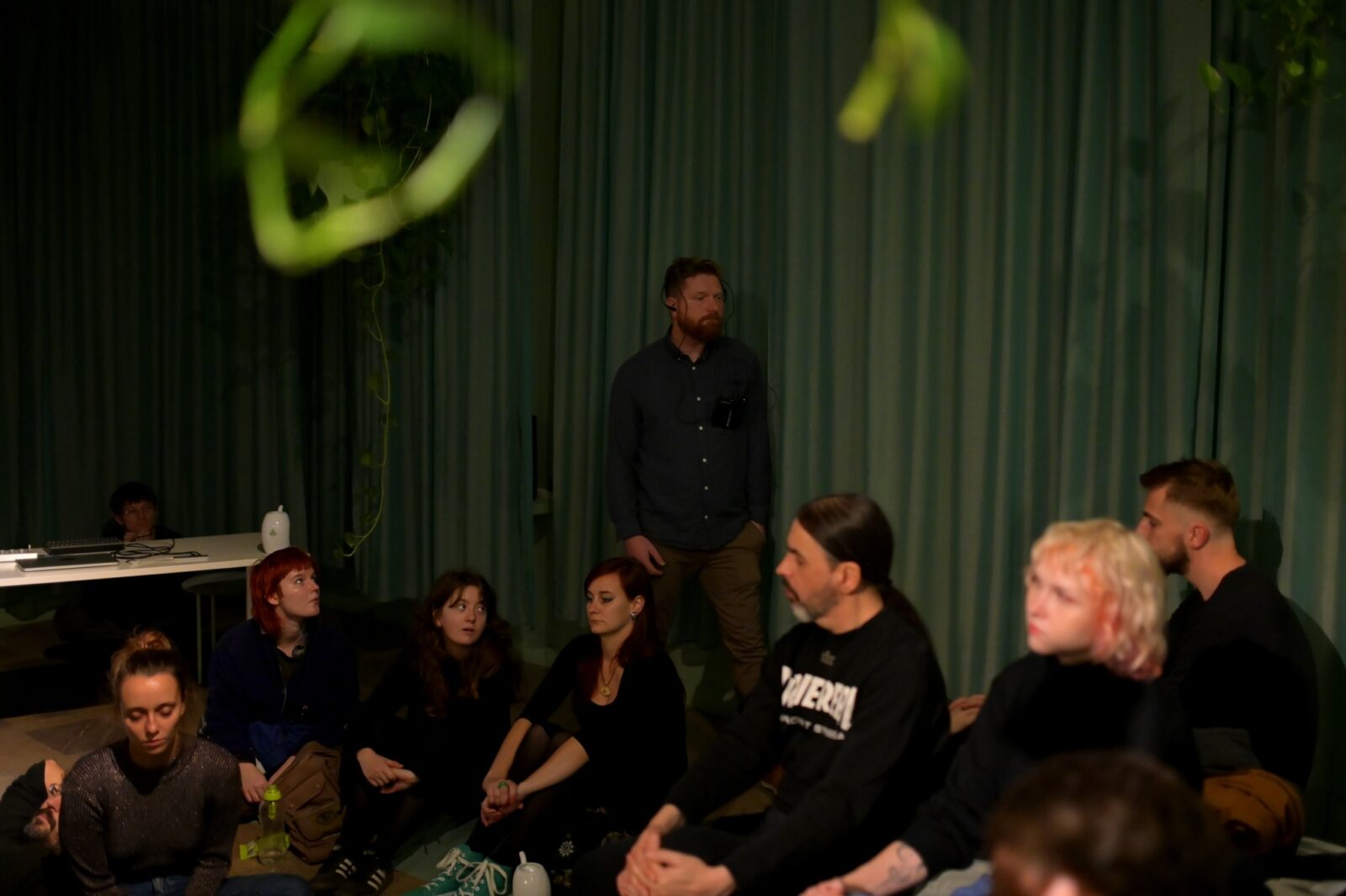
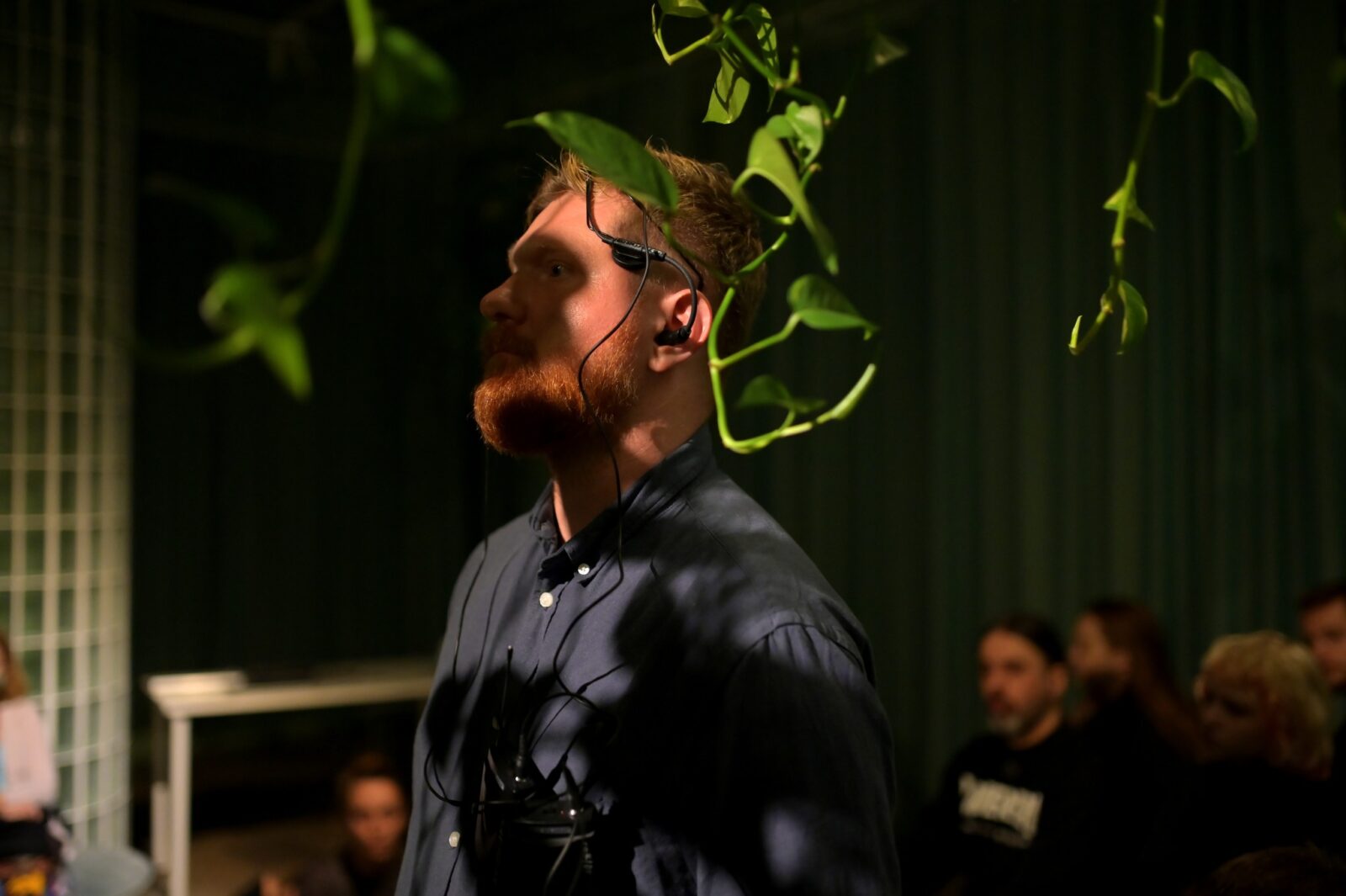
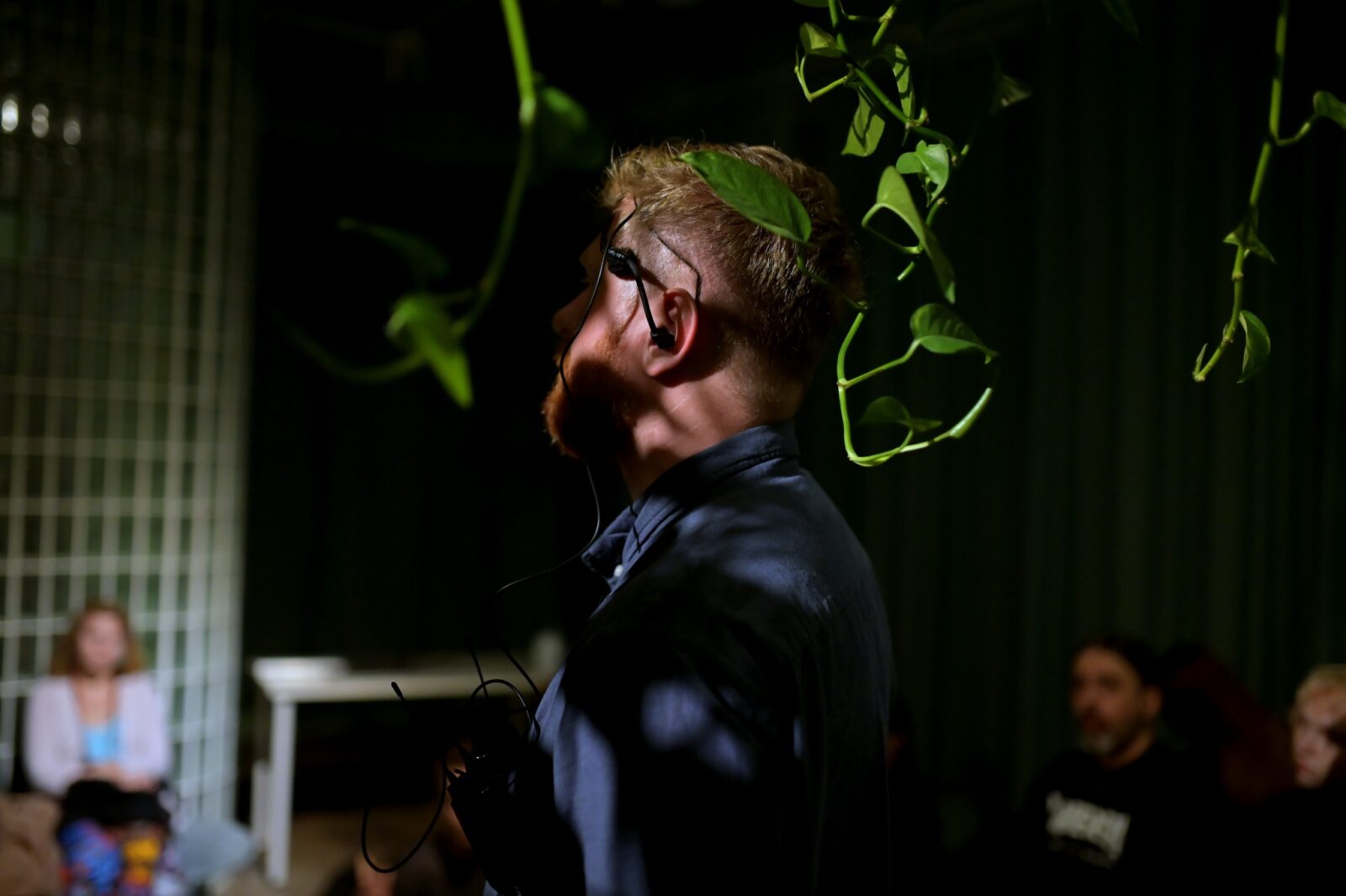
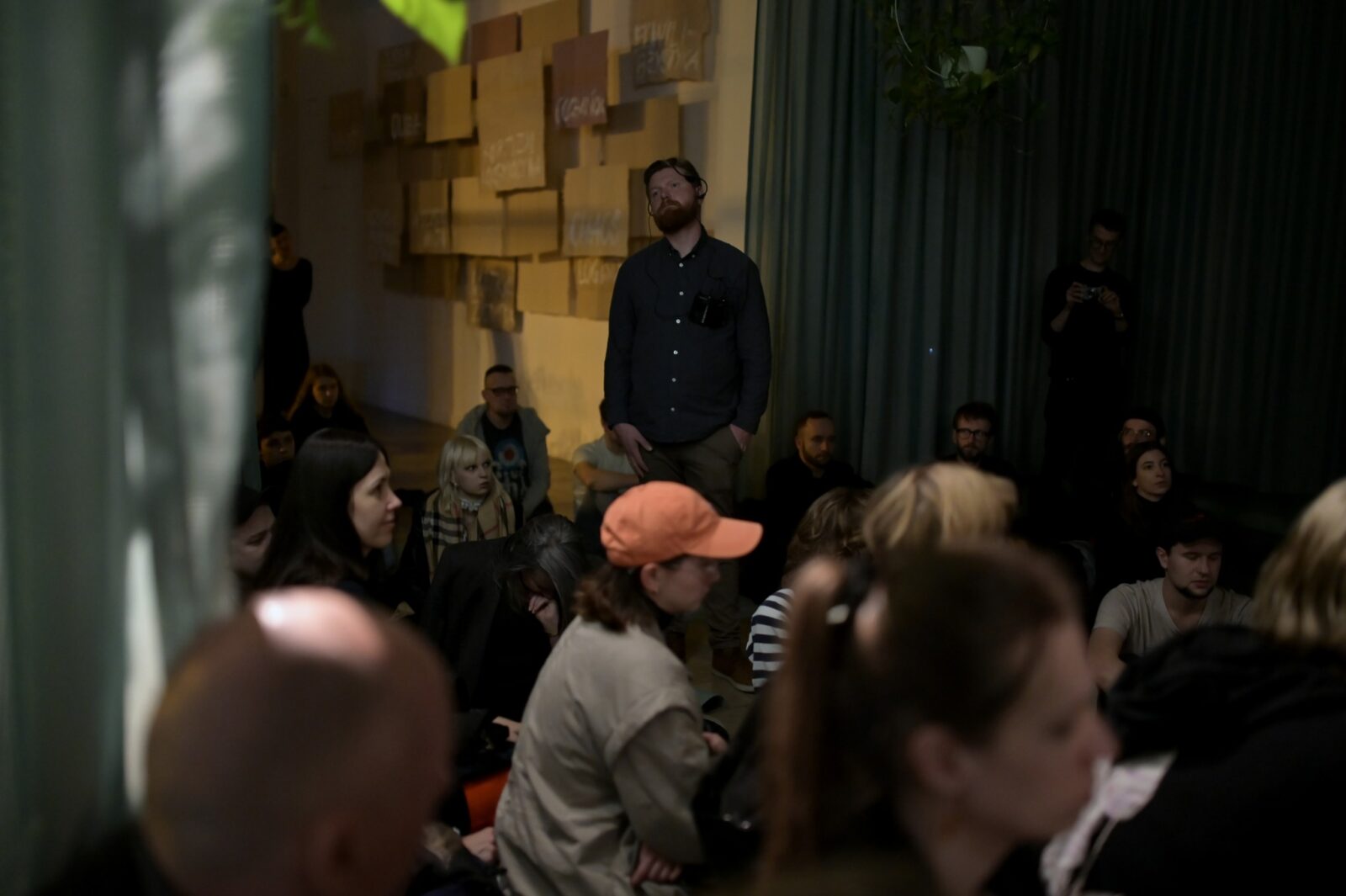
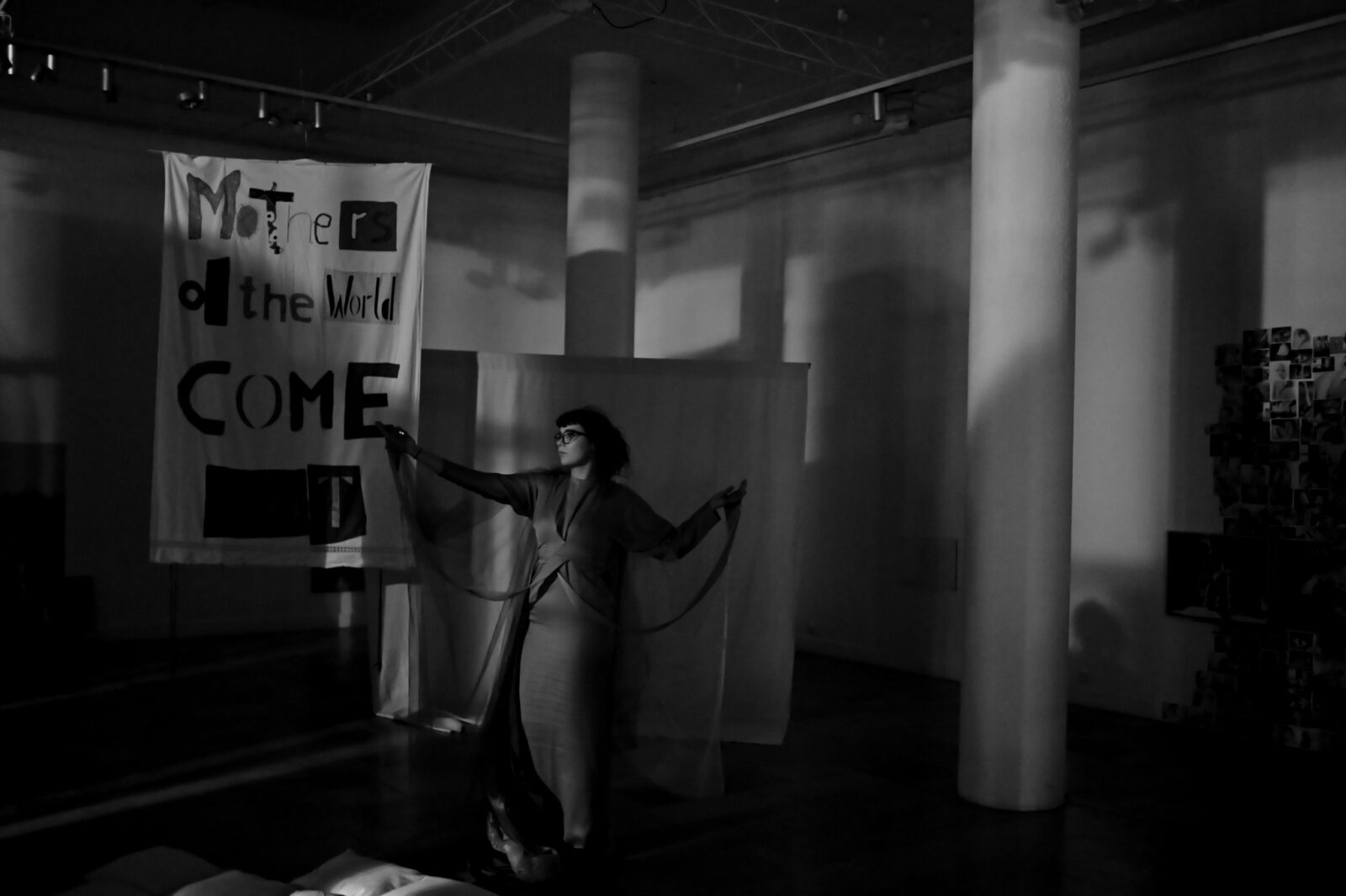
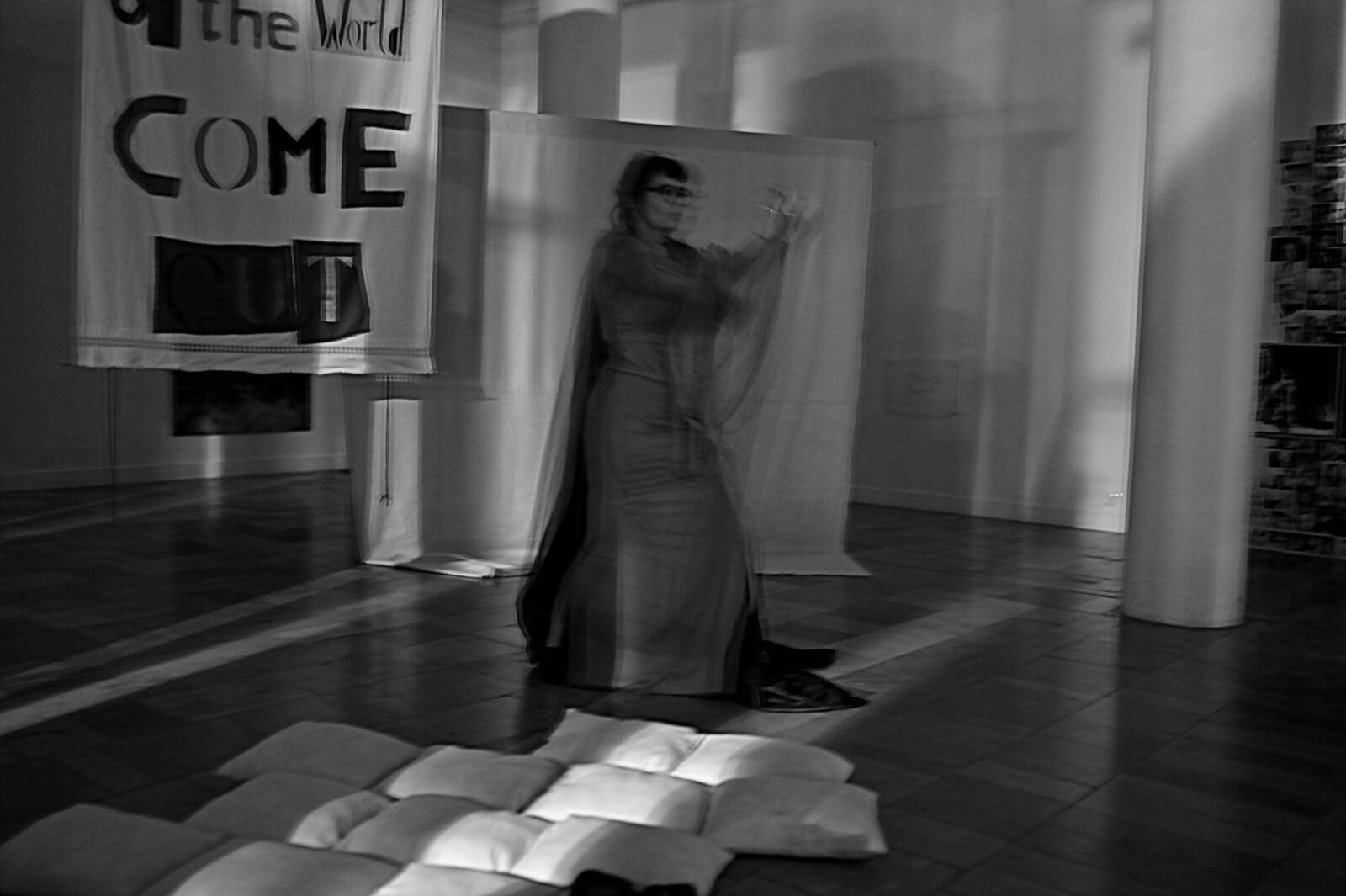
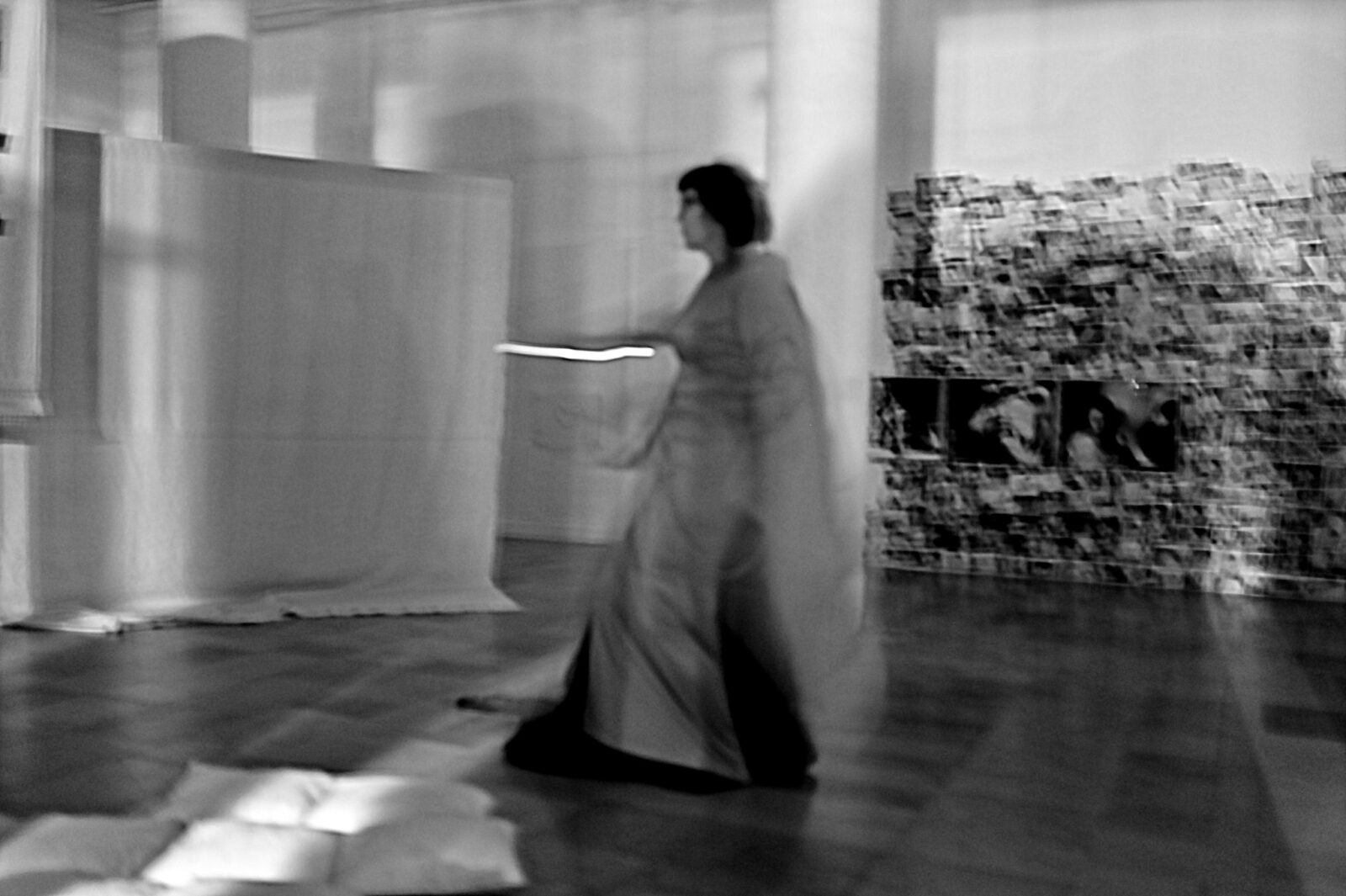
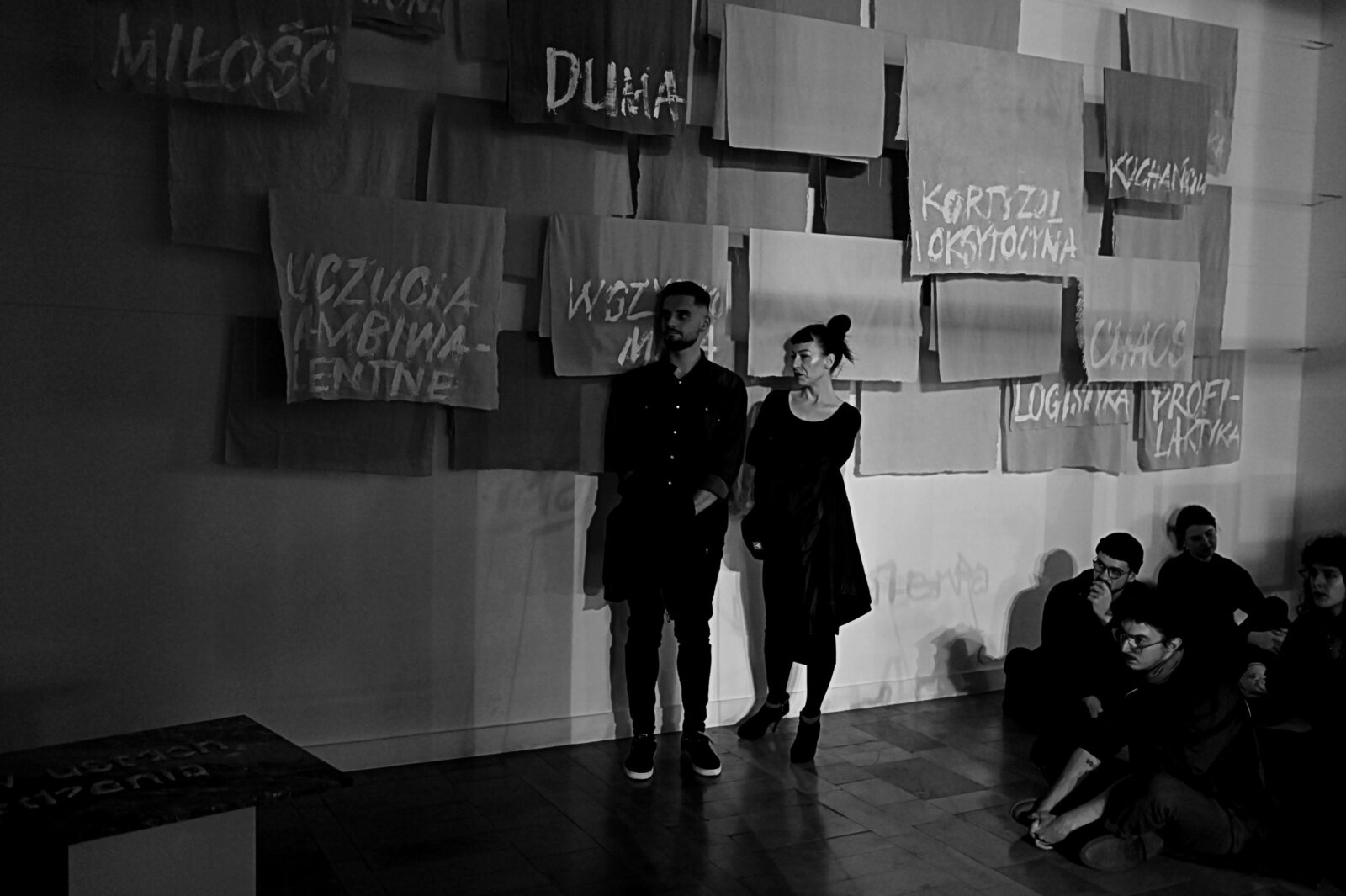
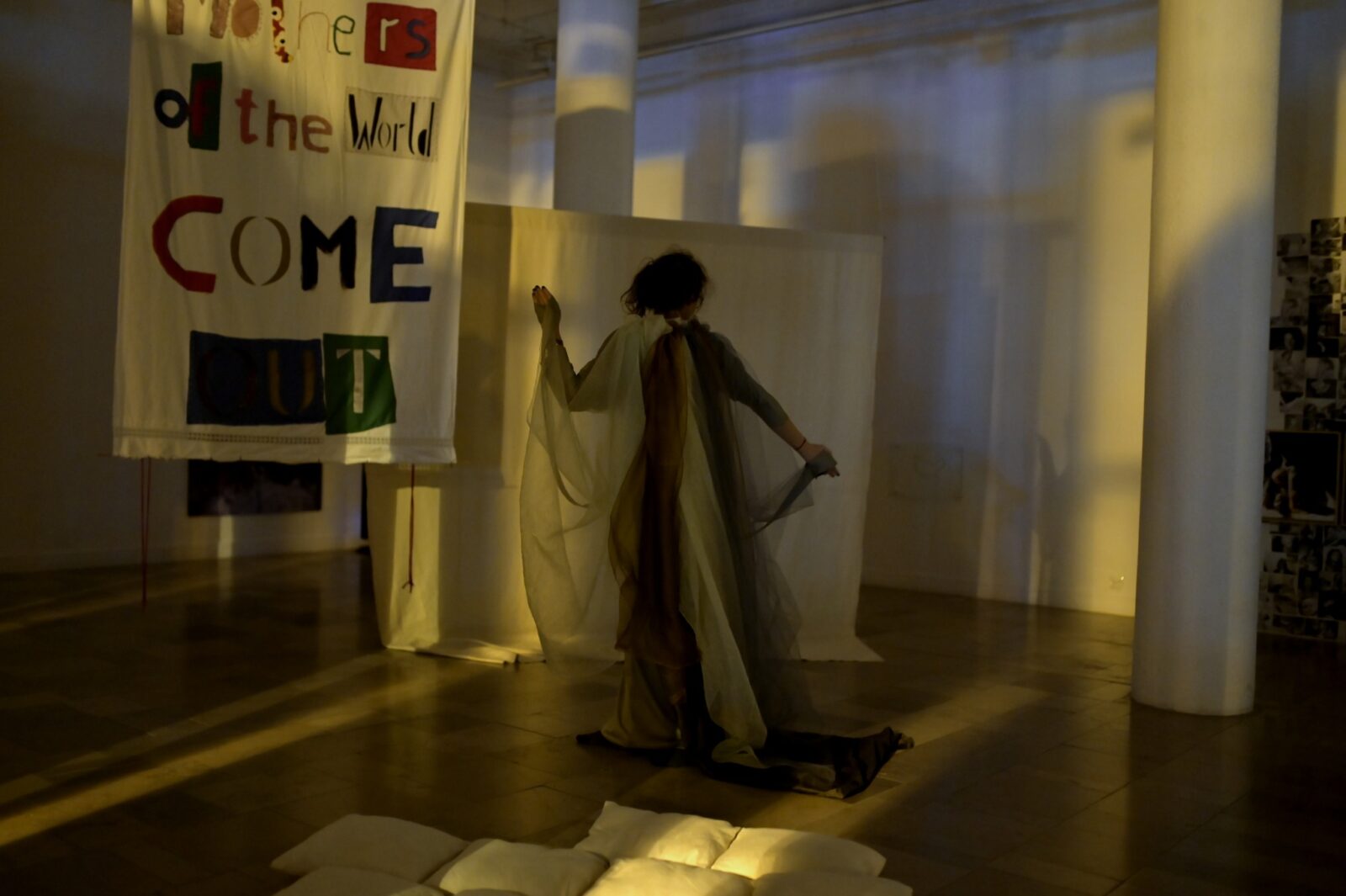
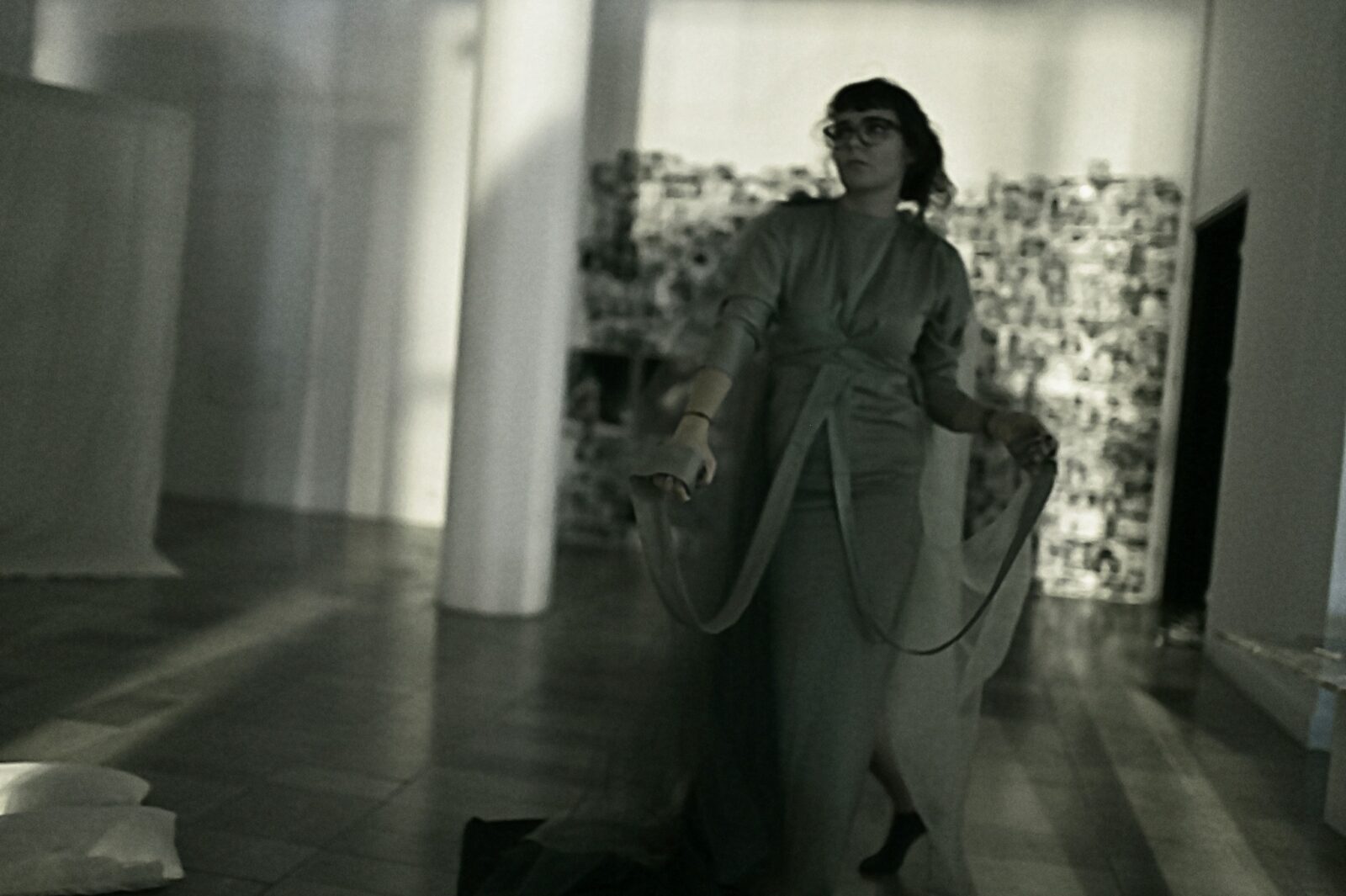
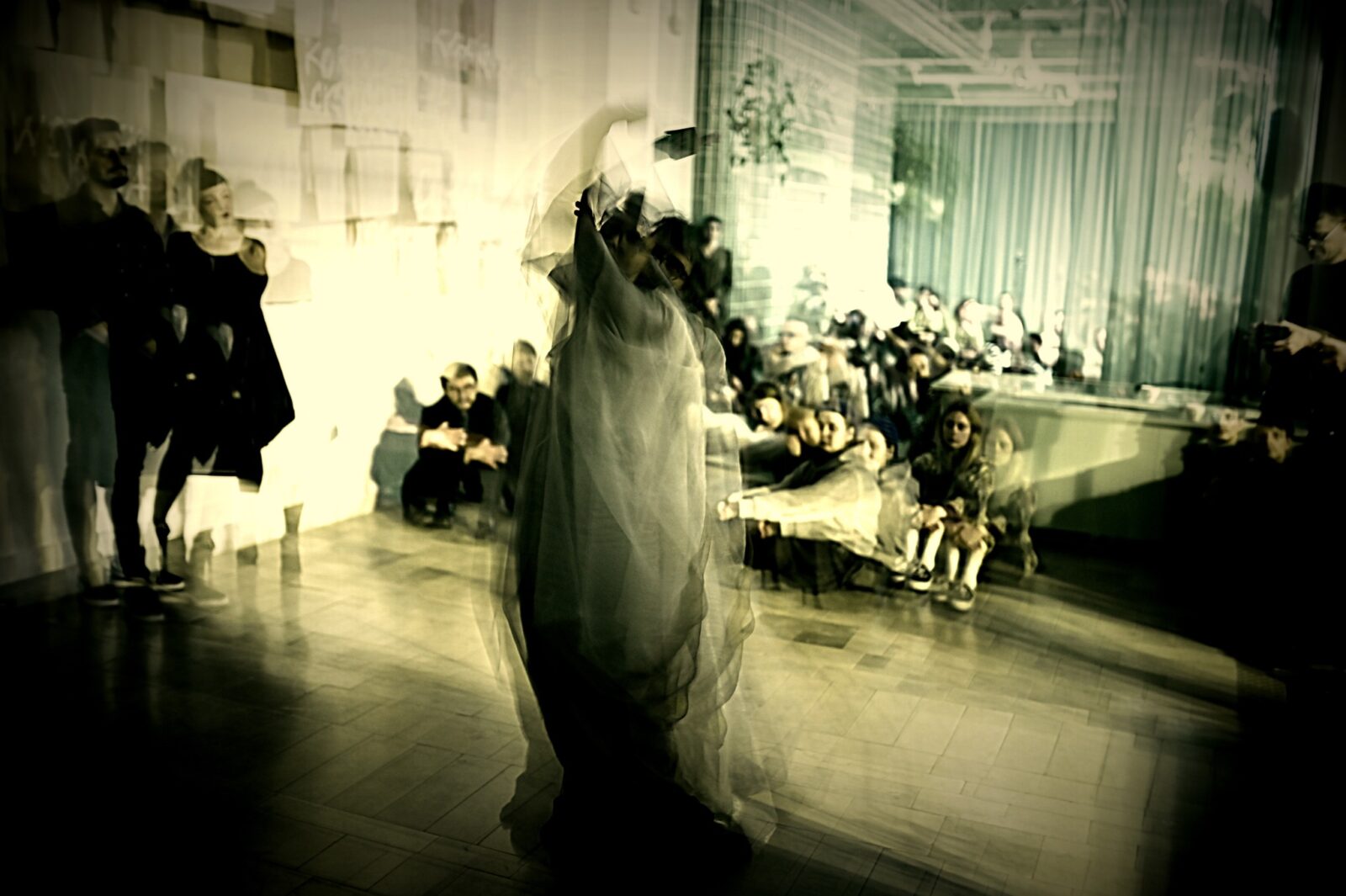
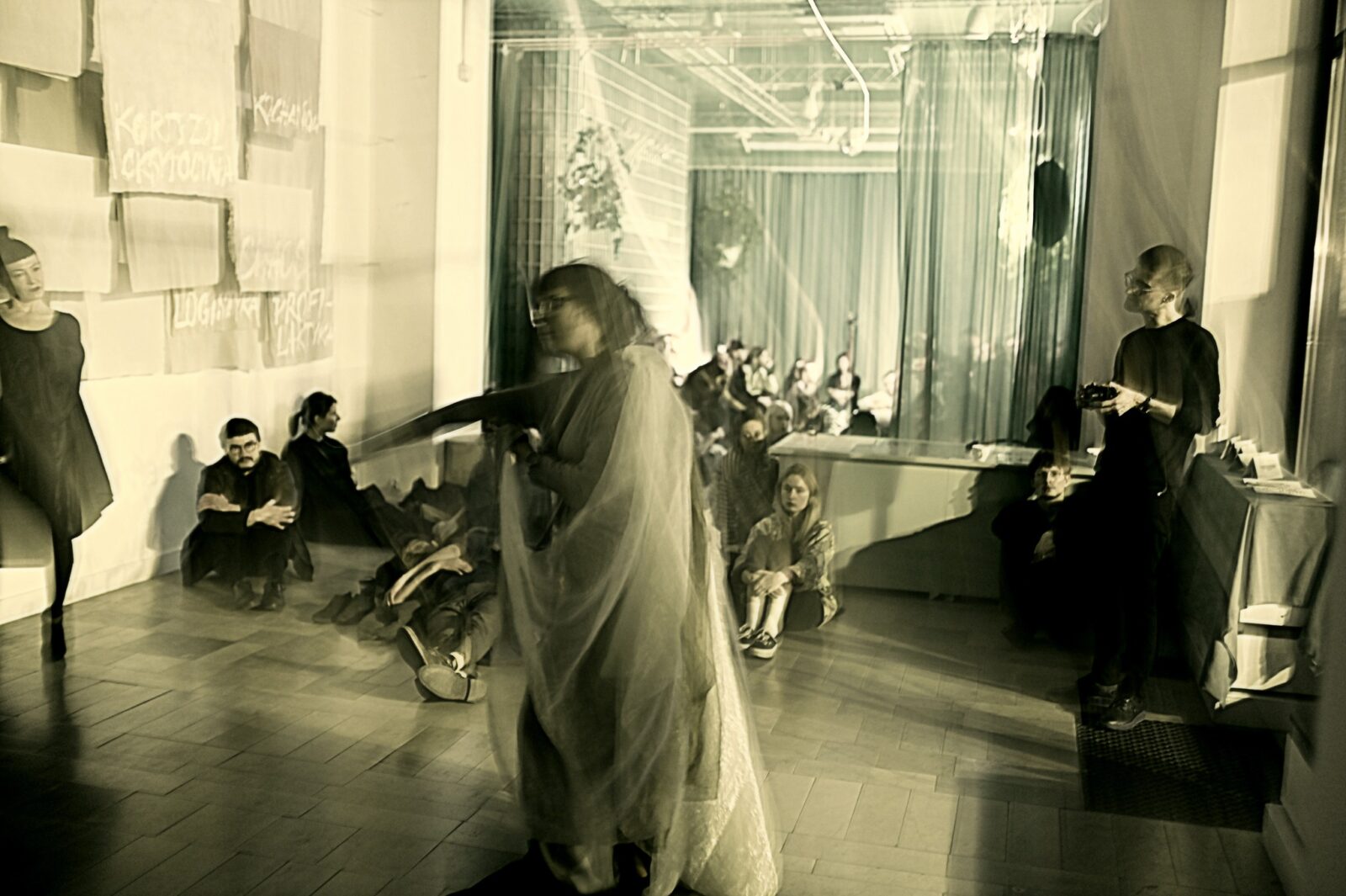
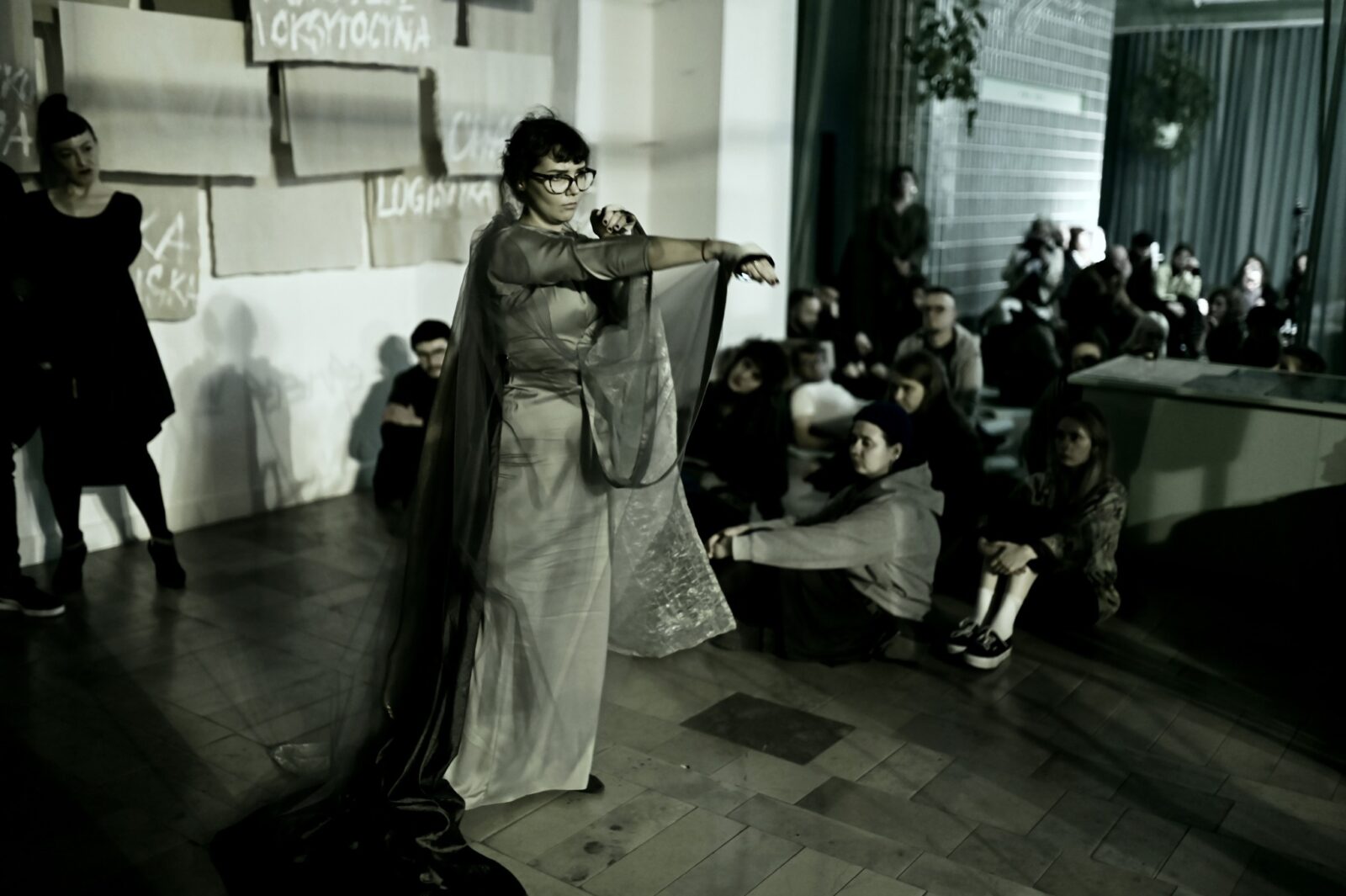
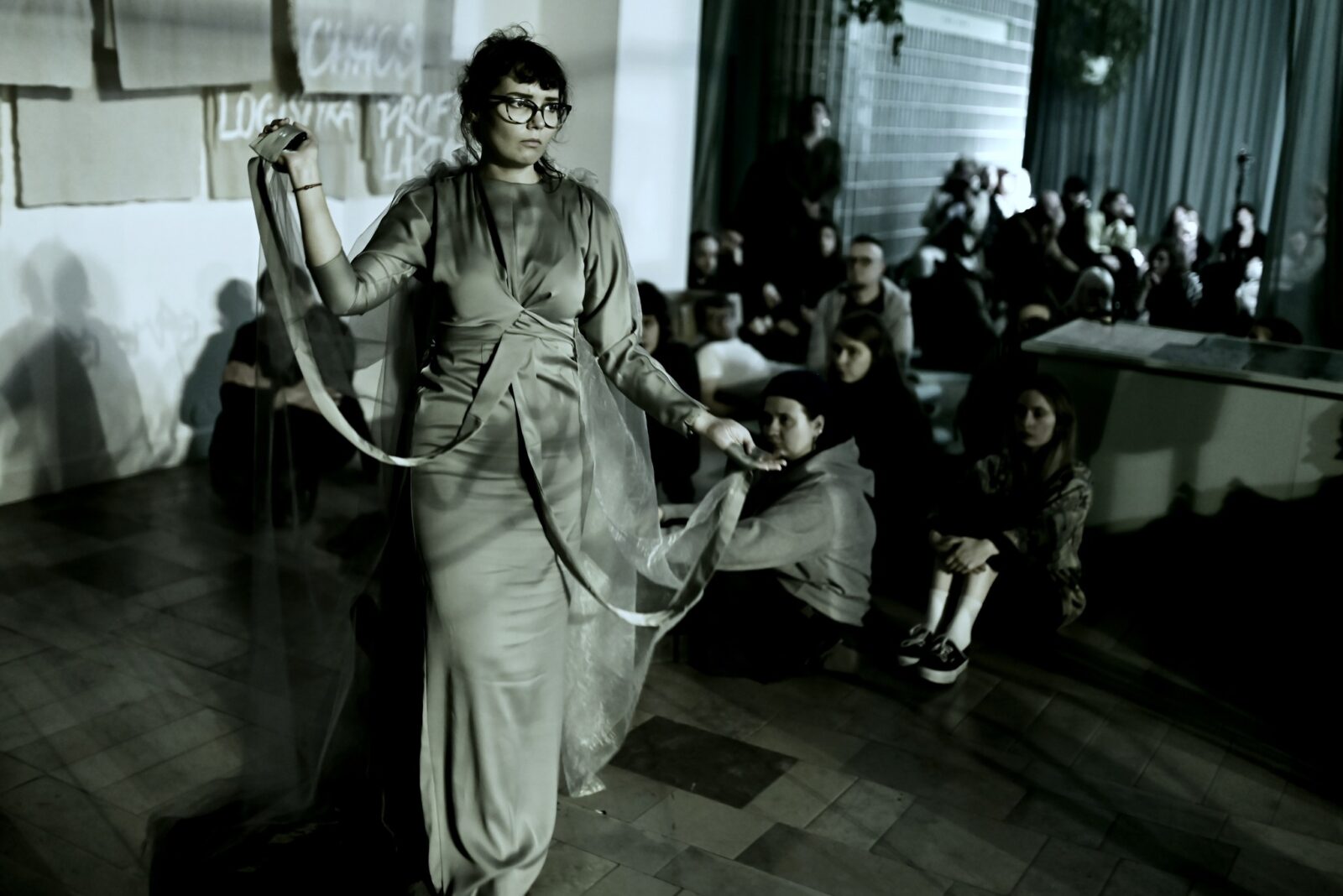
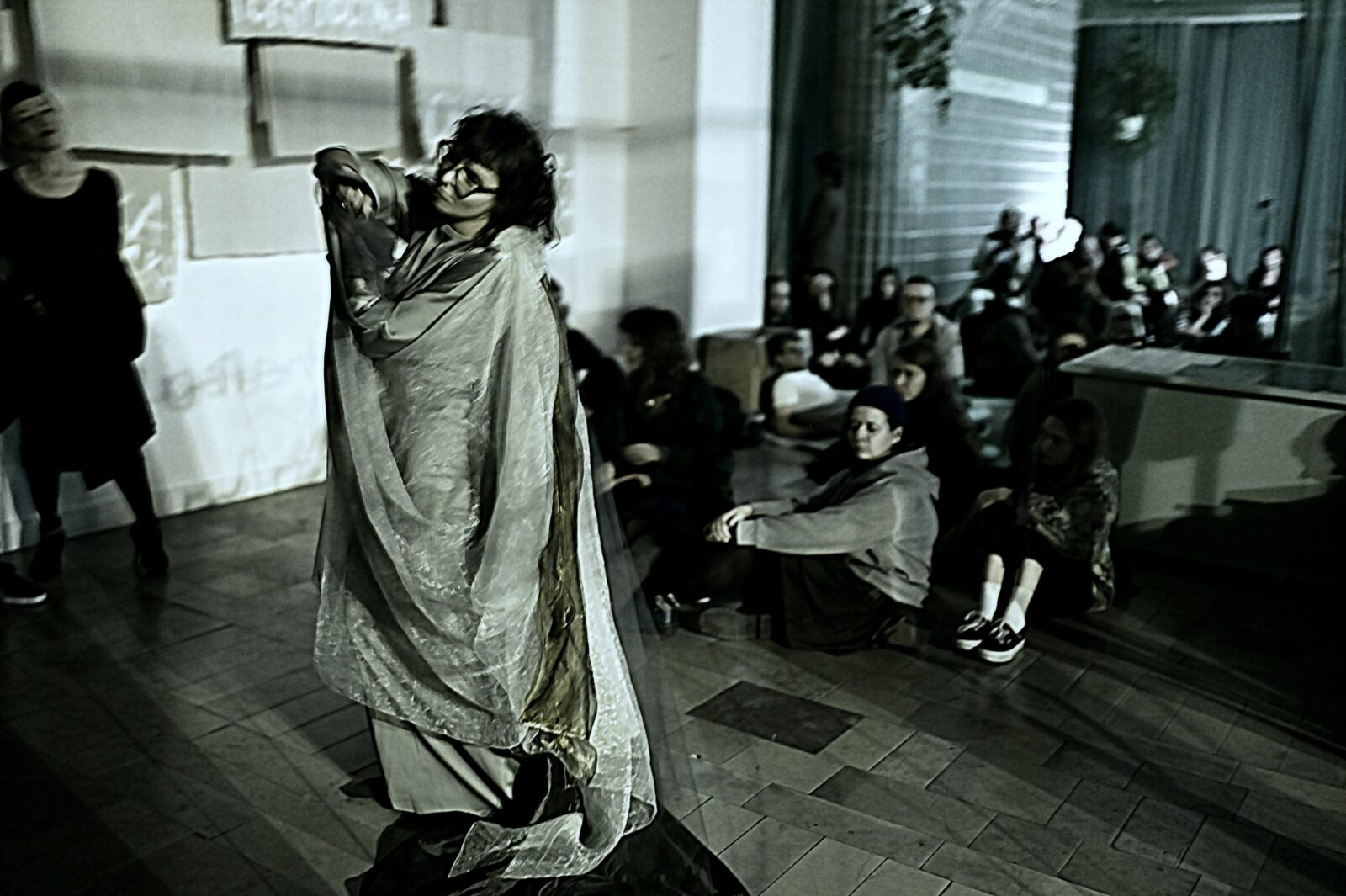
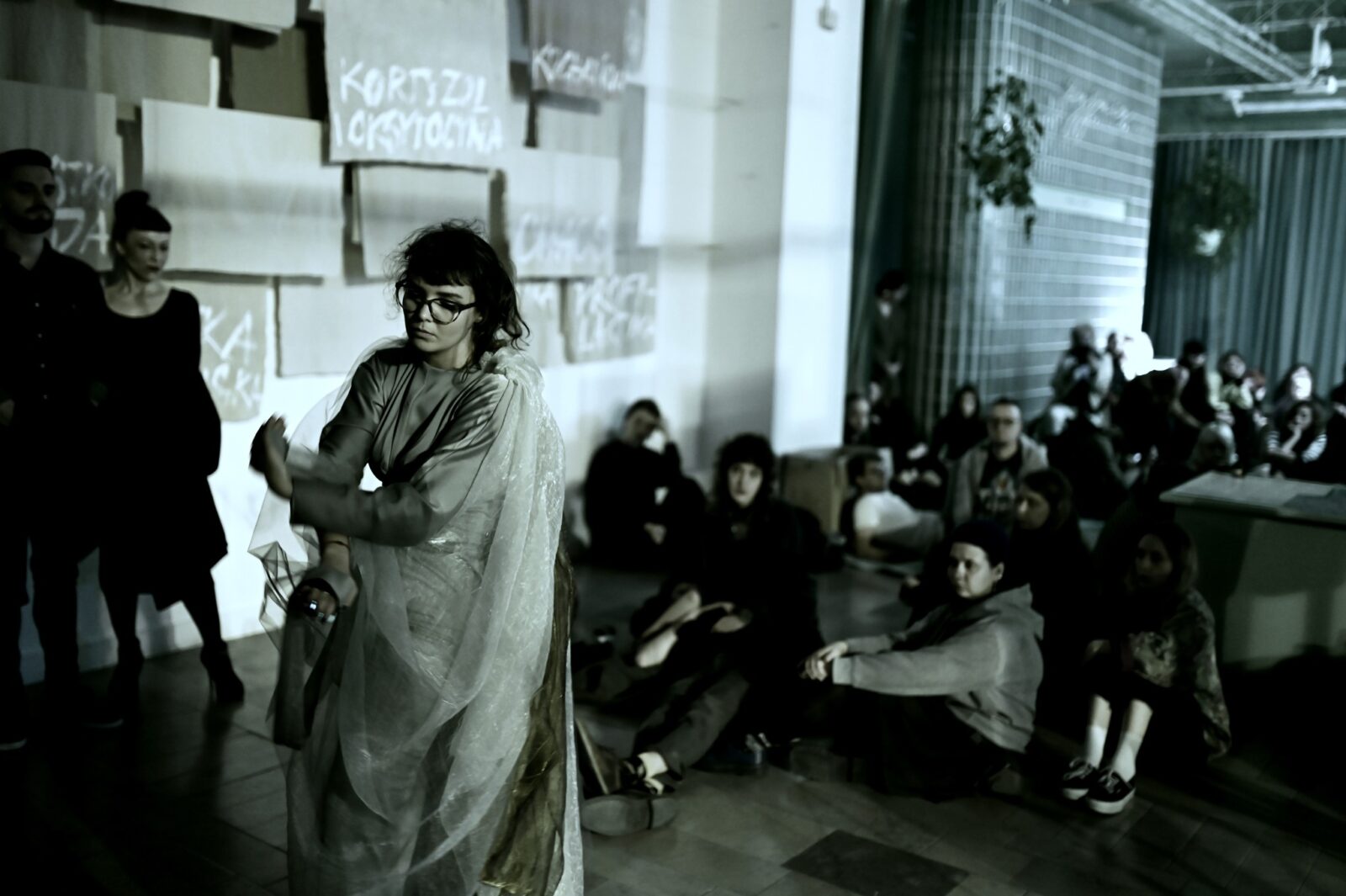
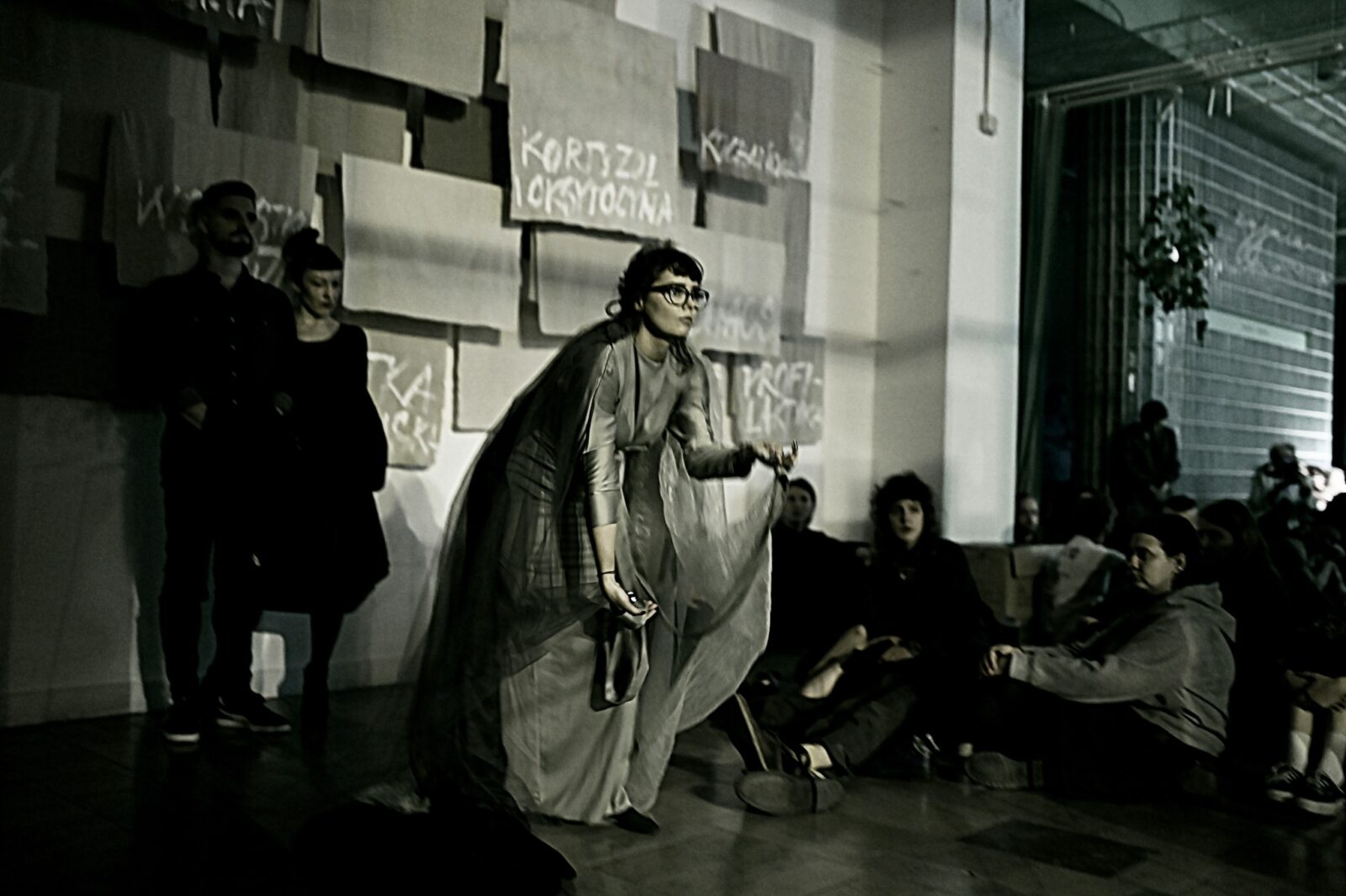
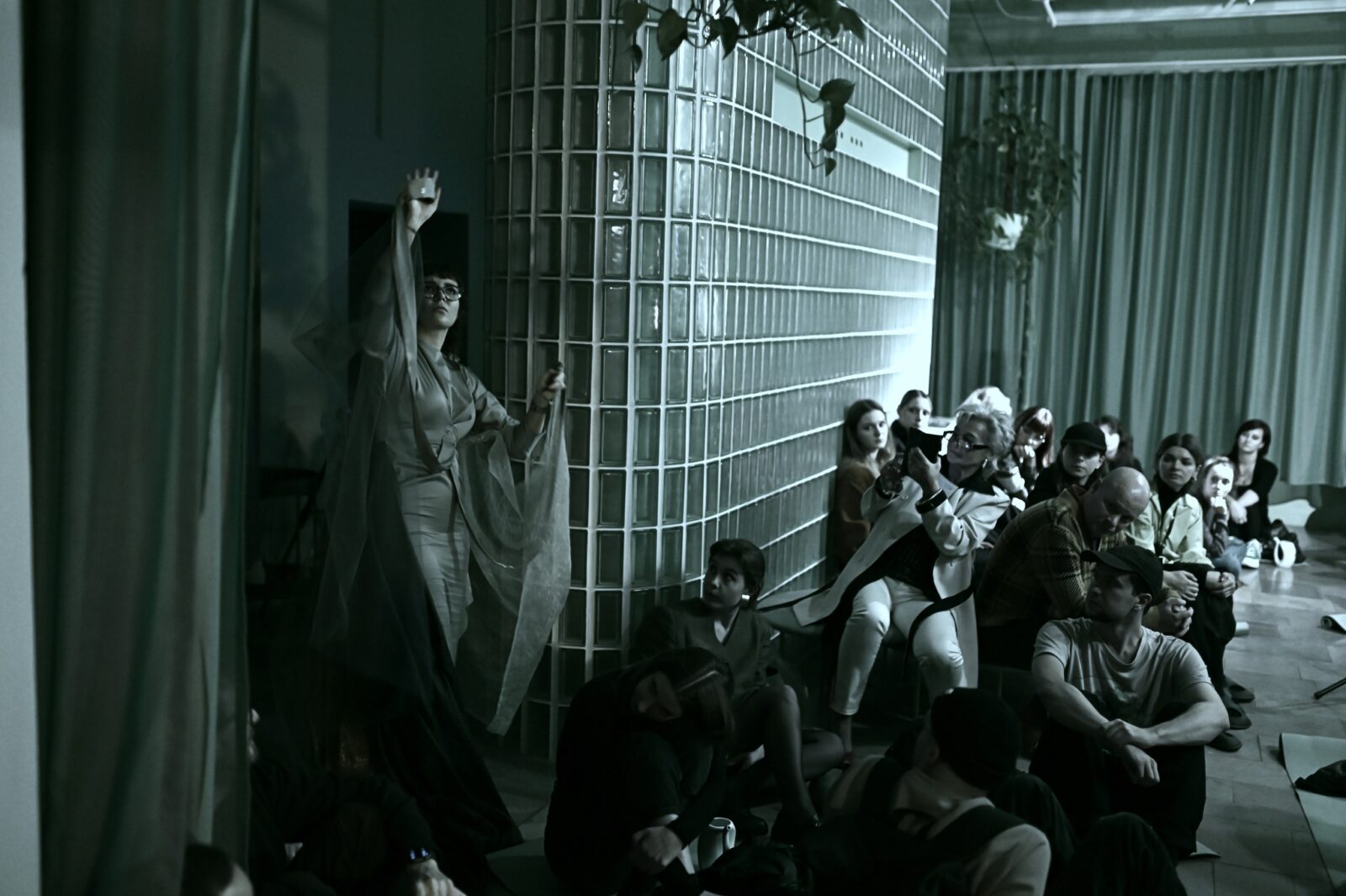
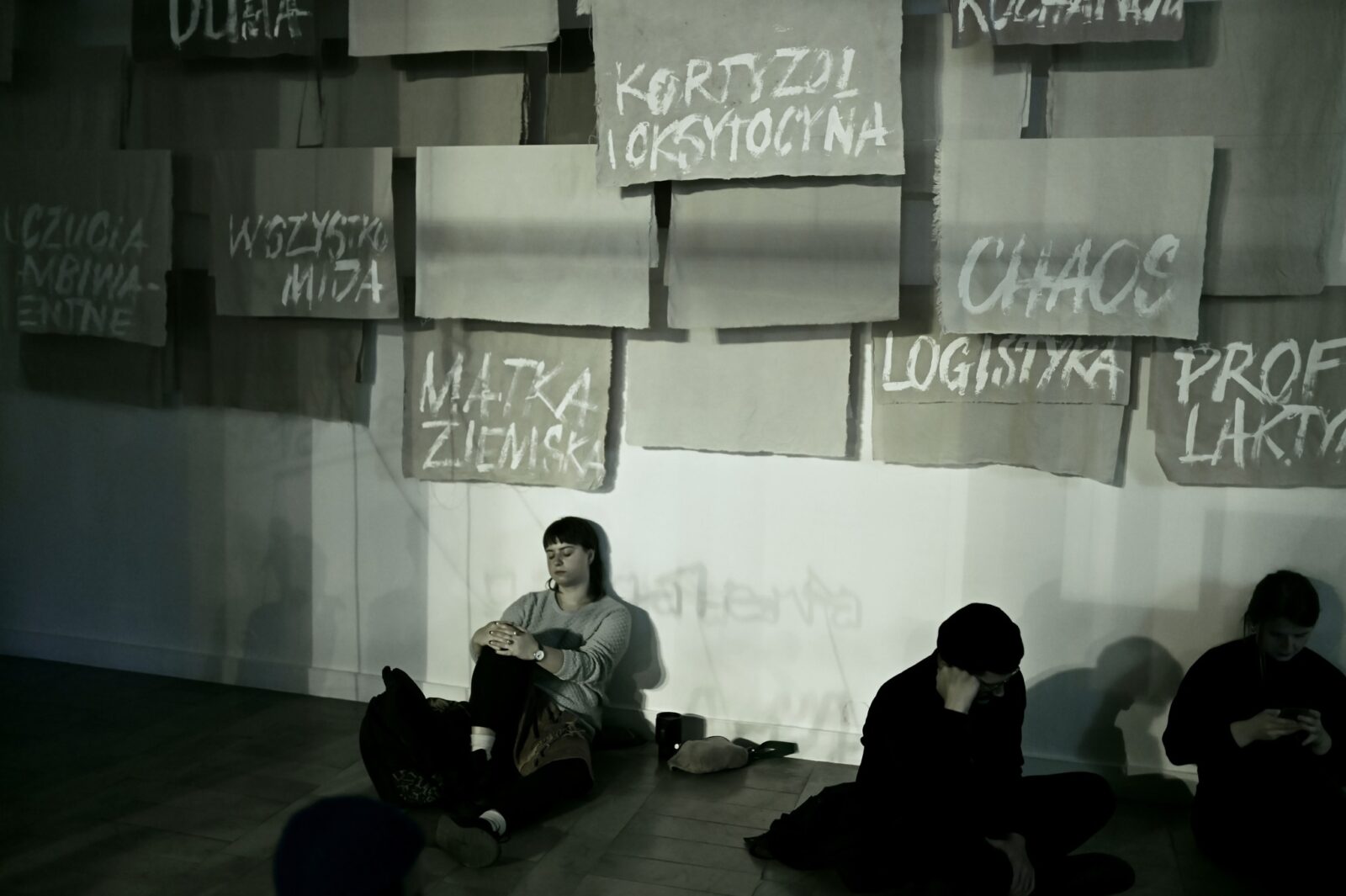
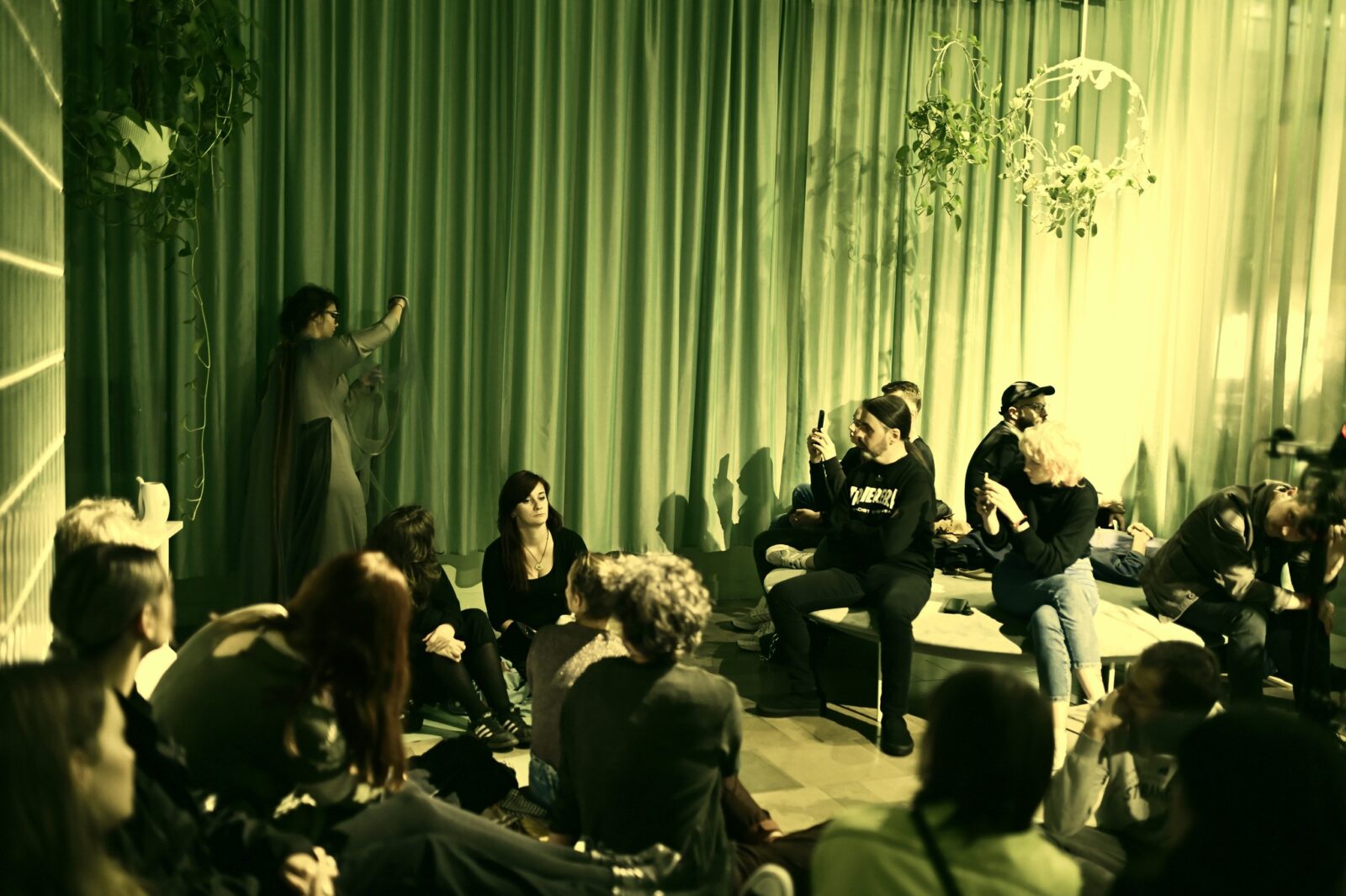
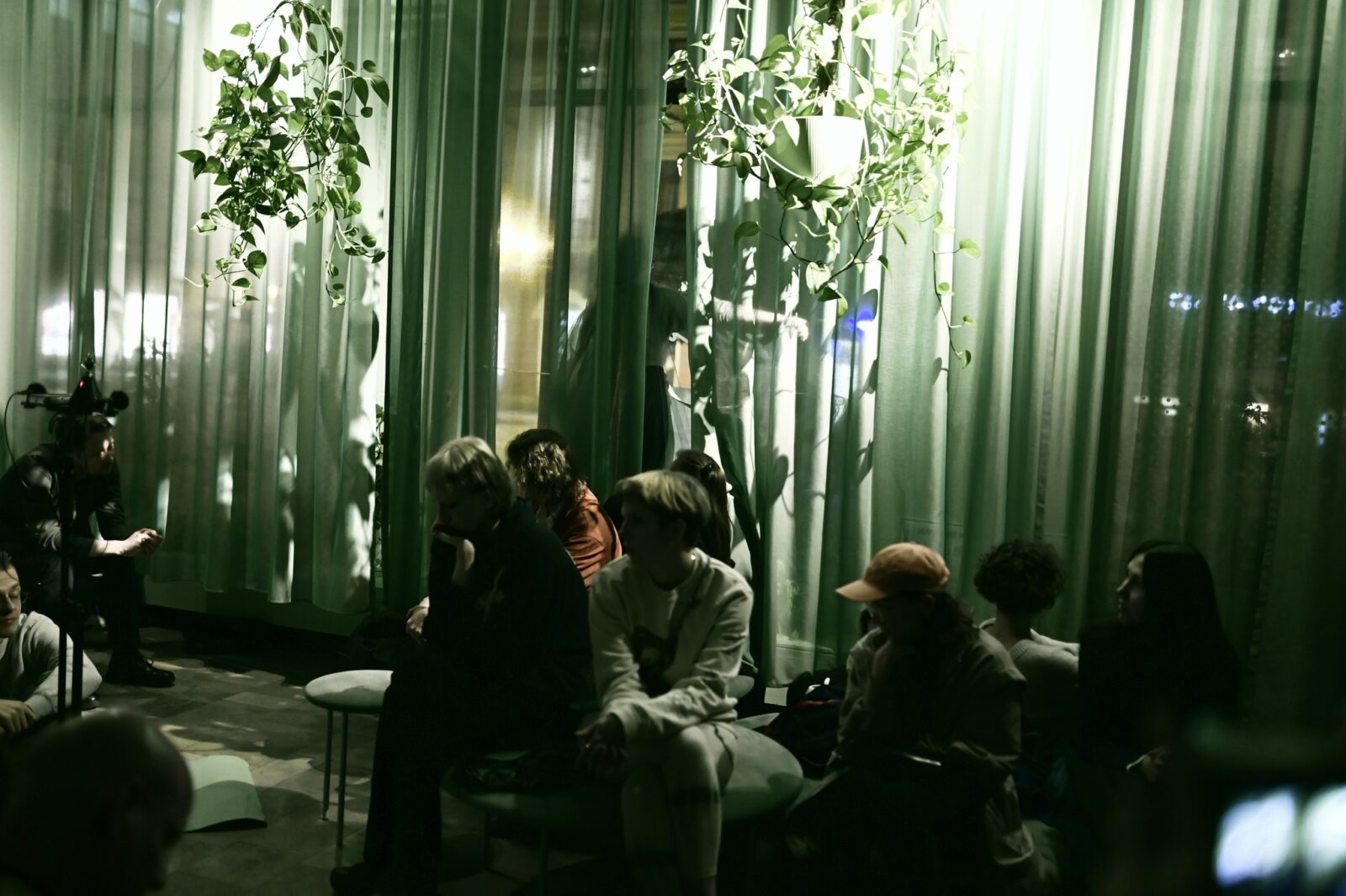
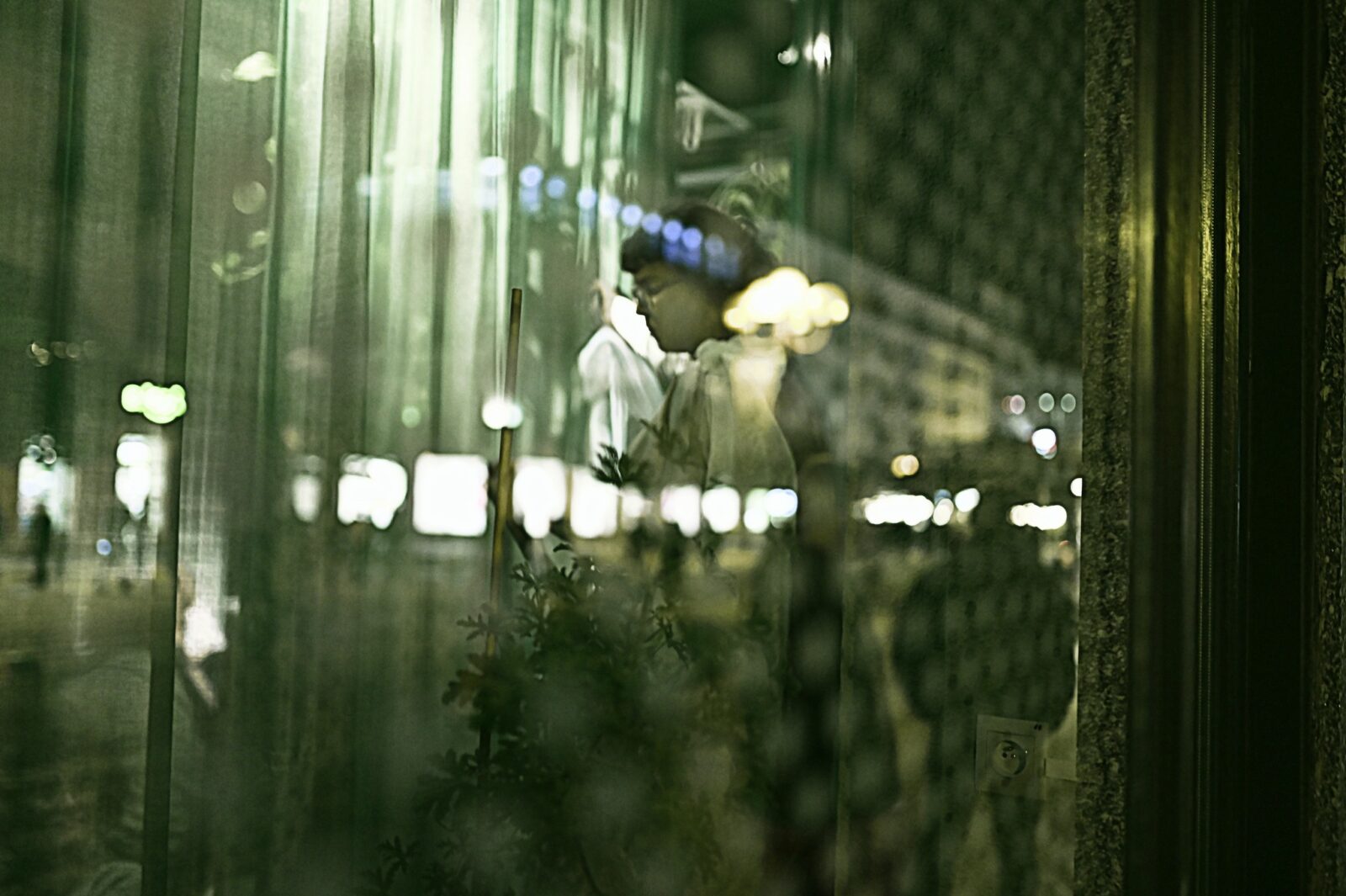
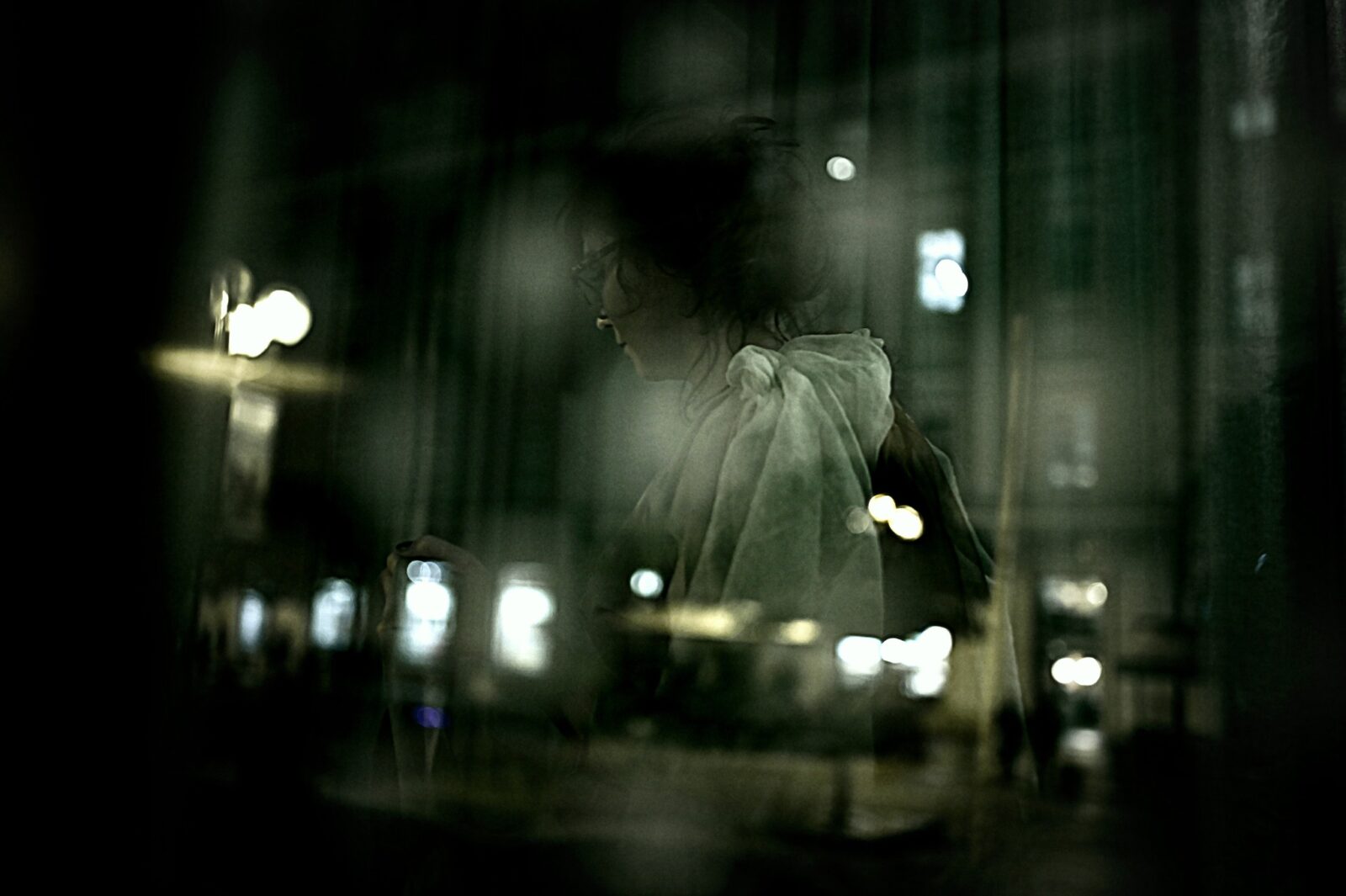
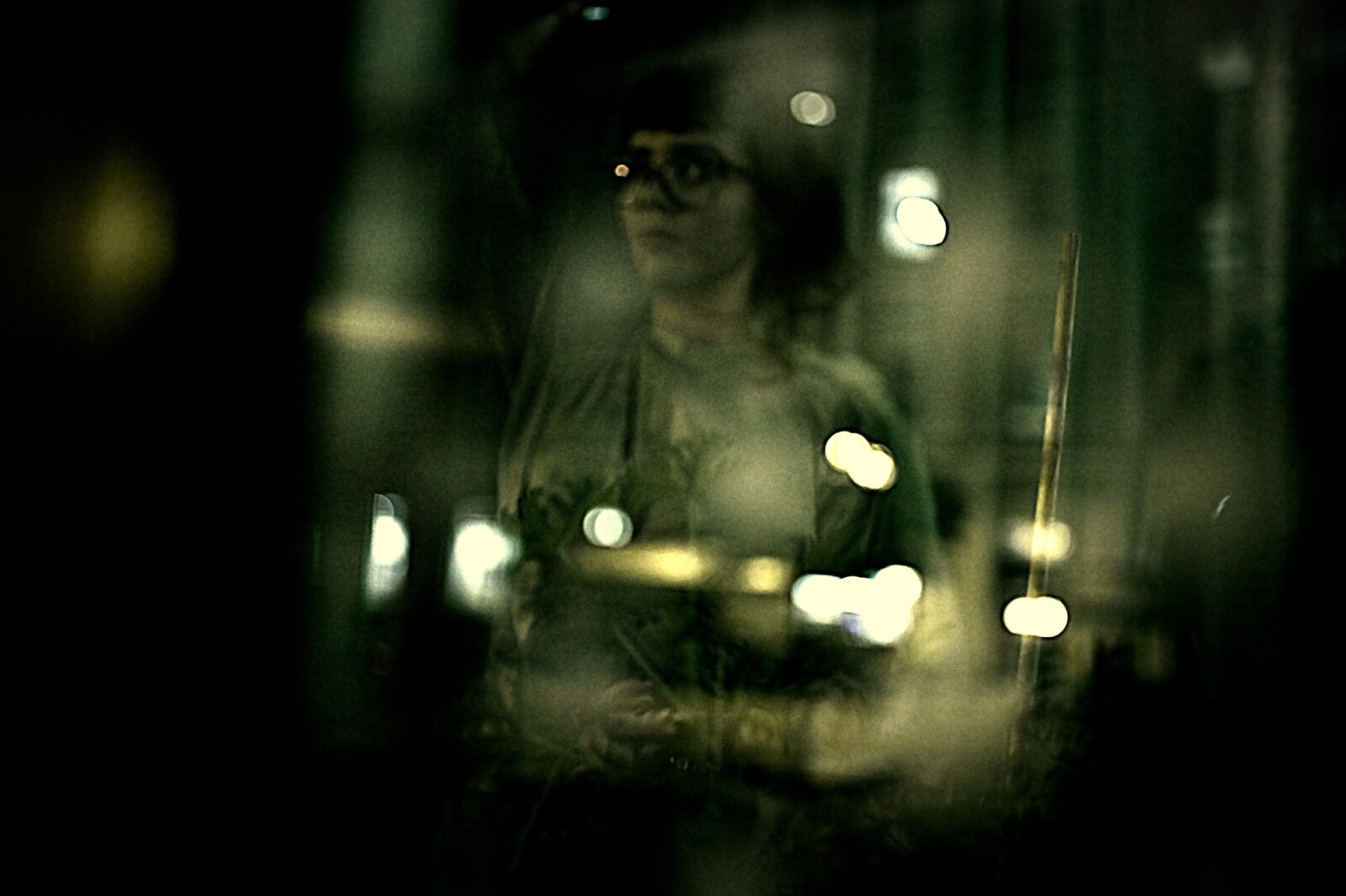
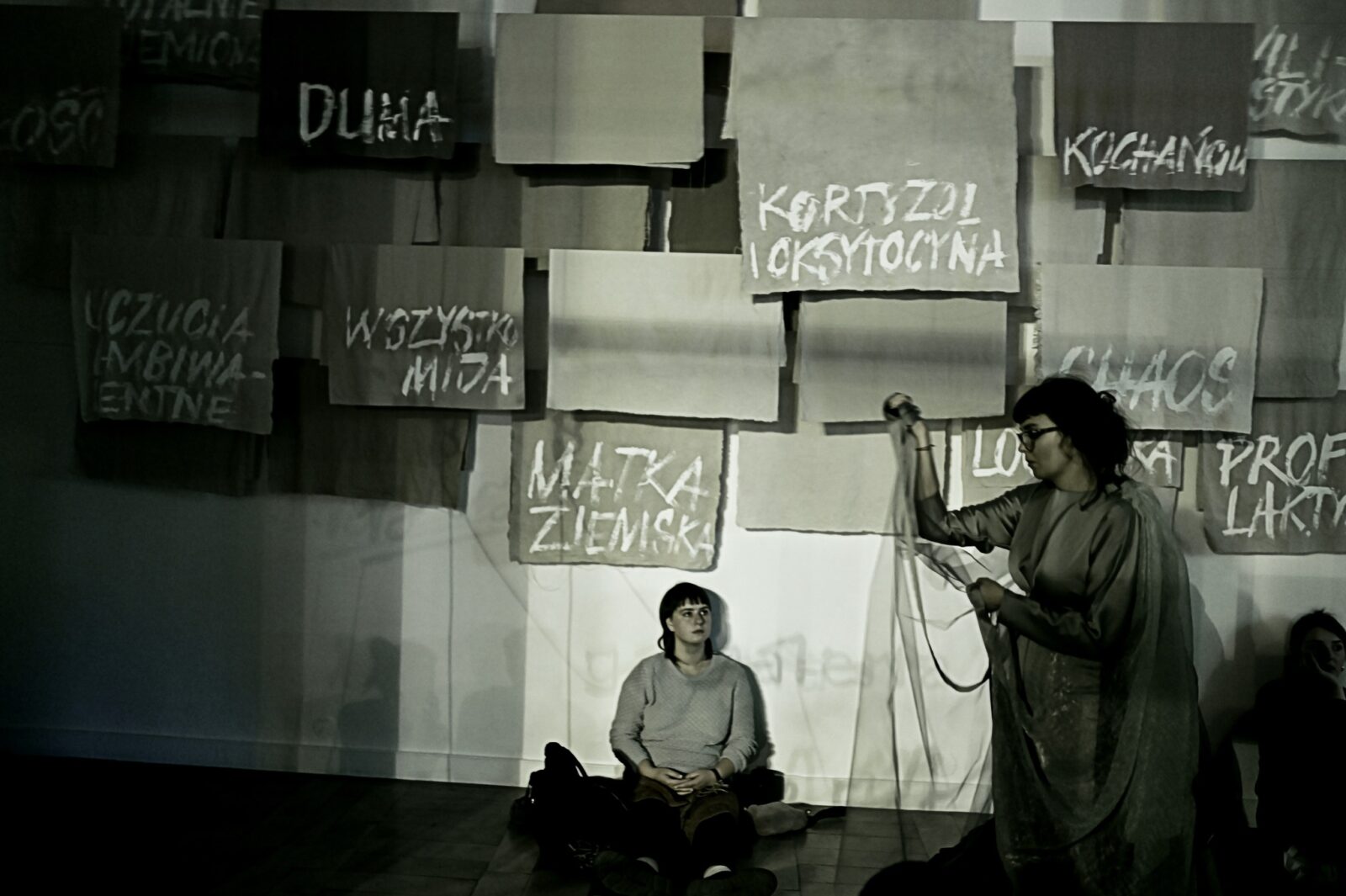
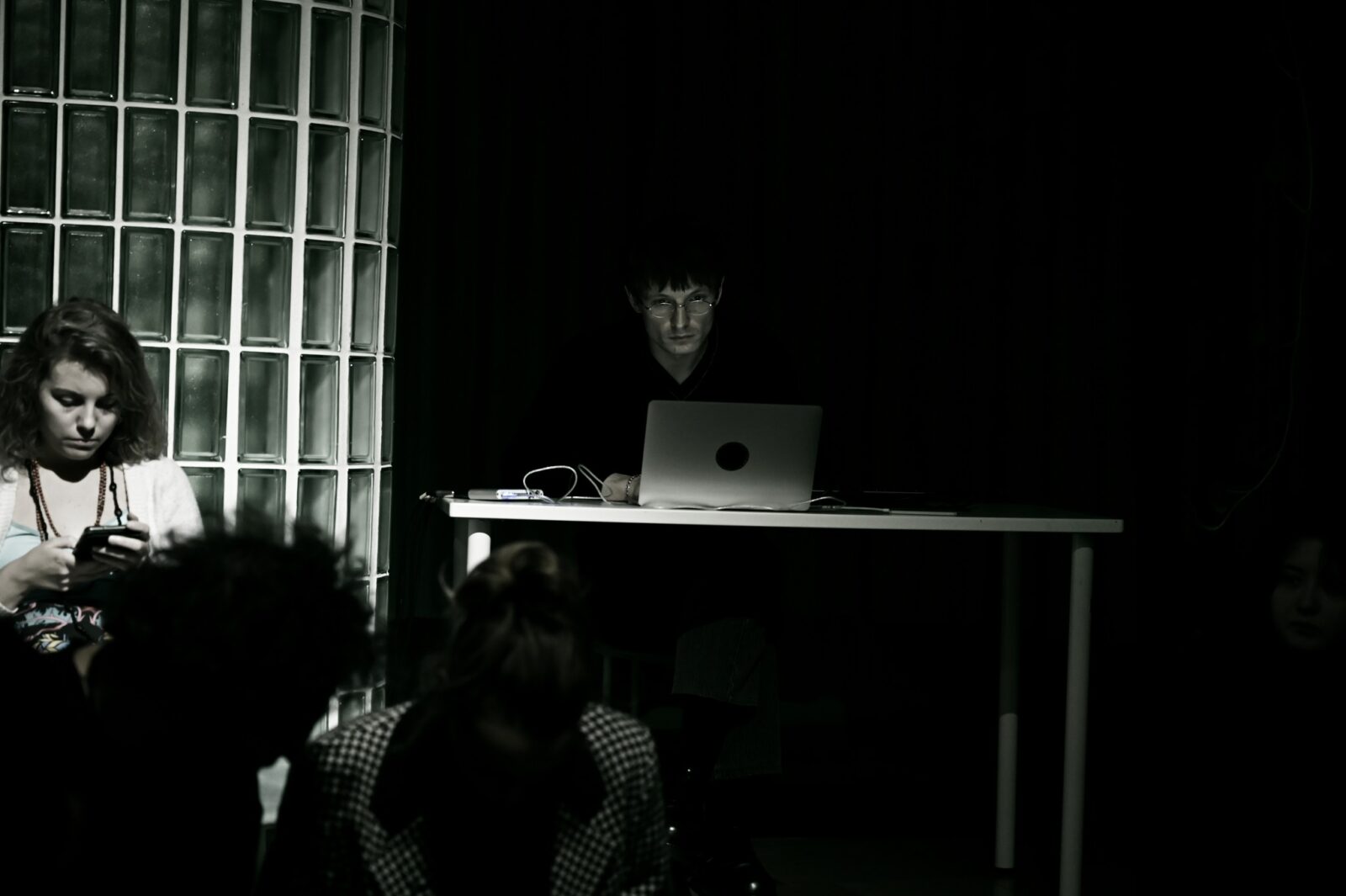
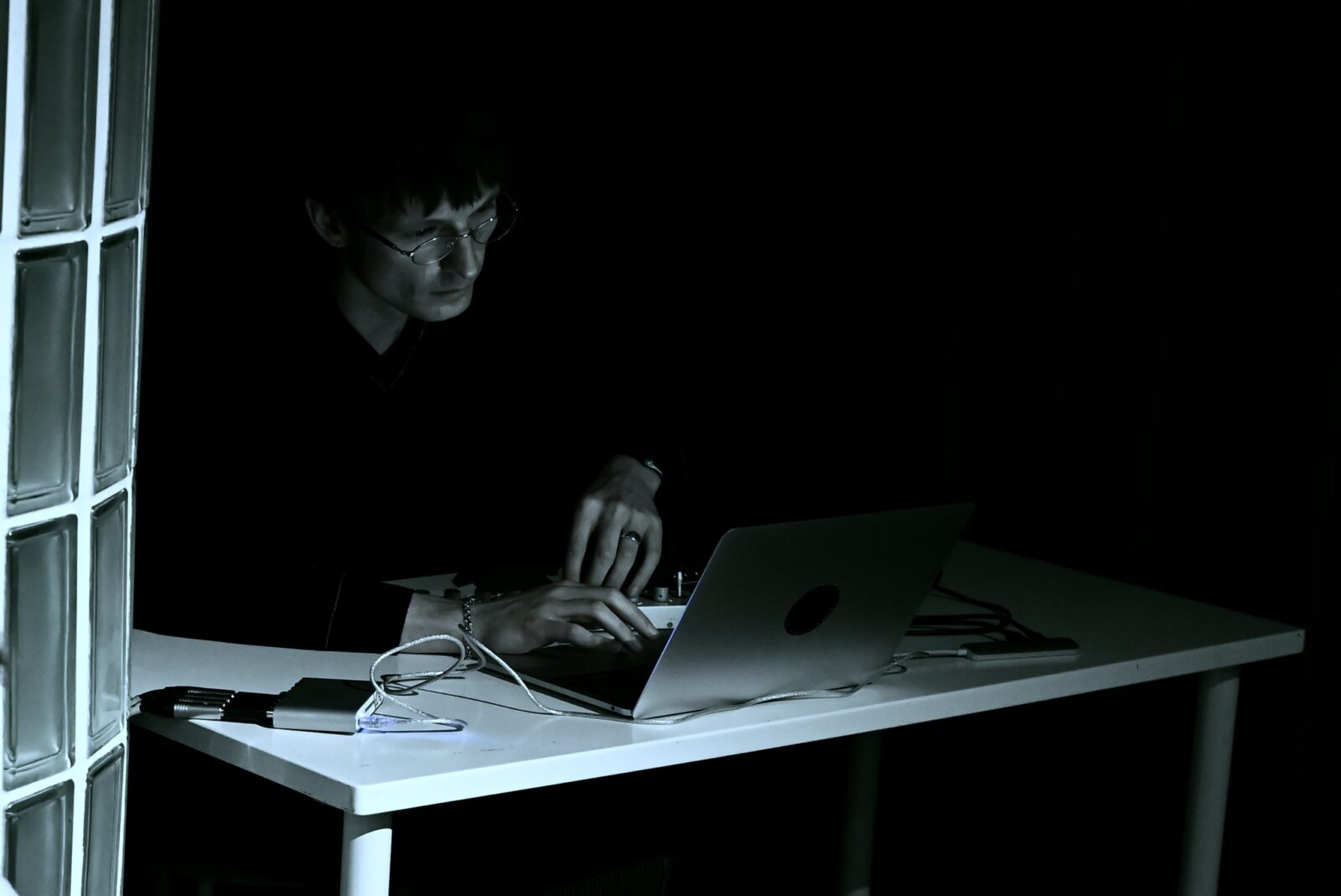
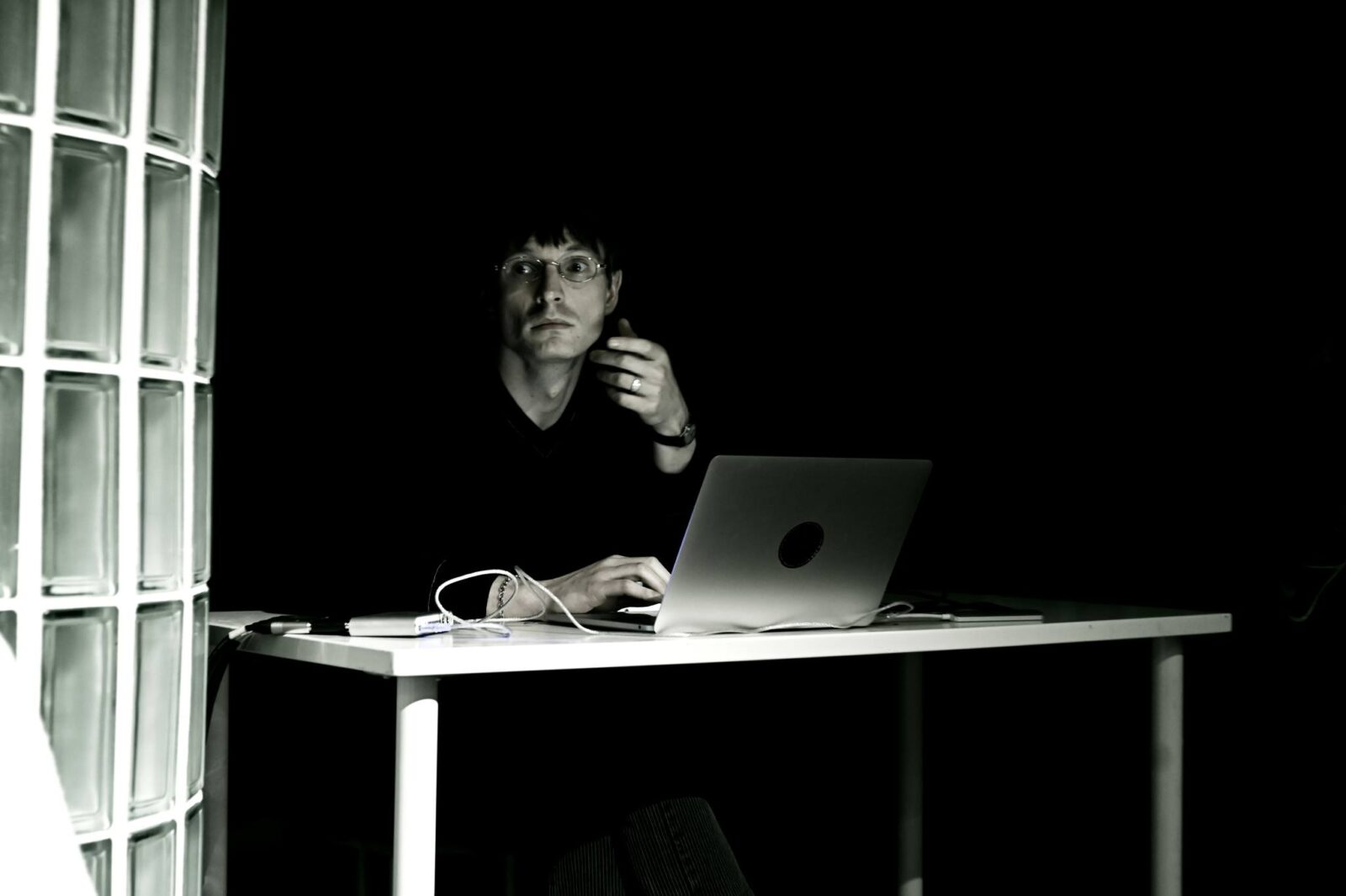
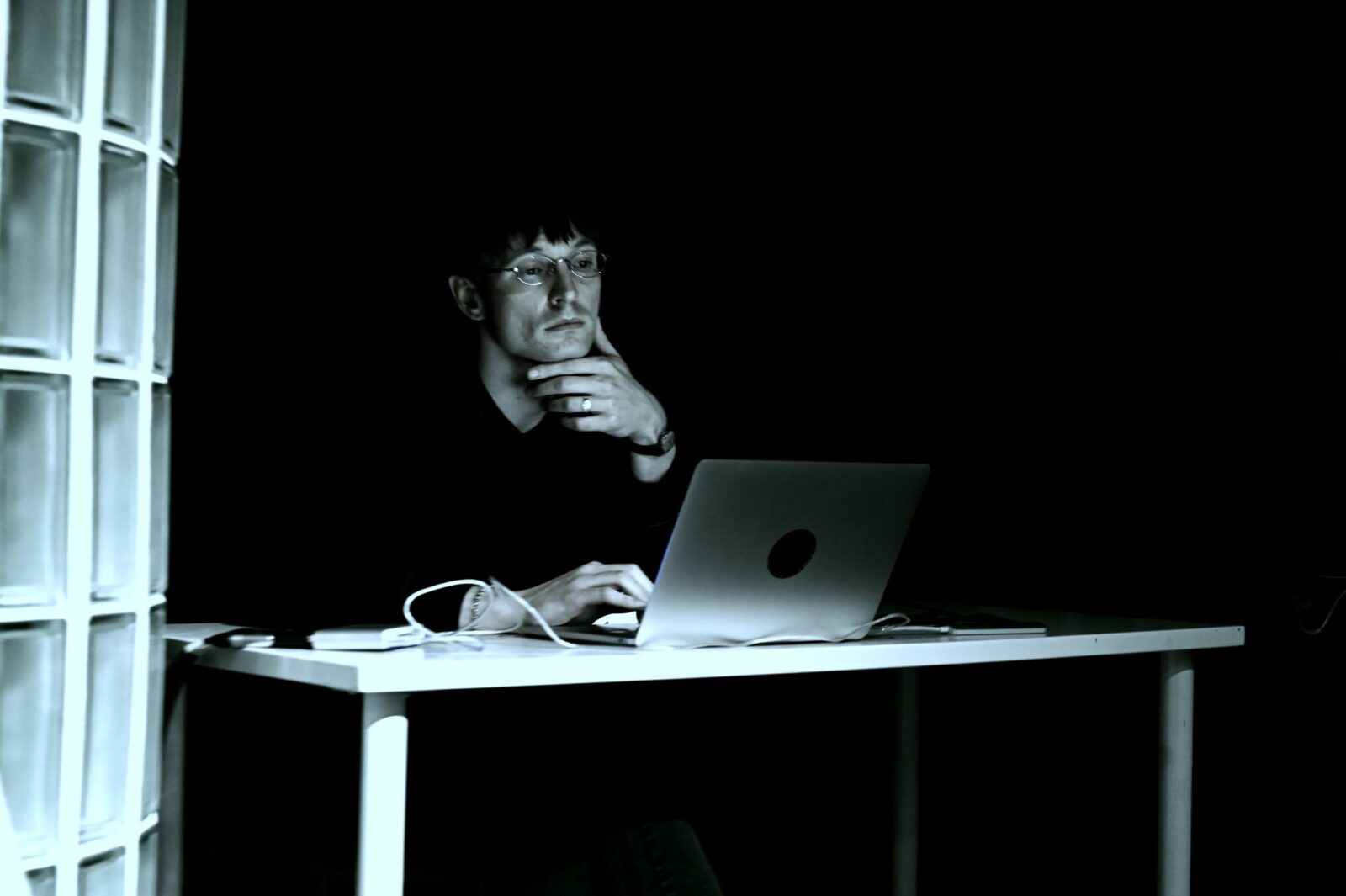
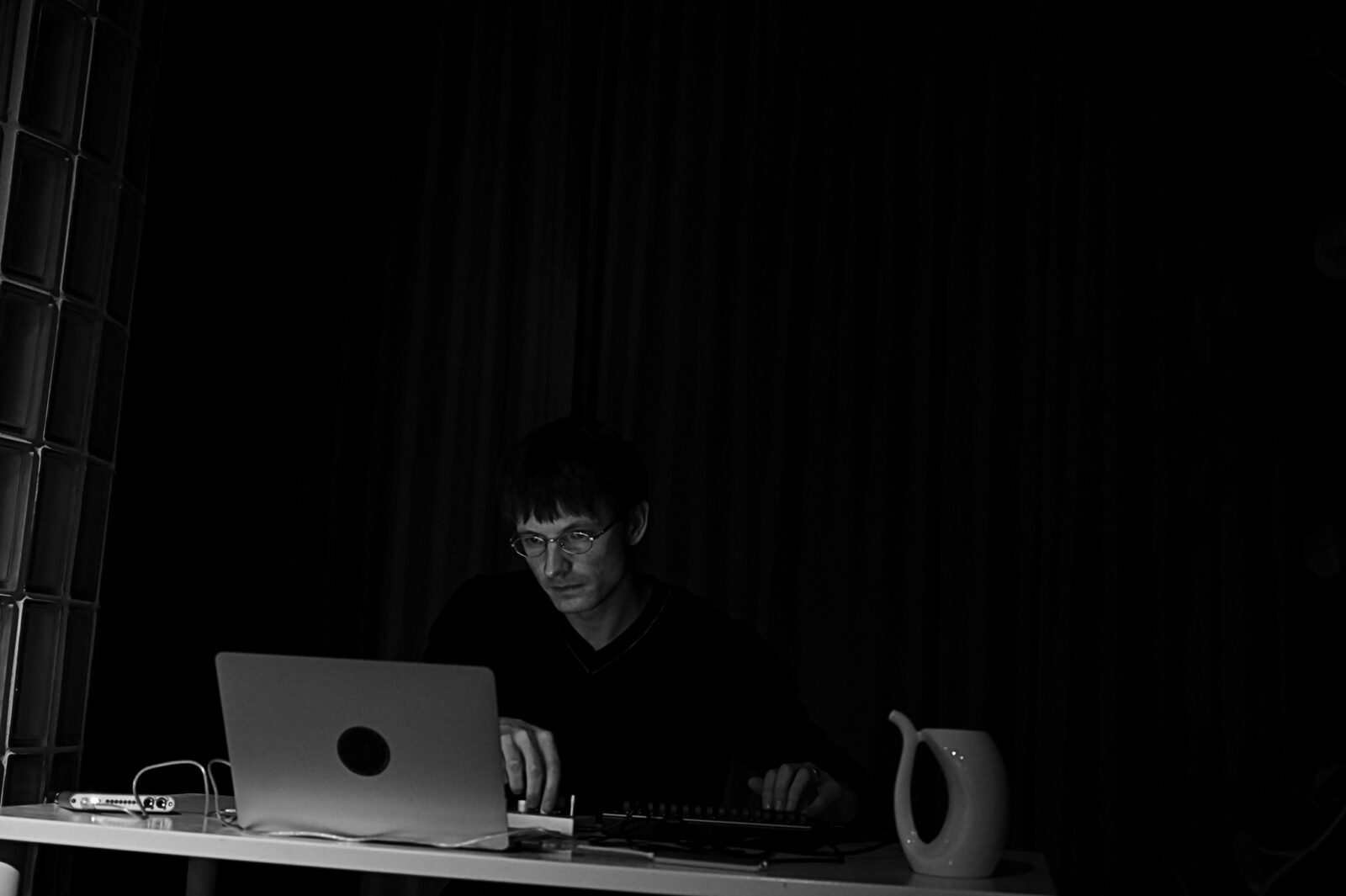
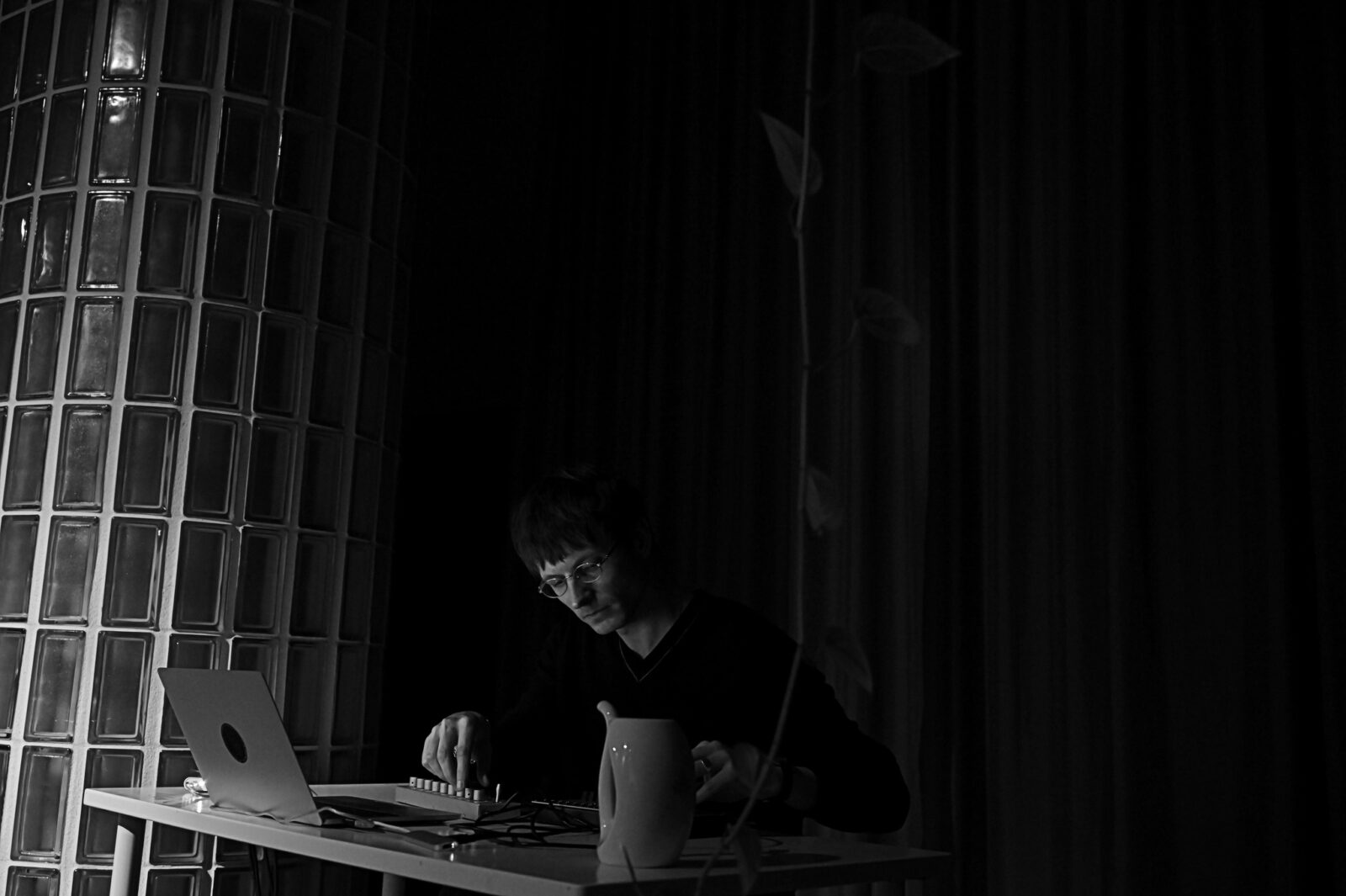
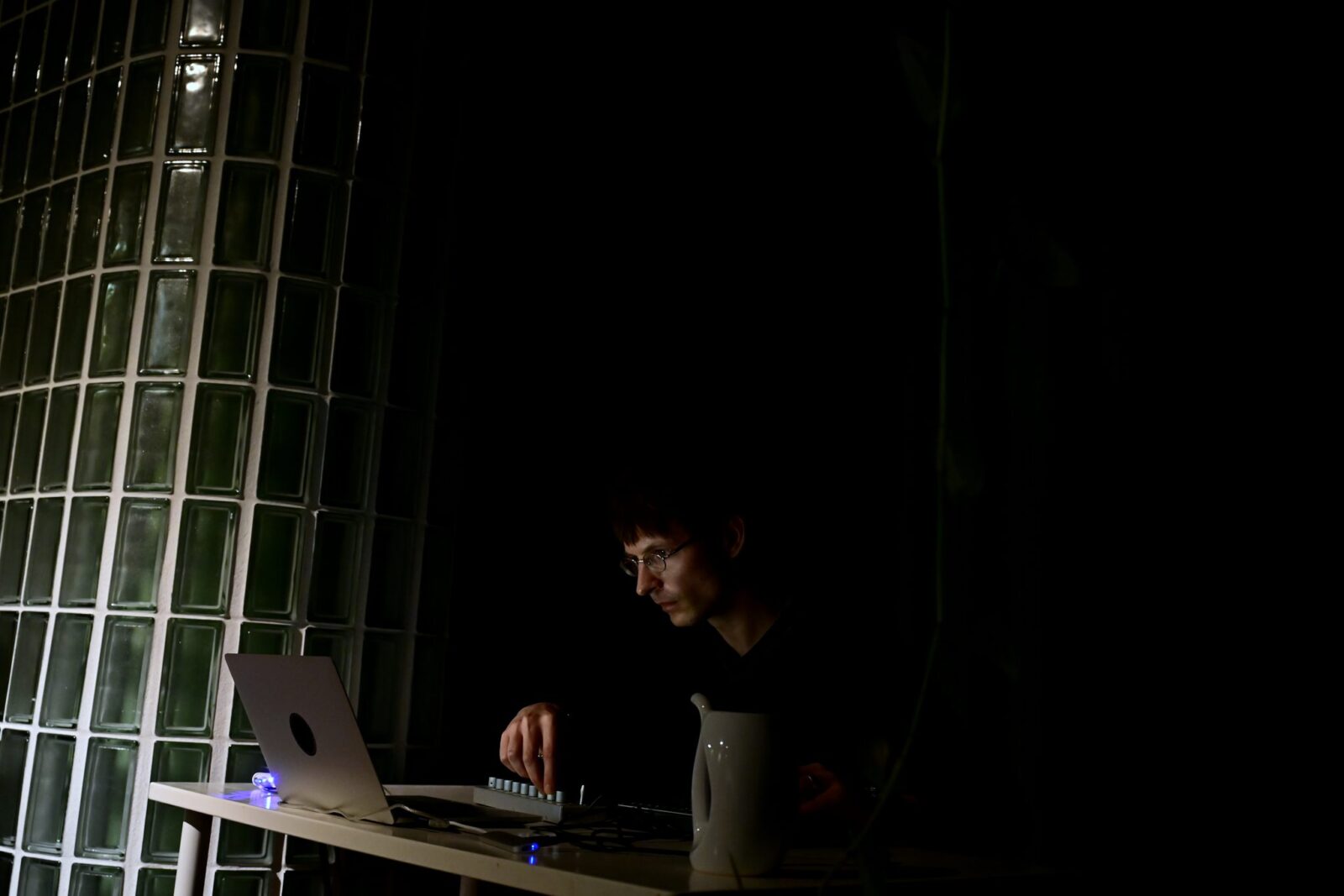
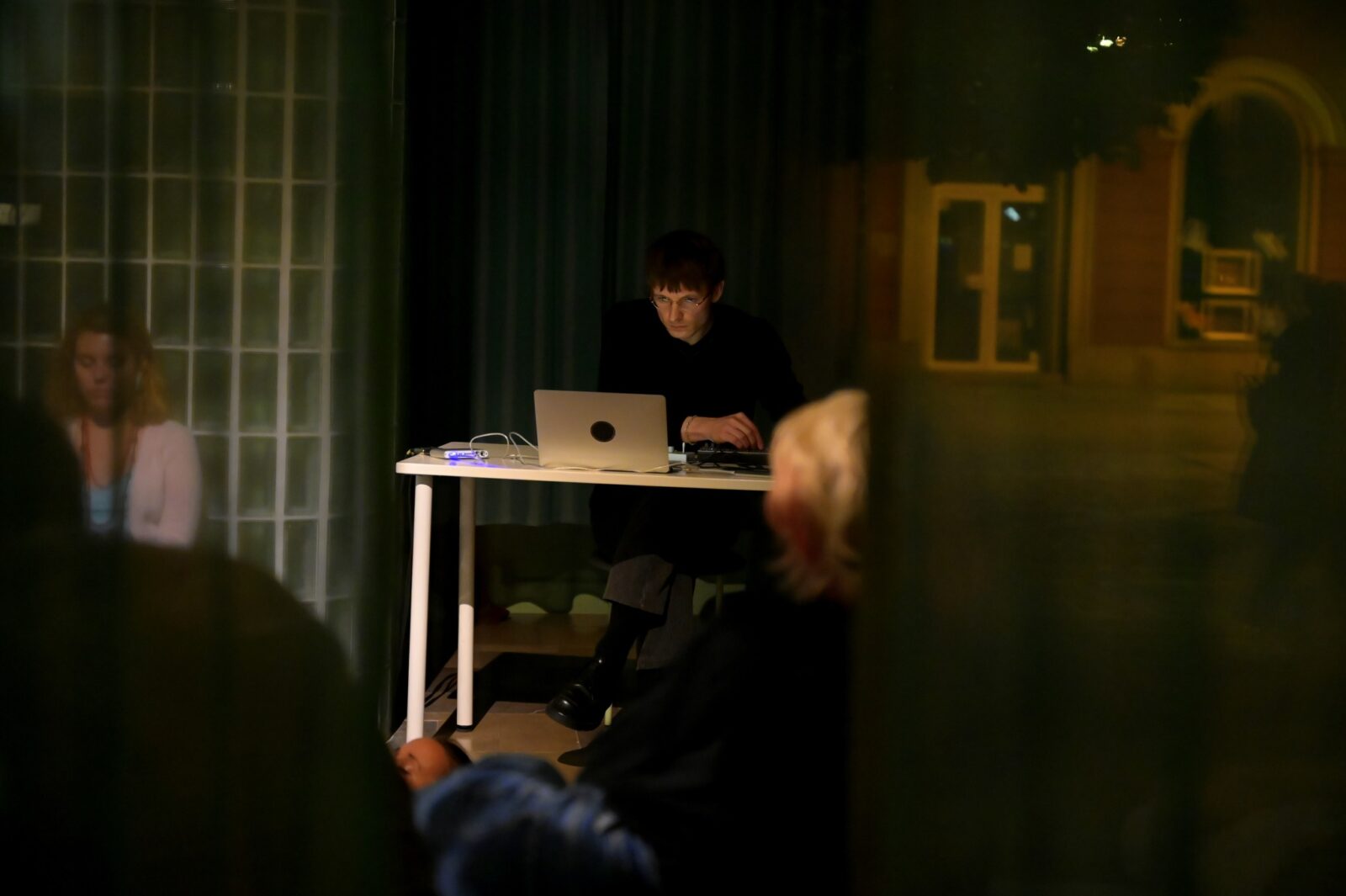
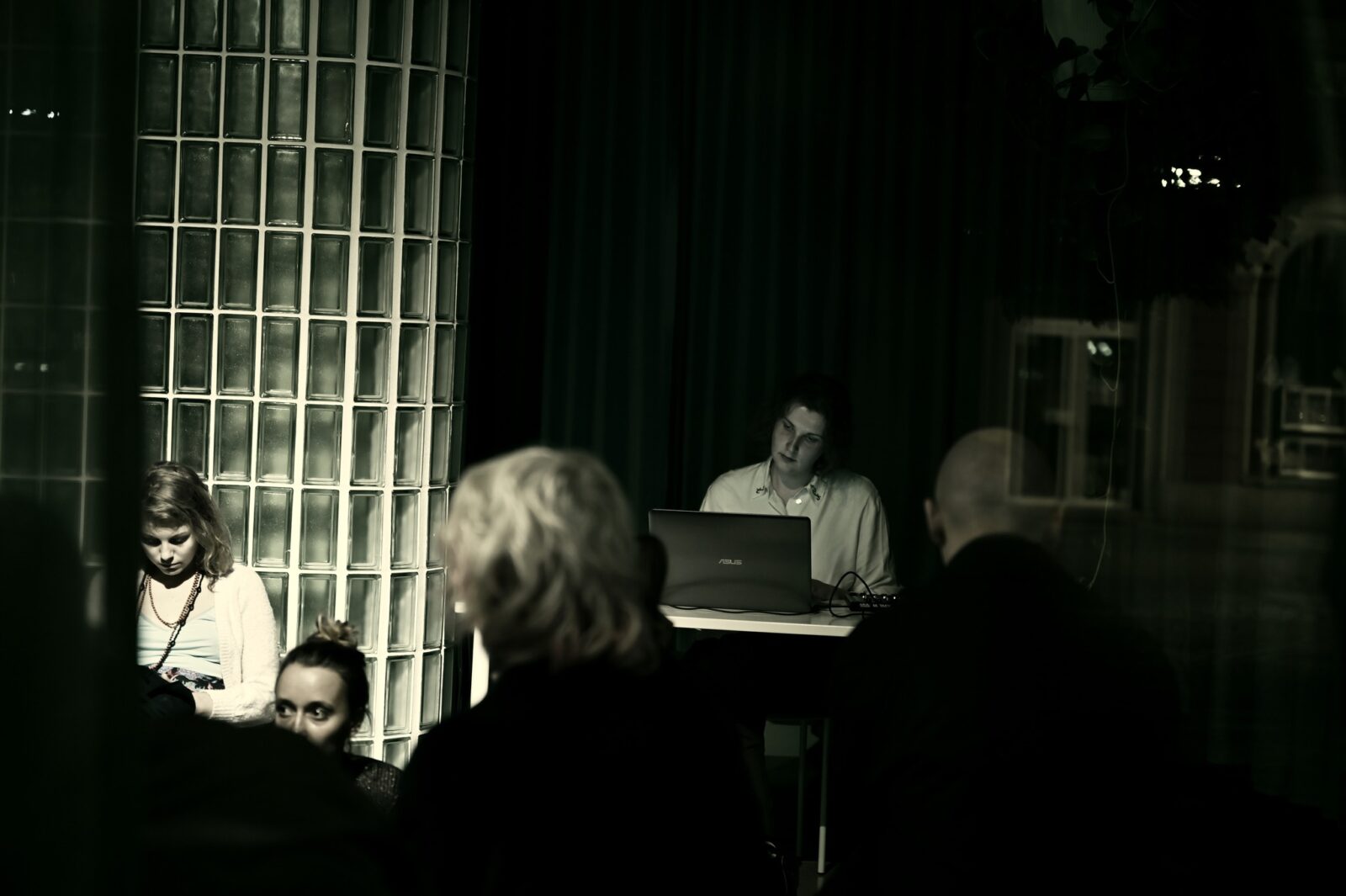
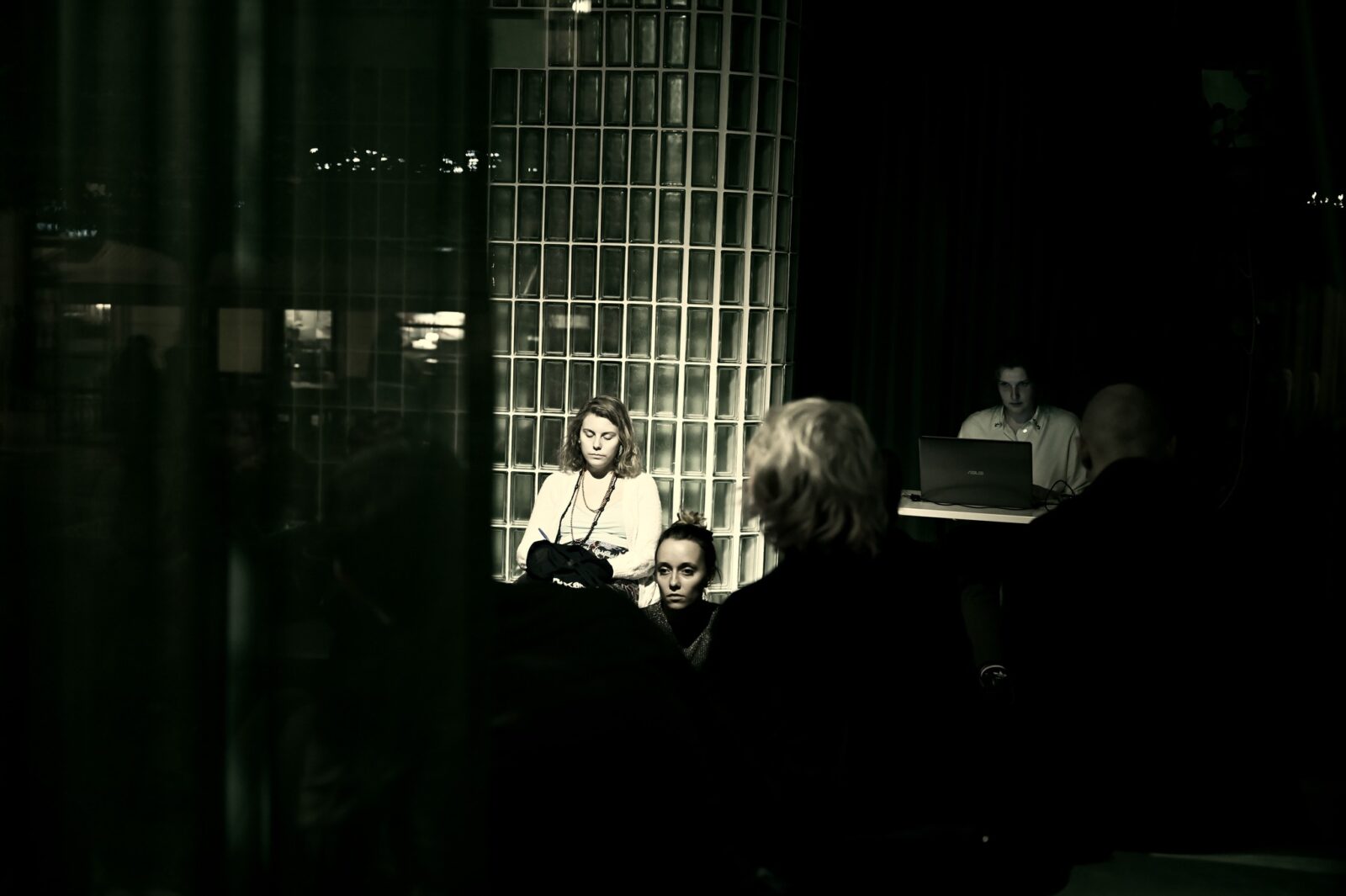
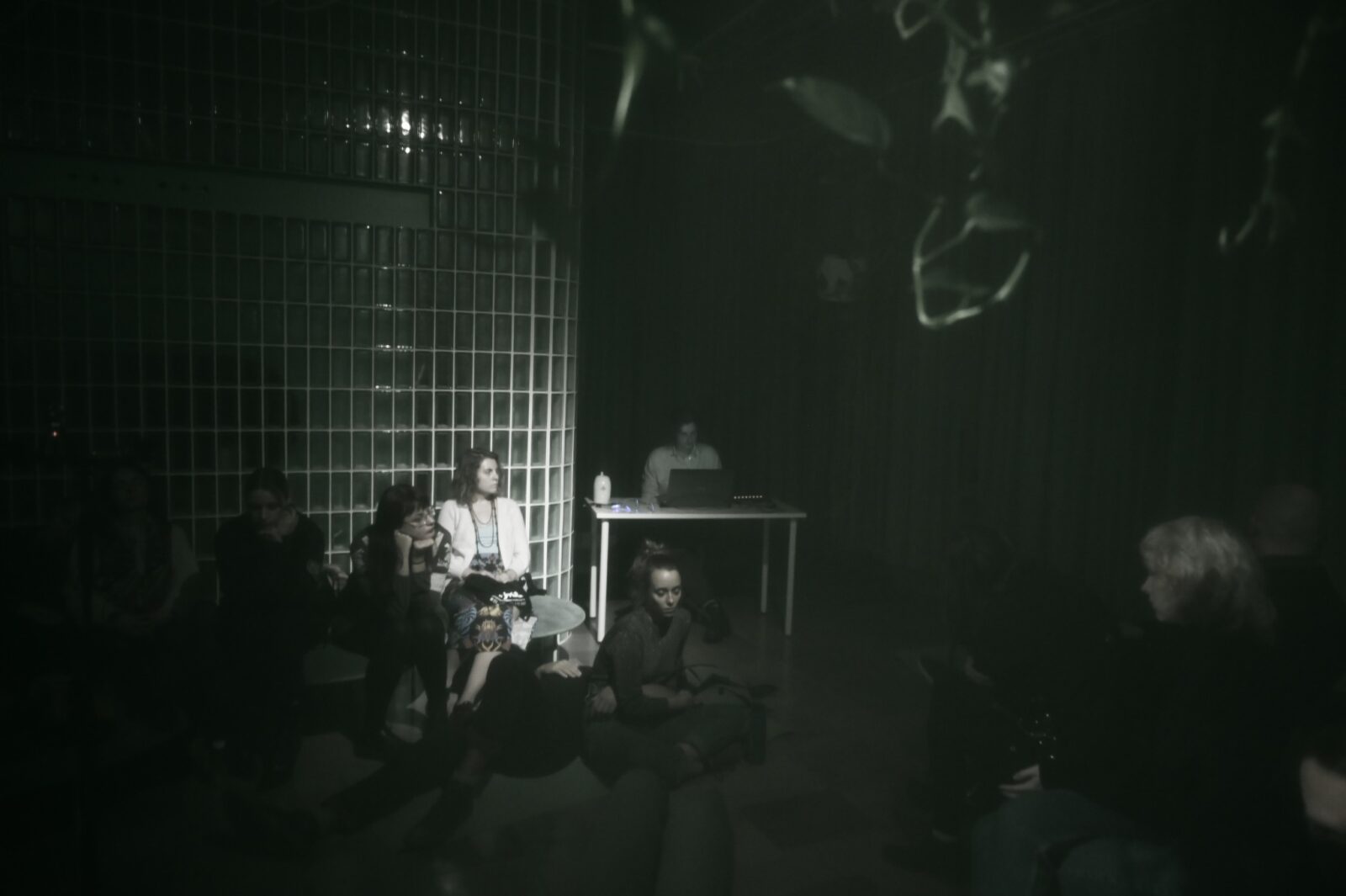
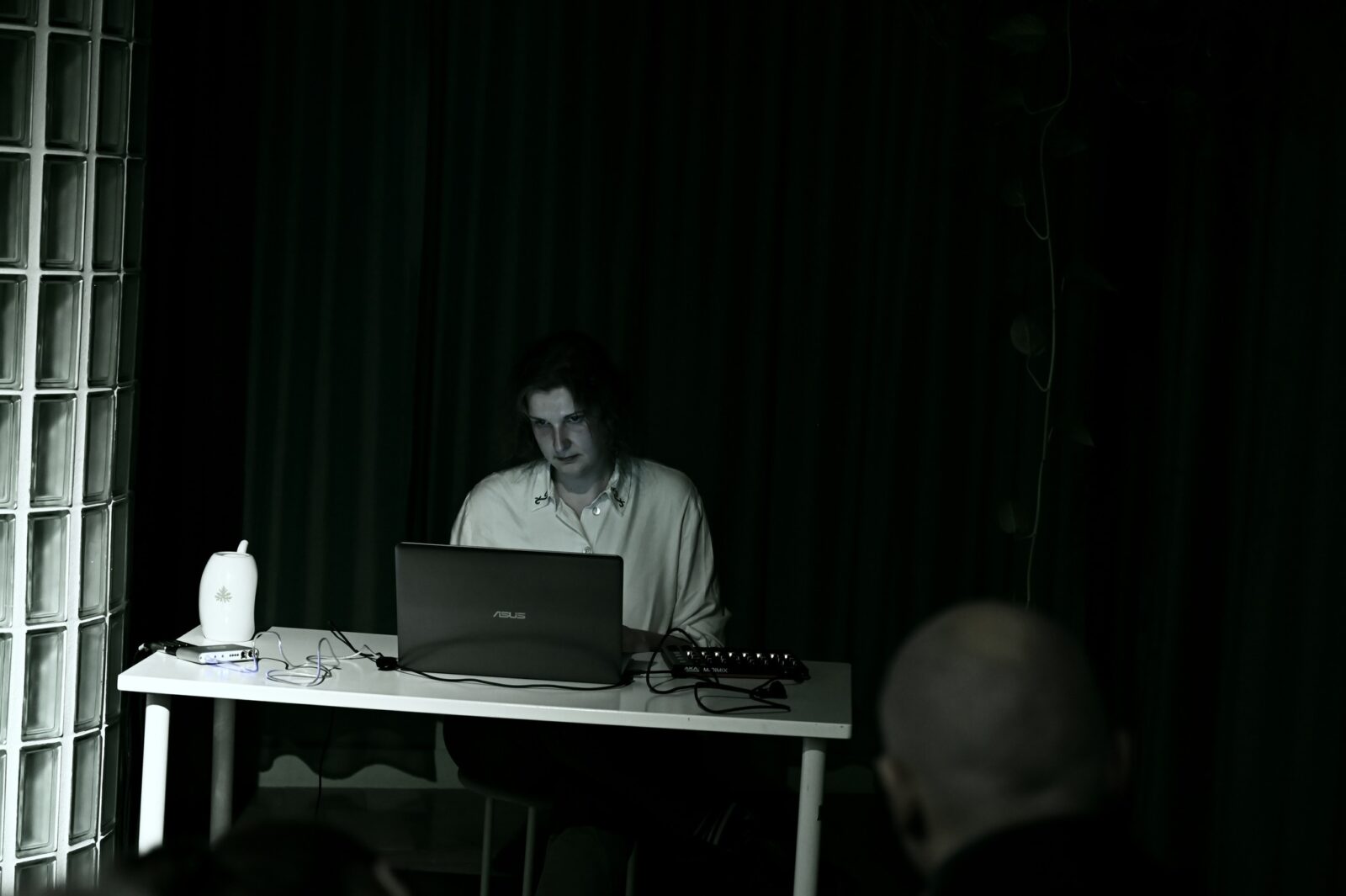
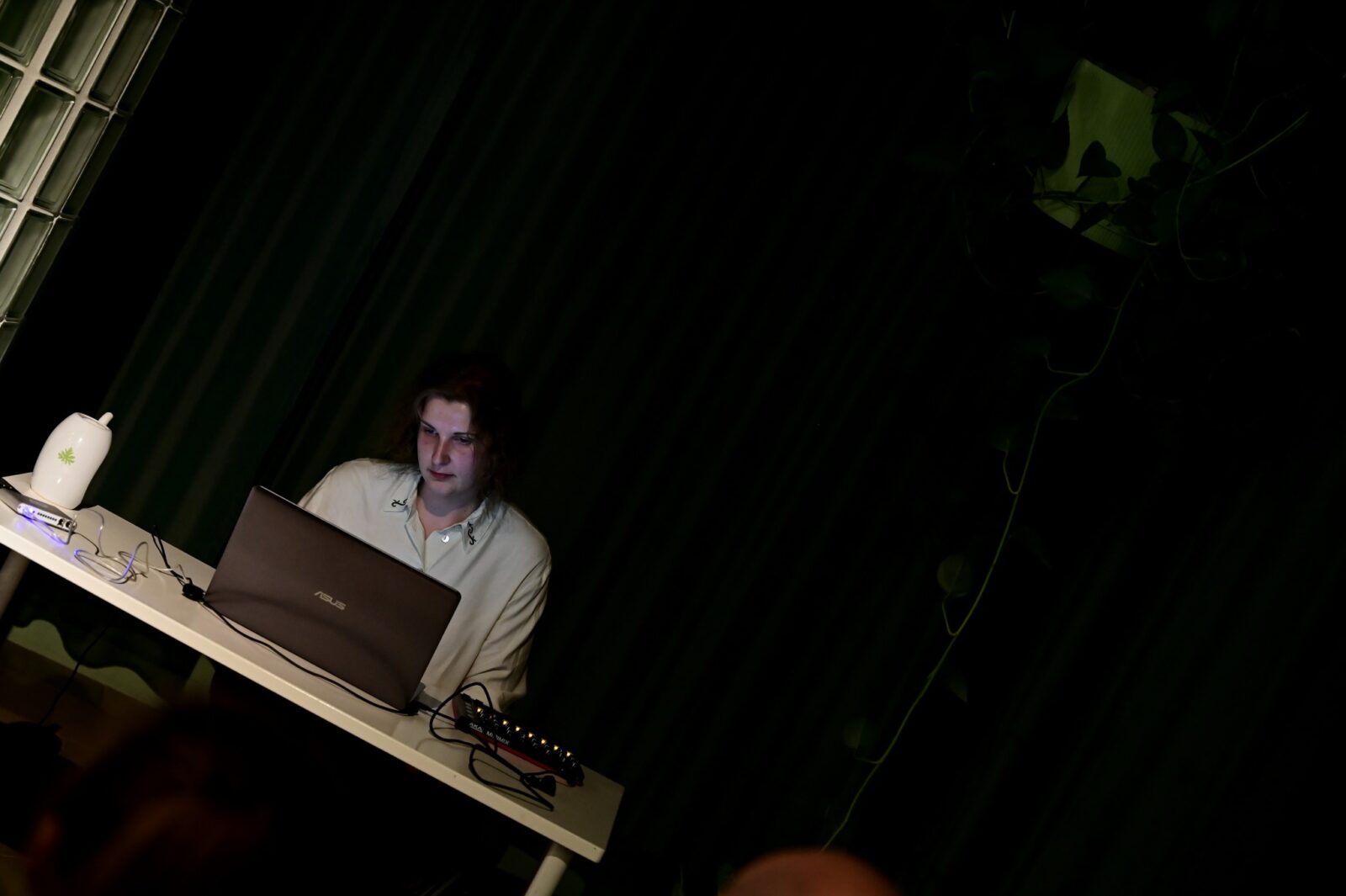
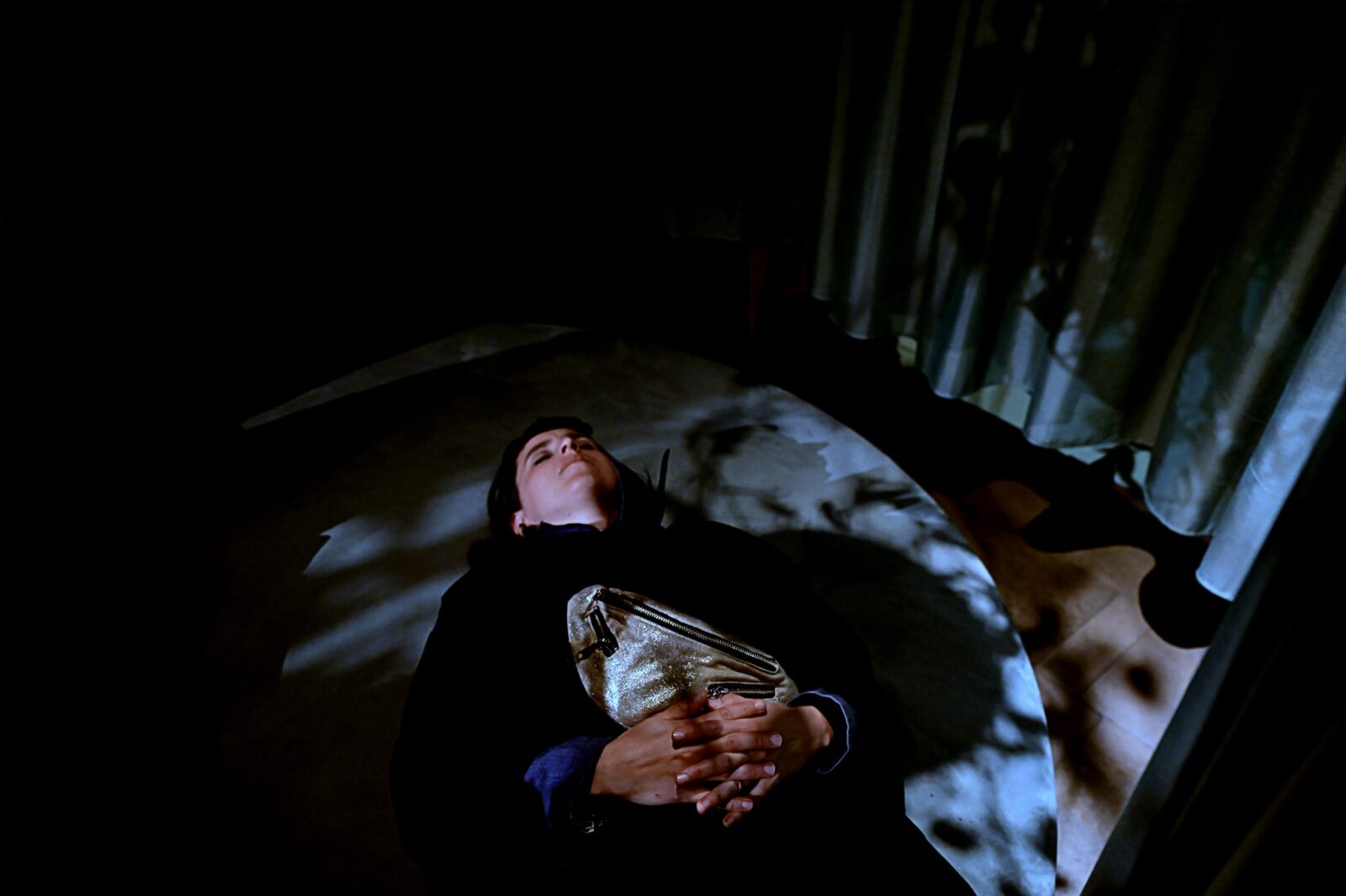
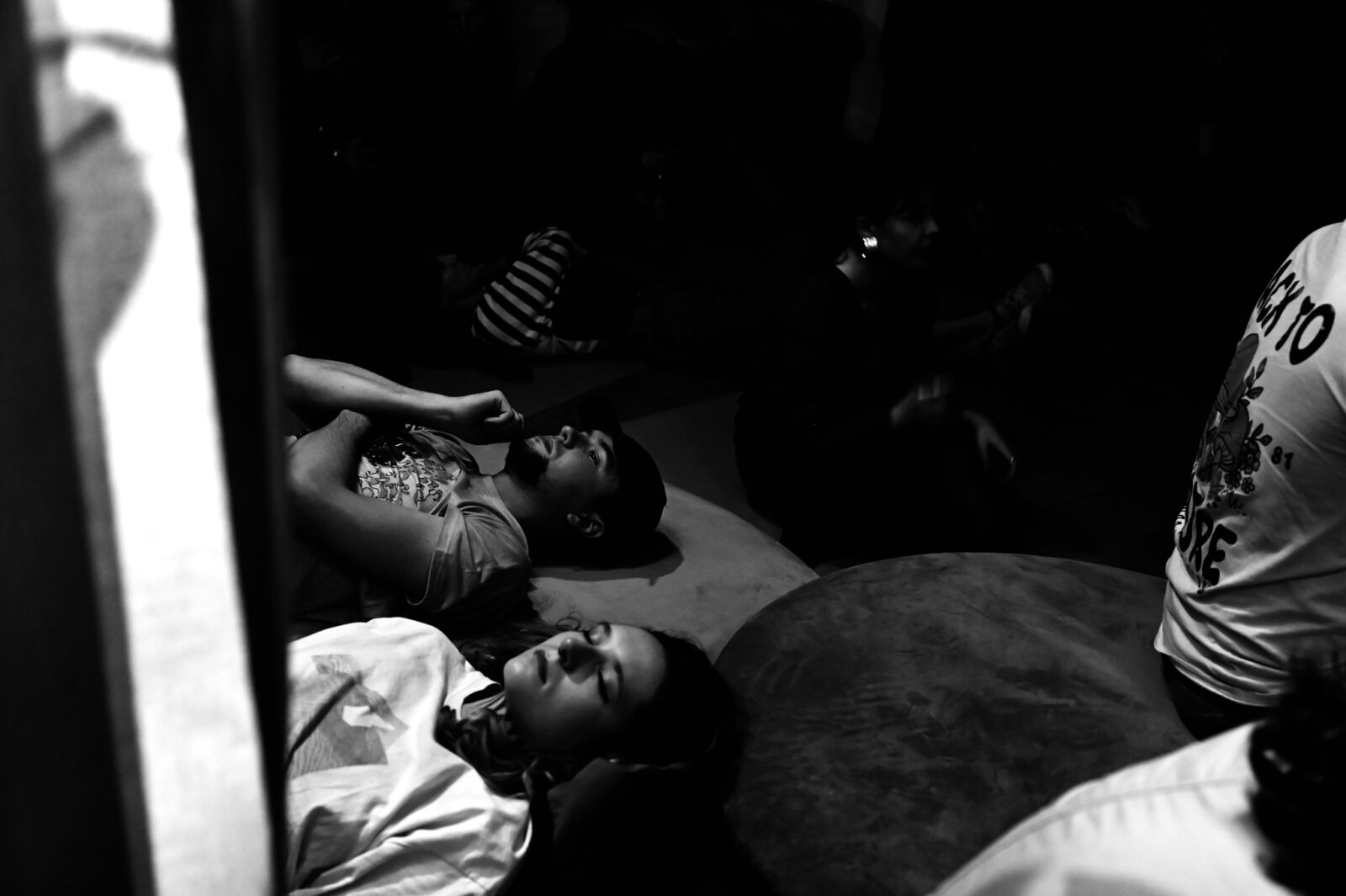
The concert took place on 8.10.2022 at the BWA Wrocław’ Dizajn Gallery in the Lifery (Żyjnia) space.
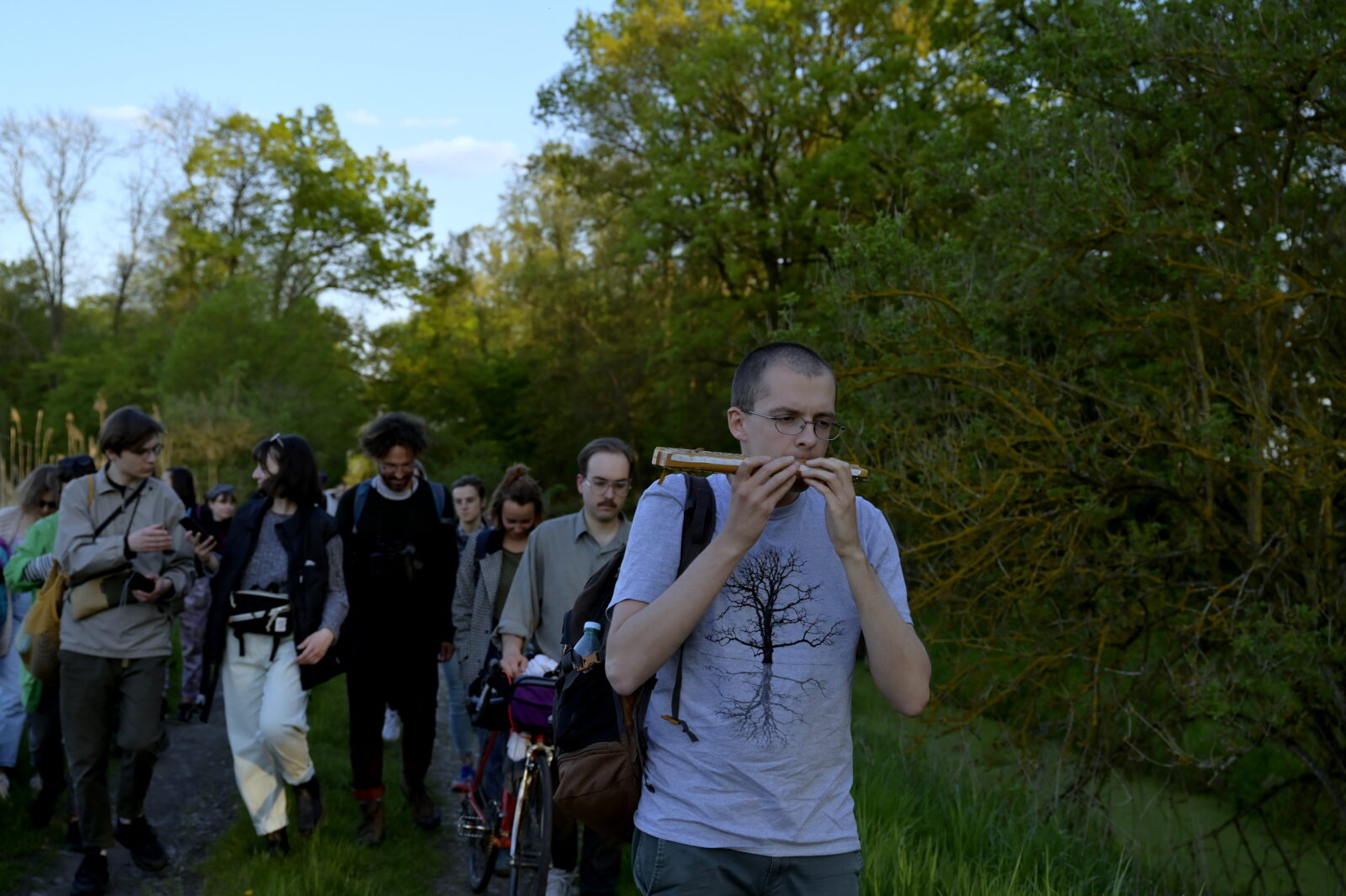
GALLERY, by Kazimierz Ździebło
REVIEW [PL only]:
TEAM
Daniel Brożek (curator), Marta Konieczna (producer, co-curator), Jan Chrzan (PR), Katarzyna Roj (curator of Dizajn BWA Wrocław)
Visual identity: Karolina Pietrzyk + Mateusz Zieleniewski
Organiser: Fundacja PozyTYwka
Partner: BWA Wrocław Galerie Sztuki Współczesnej
Series co-financed by the City of Wrocław | www.wroclaw.pl


